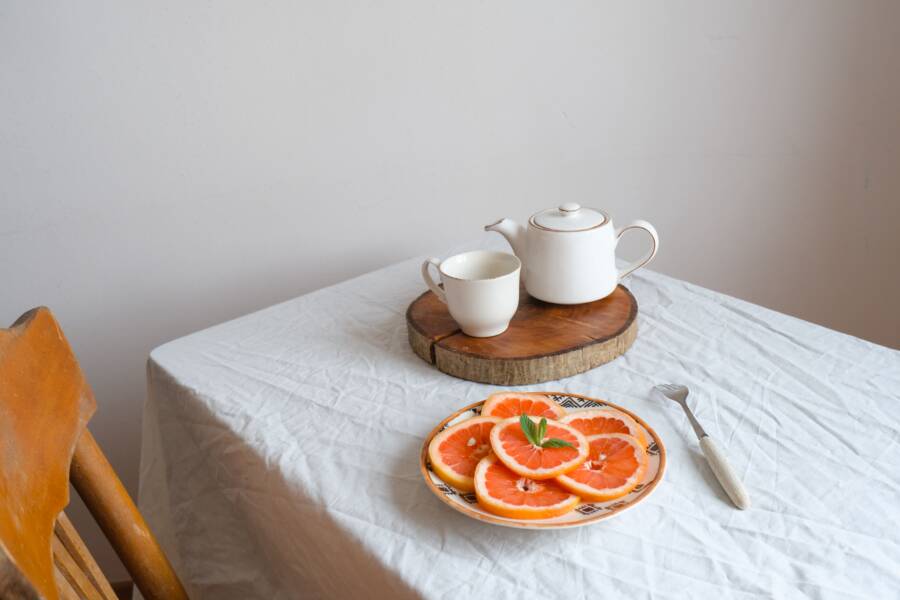
Blot a tea stain on a linen tablecloth immediately, rinse the back of the fabric with cold water, and treat the mark before washing. Tea contains tannins, which can bond more firmly with linen when heat dries or sets them.
Fresh spills usually respond well to prompt, gentle treatment. Older marks need soaking, while stains exposed to a dryer or iron may require repeated care. Use the steps below to match the treatment to the stain.
How to Remove a Tea Stain on a Linen Tablecloth
Act within a few minutes when possible. First, lift away tea leaves, sugar, or food particles with a spoon. Don’t scrape hard, since rough handling can push residue into the weave.
Place a clean white towel beneath the stained area. Then follow these steps:
Blot the surface with a white paper towel or clean white cloth. Work from the outside toward the center so the stain doesn’t spread.
Flush the back of the fabric with cold running water for 30 to 60 seconds. Rinsing from behind pushes tea out instead of driving it farther into the linen.
Apply a small amount of liquid laundry detergent to the damp mark.
Gently work the detergent into the fibers with your fingers. On sturdy linen, use a soft brush with light strokes.
Let the detergent sit for 5 to 10 minutes, then rinse thoroughly with cold water.
Check the cloth before laundering. If the brown or yellow color remains, repeat the treatment rather than adding heat.
What You Need Before Treating the Linen
Gather cold water, white paper towels or a clean white cloth, and mild liquid laundry detergent. Oxygen bleach can help with suitable washable, colorfast linen. A soft brush is optional, but it should have flexible bristles and only be used lightly.
White tools are safer because they won’t transfer dye to wet linen. They also make it easier to see whether tea is lifting from the fabric. Avoid making chlorine bleach your default choice, since it can weaken linen fibers, alter dyes, or leave yellowing.
Read the care label before applying any product. A dry-clean-only cloth, embroidered linen, or antique tablecloth needs a more cautious approach than a modern, machine-washable one.
How to Deal With a Dried Tea Stain on Linen
A dried tea stain on a linen tablecloth needs time to loosen. Fill a clean basin with cool water and soak the stained section, or the whole tablecloth if the care label permits, for about 30 minutes. Avoid hot water at this stage because heat can make tannin discoloration harder to remove.
After soaking, lift the cloth and apply liquid detergent directly to the mark. Work it in gently with your fingers, wait 5 to 10 minutes, and rinse well. Dried stains may need a second treatment, so inspect the fabric before washing.
Check the fabric care label before soaking linen or using any stain remover. Water-safe linen and dry-clean-only linen require different treatments.
When a Tea Stain Has Already Been Heat-Set
A dryer or iron can make a tea mark more resistant because heat sets tannins into the fibers. Repeat the detergent treatment first, then consider a color-safe oxygen bleach soak if the linen is washable and the care label allows it.
Follow the oxygen bleach product instructions and test it on an unseen hem first. Complete removal may not be possible after strong heat exposure, especially if the tablecloth is dyed, embroidered, or old.
Choosing Between Detergent, Vinegar, and Oxygen Bleach
Liquid laundry detergent is the best first choice for most tea spills. It is mild, easy to rinse, and suitable for many washable linens when used in a small amount. Start with detergent before trying a stronger product.
Diluted white vinegar is a cautious option for lingering odor or residue after the stain has been rinsed. Mix it with water rather than pouring it directly onto linen, and test the solution on a hidden area. Vinegar won’t reliably remove a set tea mark on its own.
Oxygen bleach is stronger and may help with a washable, colorfast tea stain on a linen tablecloth. Check the label, follow the dilution instructions, and test for color change first. Never mix vinegar with bleach, including oxygen bleach, and rinse the fabric fully before switching products.
How to Wash and Dry Linen After Stain Treatment
Launder the tablecloth according to its care label. Use the warmest water the label permits, along with the normal or gentle cycle recommended for that linen. Too much detergent can leave residue, so measure it rather than pouring freely.
Inspect the cloth in good light before placing it in a dryer. If any discoloration remains, air-dry the tablecloth and repeat treatment. Dryer heat can set the remaining mark and make later removal more difficult.
While the linen is damp, smooth the seams and reshape the cloth by hand. Hang it evenly or lay it flat according to the care instructions. Air-drying also reduces shrinkage and keeps you from exposing an unfinished stain to heat.
Mistakes That Can Make Tea Stains Worse
Rubbing is a common mistake because it spreads the liquid and roughens linen fibers. Blot instead, then rinse from the back. Starting with hot water can also set tannins, so use cold water for the first flush.
Chlorine bleach can weaken fibers and damage color when used without checking the label. Choose a suitable oxygen bleach only when the fabric is washable and colorfast. Undiluted vinegar, bleach, or stain remover may leave a new mark, so dilute products as directed and test them first.
Drying the cloth before inspection is another avoidable error. A clean-looking surface can still contain tea below the top threads. Keep the tablecloth out of the dryer until the stain has disappeared after washing.
When to Stop Treating the Tablecloth at Home
Choose professional cleaning for dry-clean-only linen, antique tablecloths, fragile fibers, or detailed embroidery. Large spills also deserve caution because repeated wet treatment can affect the fabric’s shape, finish, or dyes.
Stop after two careful treatments if the mark remains. Repeated scrubbing and stronger chemicals can cause more damage than the original tea. Tell the cleaner that the stain is tea, and list every product you applied, including detergent, vinegar, or oxygen bleach.
Keep Heat Away Until the Stain Is Gone
Blot quickly, rinse the back with cold water, apply detergent gently, and wash according to the care label. If the stain is still visible, air-dry the linen and treat it again instead of using a dryer.
Early action gives the best chance of saving a linen tablecloth. Heat is the main thing to avoid, especially before you confirm that the tea discoloration has completely lifted.