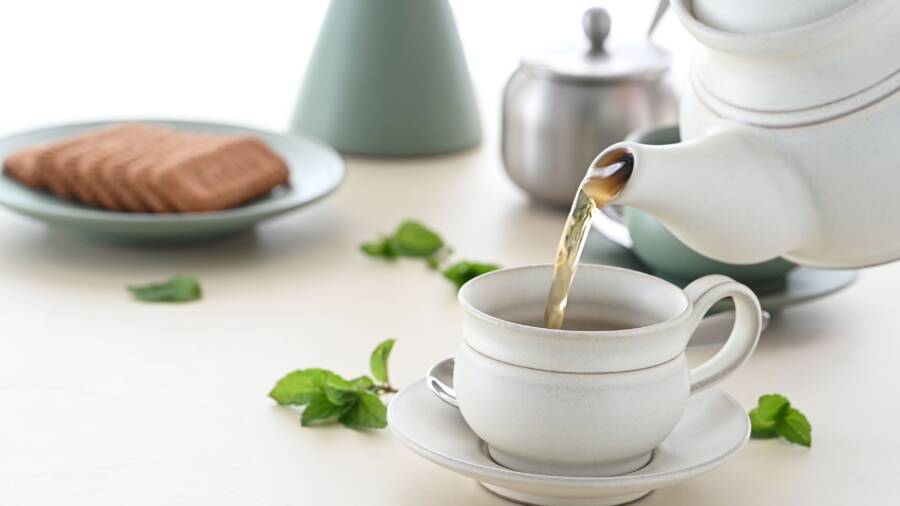
Flush the spout with warm water, soak it with a mild baking soda or dish soap solution, then scrub gently with a narrow brush and rinse well.
For dried stains, mix 1 tablespoon of baking soda with warm water, let it sit inside the spout for 10 to 15 minutes, and clean without forcing the brush.
Tea stains come from tannins in tea, which leave brown residue as liquid dries in the narrow passage. This guide shows how to get tea stains out of a teapot spout safely, whether your teapot is ceramic, glass, stainless steel, vintage, or made from unglazed clay.
Why Tea Stains Build Up Inside a Teapot Spout
Black tea, green tea, and some herbal blends contain compounds that can leave a brown film. When tea remains in the spout, the liquid dries against the inner surface and becomes harder to remove. The narrow opening also prevents ordinary dishwashing from reaching the entire passage.
Hard-water minerals can add white or gray scale to the brown residue. Sugar, milk, and loose tea particles make the buildup thicker, especially when tea sits overnight.
Removable tea staining usually looks brown and wipes away after soaking. White, chalky deposits suggest mineral scale, while a musty odor or fuzzy black, green, or pink spots may indicate mold. A dull patch, crack, chipped glaze, or permanent discoloration may be surface damage rather than dirt.
How to Get Tea Stains Out of a Teapot Spout With Baking Soda
Mix 1 tablespoon of baking soda with enough warm water to create a thin paste or pourable solution. Apply it to the spout opening, or add it through the teapot so it reaches the passage. Leave it for 10 to 15 minutes, then scrub with a soft bottle brush, pipe cleaner, or straw brush.
Rinse from both ends with clean warm water. If a brown film remains, repeat the treatment once. Avoid forcing any tool through the spout, since pressure can crack ceramic, chip glaze, or damage a delicate tip.
Flush the Cleaning Solution Through the Narrow Opening
Cover the teapot’s larger opening with your hand or a clean cloth. Add the baking soda solution through the top, then gently tilt and swirl the pot so the mixture contacts the inside of the spout.
Use warm water rather than boiling water. A sudden temperature change can cause thermal shock in cold glass or ceramic, which may lead to cracking.
Remove the Last Brown Film Without Scratching the Surface
Use a soft brush for reachable areas. A cotton swab or rolled corner of a clean microfiber cloth can lift residue near the opening.
Avoid abrasive powders, steel wool, knives, and stiff wire. Scratches on glass, glaze, or metal create rough spots where future tea residue can cling.
Use Vinegar or Dish Soap for Mineral Scale and Fresh Residue
Fresh tea residue usually responds well to a few drops of mild dish soap in warm water. Work the solution through the spout, brush gently, and rinse several times until no slick feeling remains.
For white, chalky buildup, dilute white vinegar with an equal amount of water. Let the solution sit for 15 to 30 minutes, then brush and rinse thoroughly. Don’t mix vinegar and baking soda in the same container, because the reaction reduces their cleaning action.
When Vinegar Is Safe and When to Avoid It
Diluted vinegar is generally suitable for glazed ceramic, glass, and stainless steel. Check the maker’s care instructions before using it on unglazed pottery, natural stone, painted details, metallic trim, or antique finishes.
When the finish is uncertain, test the solution on a hidden area first. Rinse the spout several times afterward to remove acid residue and vinegar odor.
Rinse the Spout Completely After Any Cleaner
Run clean warm water through the spout at least three times. Inspect both openings for powder, foam, or loosened flakes.
Remove the lid and let the teapot air-dry fully. Soap, vinegar, and baking soda should never remain inside the passage where they could affect the next pot of tea.
Choose the Right Cleaning Method for Ceramic, Glass, and Metal Teapots
Glazed ceramic usually tolerates warm water, mild dish soap, gentle baking soda, and soft brushing. Glass needs gradual temperature changes, while stainless steel can handle mild soap but scratches easily with abrasive tools.
Unglazed clay requires extra care because it can absorb cleaners and odors. Painted surfaces, gold or silver trim, cracks, and vintage finishes also need a conservative approach.
Cleaning a Ceramic or Porcelain Spout
Rinse with warm water, then use mild dish soap or a thin baking soda solution. A soft straw brush can clean the passage without scraping the glaze.
Avoid sudden temperature changes and harsh scouring. For unglazed clay, use plain warm water unless the manufacturer gives different instructions.
Cleaning Glass or Stainless Steel Without Damage
For glass, rinse gradually with warm water and use a soft brush without gritty scrubbers. Never pour boiling water into a cold glass teapot.
On stainless steel, wipe in the direction of the grain when it is visible. Avoid chlorine bleach and steel wool, then dry the metal to reduce water spots.
What to Do When a Brush Cannot Reach the Inside
A flexible straw brush, baby-bottle nipple brush, pipe cleaner, or cotton swab can reach narrow passages. Soak the residue first, since softened tea film comes away with less pressure.
A clean water flosser may help with a sturdy teapot if the maker permits it. Use the lowest pressure, keep the stream controlled, and stop if the tool catches, bends, or presses against the spout tip.
Use a Soak to Loosen Deep, Dried Tea Residue
Fill the teapot with warm water and a small amount of mild dish soap or baking soda. Position it so the spout stays filled, then soak for 20 to 30 minutes before brushing.
Don’t leave porous clay, cracked pottery, loose fittings, or decorated teapots submerged for long periods. Those materials may absorb water or loosen further.
Know When Professional Cleaning or Replacement Is Safer
A blocked vintage, handmade, cracked, or valuable teapot may need advice from its maker or a professional restorer. Aggressive cleaning can remove original decoration or worsen hidden damage.
Replace the teapot if the spout is cracked, chipped, or leaking. A musty smell that remains after careful cleaning can indicate residue trapped inside damage.
Cleaning Mistakes That Can Make Tea Stains Worse
Boiling water on a cold teapot can cause thermal shock. Sharp tools can chip the spout, and abrasive pads can scratch metal, glass, and glaze.
Never use chlorine bleach inside a teapot intended for drinking. Also, never mix vinegar with bleach or another household cleaner. Milk and sugar residue should be rinsed away promptly because dried deposits hold tea film against the surface.
Damaged glaze and scratches make later cleaning harder. Once the surface becomes rough, tea residue has more places to collect.
Prevent Stains and Check the Spout Before Use
Rinse the spout with warm water immediately after each use. Wash it with mild dish soap after every tea session, brush the opening weekly if you use the pot often, and let it dry completely before storage.
Filtered water can reduce repeated mineral scale. Avoid leaving tea in the pot overnight, and check that loose leaves haven’t collected near the spout opening.
A Quick After-Tea Rinse That Takes Less Than a Minute
Empty the pot, rinse the body and spout with warm water, and run water through the spout from both directions. Wipe the outside, remove the lid, and leave the pot open to dry.
For daily use, deep-clean about once a week. Occasional users should clean the teapot before storage and again after a long break.
Before brewing, look through the spout with a light. Confirm that water flows freely, no cleaner odor remains, and the pot has no chips, cracks, loose trim, or flaking glaze. Use it only when the spout is fully rinsed, odor-free, undamaged, and dry.
Conclusion
Warm water and a mild cleaner soften tea stains without putting the teapot at unnecessary risk. Use a soft narrow brush, match the solution to the material, and rinse the spout thoroughly from both directions.
A prompt rinse after each use prevents most buildup. That small habit is safer than aggressive scrubbing after a thick stain has dried inside the spout.