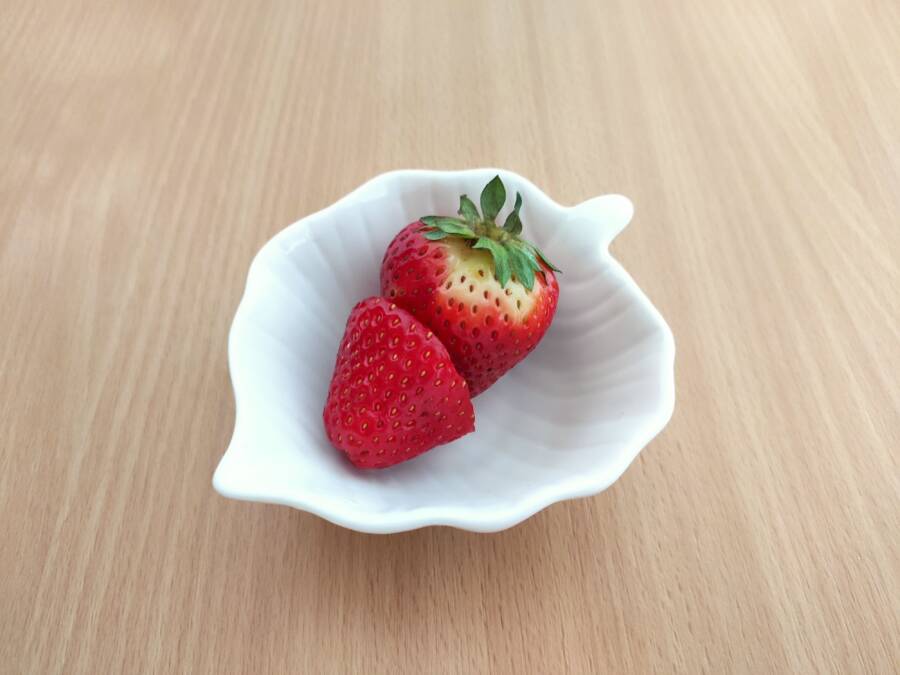
Blot the stain, rinse it from the back with cold water, then pretreat it before washing. Check the dress care label first, because some fabrics cannot tolerate water, bleach, dish soap, or peroxide.
Quick action helps keep strawberry juice from setting into white fibers. Avoid rubbing and heat until the red mark disappears, then wash the dress according to its label.
Strawberry Stain on a White Dress: Act Before It Sets
Fresh strawberry juice is mostly water, but it also contains natural color compounds that can cling to fabric. The longer the stain dries, the harder it becomes to flush the color out. Treat the mark as soon as possible, even if you can’t wash the dress immediately.
Start with the least force
Use a spoon or the edge of a dull knife to lift any strawberry pieces from the fabric. Don’t scrape back and forth, since that can push fruit deeper into the weave. Place a clean white towel behind the stained area to catch loosened juice and prevent it from spreading to another part of the dress.
Blot with a clean, damp white cloth. Press and lift rather than rubbing. Friction can spread the red pigment and drive it farther into the fibers.
Heat can turn a removable fruit mark into a stain that needs repeated treatment.
How to Blot and Rinse a Fresh Strawberry Stain
Hold the stained section under cool running water with the wrong side of the fabric facing upward. Let the water push the strawberry juice back out through the front of the dress. Rinse for two to five minutes, or until the water running through the fabric looks clear.
If you can’t reach a sink, wet a clean cloth with cold water and blot repeatedly. Keep moving to a clean part of the cloth so you don’t transfer the juice back onto the dress. Avoid hot water at this stage, because heat can make some organic stains harder to remove.
After rinsing, apply a small amount of liquid laundry detergent or clear dish soap to the remaining mark. Work from the outside edge toward the center with your fingertips, then let it sit for five to 10 minutes if the care label allows. Rinse thoroughly with cool water before choosing a stronger pretreatment.
Choose a Safe Pretreatment for White Fabric
Liquid laundry detergent is the safest first option for most washable cotton, linen, and synthetic dresses. Apply enough to cover the mark, but don’t saturate the entire garment. Gently work it into the fibers, wait five to 10 minutes, and rinse.
When oxygen bleach makes sense
Oxygen bleach can help with a stubborn strawberry stain on a white, washable dress. Follow the product label for the correct dilution, soak time, and fabric restrictions. Oxygen bleach is generally safer for many fabrics than chlorine bleach, but it can still damage delicate fibers, finishes, elastic, or colored trim.
Test the diluted solution on an inside seam first. If the fabric changes color or texture, rinse it immediately and stop using that product.
Use hydrogen peroxide with care
A 3% hydrogen peroxide solution may suit some plain white, washable fabrics. Test a hidden area, then dab a small amount onto the stain if the label permits it. Wait a few minutes, rinse well, and never combine peroxide with bleach, ammonia, vinegar, detergent, or another cleaning product.
Wash the Dress and Check the Stain Before Drying
Wash the dress on the cycle listed on its care label. Use the warmest safe water temperature stated there, since some garments require cold water while others permit warm washing. Add the recommended amount of detergent and avoid adding chlorine bleach unless the label expressly allows it.
When the cycle ends, inspect the stained area in bright light. Look for any pink, red, or brown shadow before using a dryer, iron, steamer, radiator, or direct sunlight. If any color remains, repeat the pretreatment and wash instead of applying heat.
Air-dry the dress only after the stain is gone and the label permits air-drying. Keep the garment away from direct heat while it dries, especially if the fabric contains synthetic fibers or elastic.
How to Remove a Dried or Set-In Strawberry Stain
Older stains need more contact time. For a washable dress that permits oxygen bleach, mix the product with cool water according to its label and soak only for the stated time. Keep the garment fully submerged, then rinse it and launder it using the care label’s instructions.
A set-in mark may need more than one treatment. Check the fabric after each wash instead of extending the soaking time on your own. Scrubbing hard can break or roughen white fibers, leaving a damaged patch that looks worse than the original stain.
Stop home treatment if the fabric begins to weaken, yellow, lose its finish, or change texture. At that point, further chemicals may cause permanent damage.
What to Do With Silk, Wool, Lace, and Dry-Clean-Only Dresses
Silk, wool, lace, structured dresses, and embellished garments need a different approach. Don’t soak these materials or apply peroxide, oxygen bleach, chlorine bleach, or dish soap without professional guidance. Water can create rings, distort the shape, affect adhesives, or damage trims.
Blot the strawberry juice gently with a clean white cloth and prevent the stain from spreading. Don’t keep adding water to a dry-clean-only garment. Take it to a professional cleaner as soon as possible and identify the mark as strawberry juice.
Tell the cleaner whether the stain is fresh or dried and mention anything you’ve already applied. That information helps the cleaner select a suitable treatment.
Avoid These Stain Removal Mistakes and Know When to Get Help
Avoid these common errors:
Don’t rub hard or scrub with a brush.
Don’t start with hot water.
Don’t use chlorine bleach without checking the care label.
Don’t mix cleaning products.
Don’t put the dress in a dryer while the stain is visible.
Don’t pour stain remover directly onto an untested delicate fabric.
Professional cleaning is the safer choice for expensive dresses, vintage garments, lined clothing, formalwear, and pieces with beading or glued decorations. Contact a cleaner when the stain remains after two careful treatments or when the fabric shows any sign of damage.
The care label takes priority over general stain advice. A white cotton dress may tolerate a treatment that would ruin silk, wool, lace, or a structured garment.
Keep Heat Away Until the Stain Is Gone
Remove the fruit, blot the juice, rinse from the back with cold water, pretreat the mark, and wash the dress as directed. Check the fabric in bright light before drying, and air-dry only when the stain has disappeared.
Fast action and avoiding heat are the two most important steps for a strawberry stain on a white dress. For delicate or dry-clean-only garments, stop after careful blotting and let a professional handle the cleaning.