Blot fresh polish, avoid rubbing, and use a tested acetone-free method such as rubbing alcohol or dish soap. The safest way to remove nail polish from clothes without acetone depends on the fabric, stain age, and care label.
Some stains lift after one treatment, while others need repeated blotting. Dry-clean-only, delicate, expensive, or damaged garments usually belong with a professional cleaner. Start by checking the fabric before choosing a remover.
How to Remove Nail Polish From Clothes Without Acetone
Place the garment stain-side down on several white paper towels. Test your chosen solution on an inside seam first. If the fabric shows no change after drying, apply the solution from the back of the stain.
Blot with a white cloth or cotton swab instead of rubbing. Replace the backing towels whenever polish transfers onto them. Fresh towels stop dissolved color from moving back into the fabric.
Rinse the area with cool water after the polish lifts. Apply liquid laundry detergent, then wash according to the care label. Never use a dryer, iron, or hot water while any polish remains.
Check the Fabric Before Choosing a Nail Polish Stain Remover
Read the care label before treating the mark. Identify whether the garment is cotton, linen, polyester, nylon, denim, wool, silk, rayon, acetate, or triacetate. The fiber content affects both stain removal and the risk of permanent damage.
Acetone-free does not mean fabric-safe. Rubbing alcohol, ethyl acetate, and other solvents can lift dyes, weaken finishes, or change delicate fibers. Use the least aggressive product that might work.
Apply a drop to a hidden seam and wait until the test area dries. Stop if the fabric lightens, feels sticky, becomes rough, or changes texture. A dry test matters because some damage appears only after the solvent evaporates.
Fabrics That Usually Handle Careful Spot Treatment
Washable cotton, linen, denim, polyester, and many colorfast blends can tolerate careful spot treatment. Start with 70% isopropyl rubbing alcohol on a white cloth. Use a small amount and blot from the underside.
Non-acetone nail polish remover may work on sturdy washable fabric, but test it first. Dark and brightly dyed clothing needs extra care because solvents may remove the garment’s color. Keep each treatment brief and controlled.
Fabrics That Need Extra Caution or Professional Cleaning
Silk, wool, velvet, rayon, leather, suede, acetate, and triacetate need special handling. Acetone and some solvent-based removers can dissolve or weaken acetate and triacetate fibers. Dry-clean-only clothing should not receive casual home treatment.
Lift excess polish with a dull spoon or card, then protect the stain from heat. If testing causes fading, stickiness, or texture changes, stop immediately. A professional cleaner is safer than repeated solvent applications.
The Best Acetone-Free Methods for Fresh Nail Polish
Rubbing alcohol suits many washable, colorfast fabrics. Alcohol-based hand sanitizer can help, but gels and fragrances require thorough rinsing. Non-acetone remover is stronger, while dish soap works better on leftover film than thick polish.
Use only one cleaning product at a time. Work in a ventilated area, protect the table, and apply small amounts. Never mix alcohol, remover, bleach, ammonia, or other household cleaners.
The mildest tested option is usually the sensible starting point. Stronger solvent does not guarantee a better result.
Rubbing Alcohol or Alcohol-Based Hand Sanitizer
Test 70% isopropyl alcohol on an inside seam. Dab it onto a cotton swab or white cloth, then press the cloth against the back of the stain. Blot repeatedly instead of scrubbing.
Move to a clean part of the cloth as color transfers. Use an alcohol-based sanitizer only when its label shows a suitable alcohol content. Sanitizer can leave gel, fragrance, or thickening ingredients behind.
Rinse the treated area with cool water after the polish lifts. Work in liquid laundry detergent, then wash according to the care label. Air-dry the garment until inspection confirms the mark is gone.
Non-Acetone Nail Polish Remover
Non-acetone remover may contain solvents such as ethyl acetate. Test a tiny amount on a hidden seam, then wait for the area to dry. Do not continue if the garment’s dye transfers to the test cloth.
Apply a small amount to a white cloth, not directly across the garment. Blot from the underside and change the backing towel often. Avoid this method on acetate, triacetate, silk, wool, and uncertain fiber blends.
Dish Soap and Laundry Detergent for Leftover Residue
Dish soap is useful after the main polish has lifted. Mix a small amount with cool water, then work it into the faint mark using a soft white cloth. Rinse well before applying liquid laundry detergent.
Soap alone may not dissolve a large dried polish spot. It can remove oily film and residue left by sanitizer or remover. Wash the garment only after the solvent and polish have been rinsed away.
How to Treat Wet, Partly Dry, and Dried Nail Polish Stains
Stain age determines the first move. Wet polish needs lifting and blotting, while dried polish needs gentle flaking before treatment. In both cases, keep heat away from the garment.
Fresh polish can spread quickly across a woven surface. Dried polish is less mobile, but scraping can break fibers. Choose controlled, short treatments instead of soaking the clothing.
Fresh Spills Need Fast Blotting
Remove jewelry or affected clothing layers so the polish cannot spread. Place absorbent paper under the stain, then lift thick polish with a spoon or dull card. Blot the remaining color with a white towel.
Rubbing pushes polish deeper into the weave and enlarges the mark. Avoid adding water at the start if it would spread the wet polish. Once excess product is gone, use a patch-tested acetone-free treatment.
Dried Polish Needs Gentle Lifting First
Place the garment on a firm, protected surface. Gently flake raised polish with a dull card or spoon, without scraping hard. Brush or vacuum away loose pieces before applying any solvent.
Use a small amount of the tested product from the back of the stain. Change the backing towel after each round. Several short treatments are safer than saturating the garment with solvent.
A Careful Step-by-Step Process for Removing Nail Polish From Washable Clothes
Gather white paper towels, a dull spoon or card, cotton swabs, rubbing alcohol or another tested product, cool water, and liquid detergent. Work in a ventilated area on a protected surface. Check the care label before beginning.
Separate the garment’s layers so the solution cannot reach clean fabric underneath. Place white towels behind the stain and keep them flat. A colored towel can transfer dye into the damp area.
Set Up the Garment and Protect the Clean Fabric
Test the chosen product on an inside seam and wait until it dries. If the fabric remains unchanged, position the stain face down over the towels. This setup lets the dissolved polish move away from the visible surface.
Use a clean white cloth or cotton swab for each application. Start at the outer edge only when the stain is spreading, then work toward the center. Keep the treated area small and lightly damp.
Blot, Replace the Backing, and Repeat Carefully
Apply a little product to the cloth or swab. Press from the back, lift the cloth, and move to a clean section as color transfers. Replace the paper towel whenever it becomes marked.
Repeat in short rounds rather than saturating the garment. The process is complete when no color transfers and only a faint residue remains. Stop if the fabric changes before the stain disappears.
Rinse and Wash Without Setting the Stain
Rinse the area with cool water from the back of the fabric. Apply liquid detergent directly to the residue, then wash according to the care label. Use the garment’s normal cycle rather than choosing extra heat.
Inspect both sides in bright light before drying or ironing. If the mark remains, repeat the safest tested treatment and wash again. Heat can make leftover polish much harder to remove.
How to Remove Dried Nail Polish From Different Clothing Materials
Fabric-specific care is safer than one universal formula. Sturdy washable materials usually tolerate more controlled blotting than delicate fibers. Blends can behave unpredictably because their dyes, coatings, and fibers differ.
Cotton, Linen, and Denim
Cotton and linen often tolerate rubbing alcohol after a colorfastness test. Treat dried polish briefly, blot from the back, and rinse thoroughly. Finish with liquid detergent and a care-label wash.
Denim dye may transfer during treatment, especially on dark jeans. Use the smallest amount possible and check the surrounding color after each round. Inspect the garment without heat before placing it in a dryer.
Polyester, Nylon, and Blended Fabrics
Many polyester and nylon garments can handle a tested alcohol-based product. Blends may react differently because another fiber or surface coating changes the fabric. Apply minimal product and rinse thoroughly.
Avoid high heat while residue remains. Heat can set leftover color and damage some synthetic finishes. Air-dry the garment until you can inspect it clearly.
Silk, Wool, Rayon, Acetate, and Triacetate
Don’t assume an acetone-free remover is safe for silk, wool, rayon, acetate, or triacetate. Home solvents can cause discoloration, shrinkage, roughness, or fiber dissolution. Lift excess polish without aggressive scraping.
Cover the stain to prevent spreading and take the garment to a professional cleaner. This is especially important for dry-clean-only clothing. The cost of cleaning is usually lower than replacing a damaged delicate garment.
What to Do After the Polish Is Gone
Removing visible color is only part of the cleanup. Solvent, sanitizer gel, and oily polish ingredients can remain in the fibers. Rinse the area, apply detergent, and follow the garment’s care instructions.
Wash Out Solvent and Oily Residue
Rinse from the back with cool water until the product no longer feels slippery. Work liquid laundry detergent into the area, then wash according to the label. Don’t automatically use hot water.
Never combine rubbing alcohol, nail polish remover, bleach, ammonia, or other cleaners. Chemical mixtures can damage fabric and create dangerous fumes. Keep the room ventilated while alcohol or solvent remains nearby.
Inspect Before Drying or Ironing
Examine both sides in daylight while the garment is still damp. Look for pink, red, shiny, or oily residue around the original spot. If any remains, repeat the safest tested method.
Air-dry the garment until the stain is completely gone. A dryer can set leftover color and make later treatment more difficult. Ironing can also press residue deeper into the fibers.
Mistakes That Can Spread or Set a Nail Polish Stain
Rubbing spreads polish across more fibers and can push it deeper. Too much solvent may create a larger wet ring. A patch test prevents many avoidable color and texture problems.
Colored towels can bleed into treated fabric. Heat can set remaining polish, while bleach and random chemical mixtures can damage clothing. Treating dry-clean-only garments at home adds unnecessary risk.
Do Not Rub, Scrub, or Soak the Garment
Use controlled blotting with fresh sections of a white cloth. Soaking can move dissolved color into clean areas. A longer treatment is not always better when solvent affects dye or fiber strength.
Press lightly, then lift the cloth. Repeat only while color transfers. Stop once the fabric shows a reaction or the polish stops releasing.
Do Not Use Heat or Unchecked Household Chemicals
Keep dryers, irons, and hot water away from the stain. Heat can set remaining color and may damage some synthetic finishes. Bleach can discolor clothing and should never be mixed with other cleaners.
Open a window when using alcohol or solvent-based products. Follow the product label and use small amounts. Rinse the treated area before laundering.
When Home Treatment Is Not Safe or Worth the Risk
Stop experimenting with dry-clean-only clothing, expensive garments, and sentimental items. Large spills also deserve professional attention because repeated treatment can spread the stain. Strong dye transfer is another reason to stop.
Signs the Fabric Is Being Damaged
Watch for fading, a light ring, bleeding dye, roughness, stickiness, thinning, puckering, or a dissolved surface. Stop immediately if any sign appears. For delicate or dry-clean-only items, leave further work to a professional.
Blot away excess product without rubbing. Rinse only if the care label and treatment allow it. Otherwise, cover the area and take the garment to a cleaner.
How to Explain the Stain to a Professional Cleaner
Tell the cleaner that the stain is nail polish and say whether it is wet or dried. Provide the polish brand or ingredient information when available. Mention every product already used.
Disclose any rubbing alcohol, sanitizer, non-acetone remover, soap, or detergent. This information helps the cleaner choose a compatible process. It also prevents unexpected reactions during treatment.
How to Prevent Nail Polish Spills on Clothing
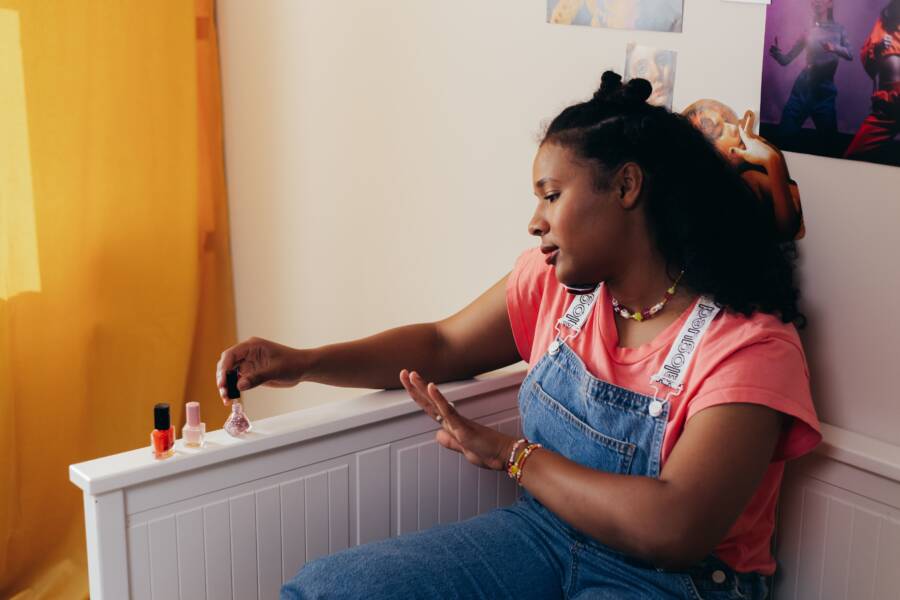
Paint your nails away from clothing whenever possible. Wear an old shirt, cover the work surface, and let polish dry fully before changing clothes. Store bottles upright with the caps closed.
Prevention matters most with silk, wool, acetate, and other difficult-to-treat fabrics. A small spill on these materials can cause permanent damage. Keep delicate garments away from polish and solvent.
Create a Safer At-Home Nail Care Setup
Use a washable towel or tray beneath your hands. Keep remover and alcohol away from fabric, and place paper towels nearby for quick blotting. Set the bottle on a stable surface where it won’t tip.
Avoid nail care while wearing valuable or delicate clothing. Close the bottle before reaching for another item. These habits reduce spills before stain removal becomes necessary.
Conclusion
To remove nail polish from clothes without acetone, lift excess polish, test an acetone-free product, and blot from the back with fresh white towels. Rinse, wash with detergent, and air-dry until daylight inspection shows no remaining color.
Acetone-free products can still damage dyes and fibers. Acetate, triacetate, delicate, dry-clean-only, and valuable garments deserve professional cleaning.
Stop immediately if the fabric fades, feels sticky, roughens, thins, or changes texture. A controlled pause can prevent a small stain from becoming permanent fabric damage.