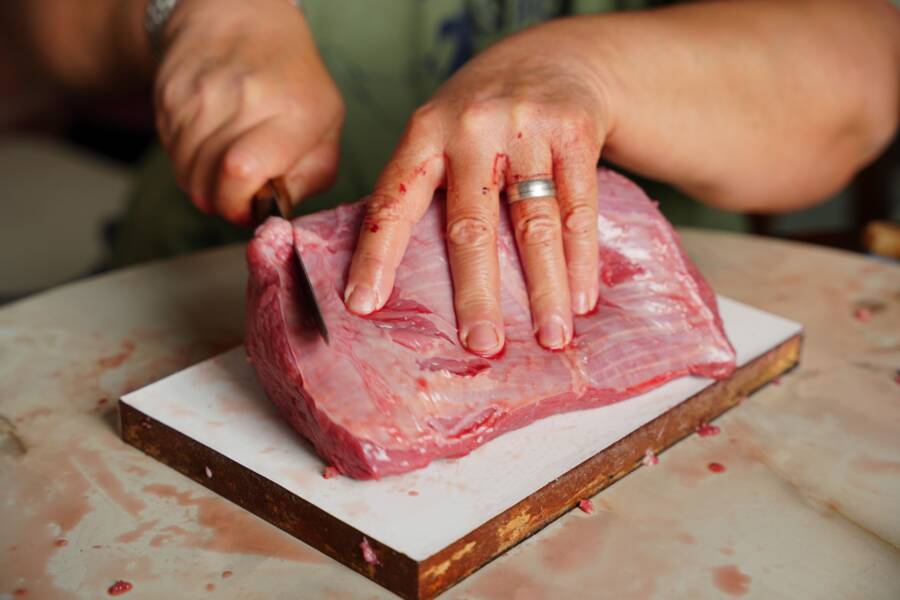
Meat tenderizer is a common kitchen powder, usually made of plant enzymes like papain or bromelain, that breaks down tough connective tissue in steaks. Because blood is mostly made of protein, meat tenderizer works on blood stains by dismantling those exact same protein bonds. When you spill blood on clothes, the iron and proteins bind tightly to the fibers. Applying a kitchen tenderizer to the mess changes the chemical structure of the stain so it detaches from the fabric.
Why Meat Tenderizer Works on Blood Stains
Blood sets quickly because its complex protein web wraps around threads of cotton and synthetic material. Meat tenderizers contain proteolytic enzymes that target these specific proteins. Instead of scrubbing the fabric until the threads fray, the powder attacks the root of the stain by breaking large proteins into smaller, water-soluble pieces.
How Enzymes Target Protein Bonds
Enzymes act like microscopic scissors that cut through the tough protein web of dried blood. Papain, which comes from papayas, and bromelain, which comes from pineapples, search for peptide bonds holding the blood molecules together. Once they snap these bonds, the blood loses its grip on the textile. You can wash away the residue easily with cold water.
The Role of Salt and Other Ingredients
Store-bought tenderizers often contain salt and other fillers alongside the active enzymes. Salt acts as a mild abrasive and draws moisture out of the stained area, which helps the enzymes penetrate deeper into the fibers. However, some commercial blends also include MSG or garlic powder. These extra flavorings do nothing for cleaning, so check the ingredient label before pouring seasoned powder onto your laundry.
When to Skip Meat Tenderizer Completely
You should skip meat tenderizer completely when you are dealing with delicate fabrics like wool and silk. These natural materials consist entirely of protein fibers. Strong proteolytic enzymes cannot tell the difference between a blood stain and a wool sweater. The powder will digest the garment itself, leaving holes or weak spots in your favorite clothes.
Risks Involving Delicate Natural Fabrics
Wool and silk garments suffer permanent damage when exposed to meat tenderizers. The enzymes chew through the structural integrity of the fabric within minutes. If you spill blood on a wool coat or a silk blouse, standard laundry detergent or a mild oxygen bleach is a much safer choice than a kitchen enzyme powder.
Alternative Cleaning Methods for Colored or Dyed Materials
Garments with sensitive dyes require extra caution because enzymatic powders can alter or fade specific clothing colors. Test the tenderizer on a hidden seam before applying it to the main stain. If the dye runs or lightens during the patch test, switch to a cold water soak with regular dish soap instead.
Step by Step Guide to Using Tenderizer on Tough Stains
Using meat tenderizer on stubborn laundry mishaps requires precision to protect the garment. Mix one tablespoon of unseasoned meat tenderizer powder with two tablespoons of cold water to form a loose paste. Apply the paste directly to the stained area with your fingers or a clean spoon. Let the mixture sit for thirty minutes before rinsing the garment thoroughly in a sink filled with cold water.
Mixing the Right Paste
Always use cold water instead of warm water when mixing your paste. Warm or hot water cooks the iron in blood, setting the stain permanently into the fabric fibers. Cold water keeps the proteins loose and responsive to the enzymes in the powder.
Timing and Safe Rinsing Practices
Leaving the tenderizer on the fabric for more than thirty minutes risks damaging the threads, especially on cotton blends. Rinse the garment under a running cold water tap until all the powder washes away. Wash the item in your washing machine on a normal cold cycle immediately afterward to remove any remaining residue.
Blood stains dissolve easily when treated with protein-destroying enzymes, but fabric safety always comes first. Check the garment label to confirm the material content before reaching for the spice rack.