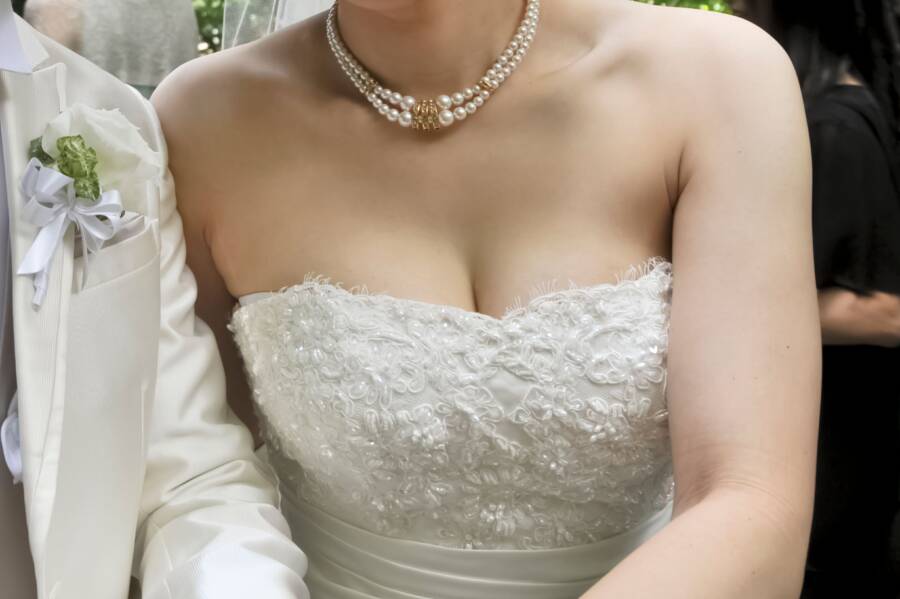
Blot the wet oil immediately with a clean white cloth or paper towel. Apply an absorbent powder like cornstarch directly to the spot to lift remaining traces from the fabric fibers before washing.
Why You Must Act Fast on a Grease Stain on a Wedding Dress
Oil molecules bond quickly with the delicate fibers of silk, satin, and polyester blends. Natural protein fibers like silk trap grease within their complex weave almost instantly. Synthetic fabrics repel water, but they readily absorb oil-based substances.
Time works against you the moment an oily substance touches bridal attire. As days pass, the oil oxidizes and hardens within the weave. Fresh oil sits on the surface, making removal simple. Old oil turns yellow and requires aggressive chemical treatments that weaken the garment.
Immediate Actions to Take Before Washing
Lift away any excess butter, salad dressing, or makeup with a dull edge like a butter knife or credit card. Press a clean white cloth against the spot to pull out loose residue. Do not smear the spill outward. Work from the outer edges toward the center to contain the affected area.
Dust the entire spot with plain white talcum powder or cornstarch. Leave the powder undisturbed for at least thirty minutes. The fine particles pull oil molecules out of the weave through capillary action. Gently brush away the powder with a soft-bristled makeup brush once it absorbs the oil.
Common Mistakes That Can Ruin the Fabric
Rubbing the spot forces oily residue deeper into the weave instead of lifting it out. People often reach for hot water because it cleans dishes, but heat sets oil permanently into fabric. Avoid hair dryers and household bleach because they discolor white and ivory textiles instantly.
Harsh scrubbing creates fuzzy spots on silk and satin gowns. Treat the fabric gently at every step of the cleaning process. Dab or blot the area instead of scrubbing back and forth.
Safe Household Remedies for Fresh Oil Marks
Kitchen ingredients offer gentle alternatives to harsh commercial solvents. These remedies target oil without stripping the finish of delicate white textiles. Test any home remedy on an unseen interior seam before touching the visible exterior of the gown.
Using Cornstarch or Baby Powder to Absorb Oil
Cornstarch remains the safest household treatment for raw silk and expensive lace. Cover the entire oil mark with a thick layer of powder. Let it sit for one hour so the starch absorbs the liquid grease.
Vacuum the powder away using a clean hose attachment, or sweep it off gently with a dry cloth. Repeat this process twice if the fabric still feels slick to the touch. This dry method protects fragile beading and intricate embroidery from moisture damage.
Applying Mild Dish Soap for Spot Treatment
Dish soap breaks down grease molecules efficiently without harming synthetic wedding fabrics. Mix one drop of clear dish soap into one cup of cold water. Dip a clean cotton swab into the soapy solution.
Dab the spot lightly, working from the outside inward. Blot the area with a second damp cloth to remove soap residue. Press a dry white towel against the wet fabric to soak up excess moisture immediately.
When to Rely on Professional Dry Cleaners
Home remedies work on minor surface spots, but large oil spills require professional care. Gowns with multi-layered skirts, glued-on crystals, or complex internal boning demand specialized handling. Attempting to wash a heavily constructed gown in a residential bathtub ruins the inner lining and distorts the silhouette.
Take the dress to a specialist who handles bridal alterations and preservation. Inform the shop owner about the exact origin of the stain. Professional cleaners use specialized hydrocarbon solvents that dissolve oil without damaging delicate wedding fabrics.
What to Tell the Cleaner When You Drop It Off
Identify the exact substance that caused the mark. Tell the counter attendant whether the spill is cooking oil, motor grease, or cosmetic foundation. Specify the fabric composition found on the interior care label.
Ask the cleaner for a written estimate before authorizing any work. Request a guarantee that the shop handles wedding dresses on-site instead of outsourcing them to an industrial facility. Clear communication prevents treatment errors and protects your investment.
Keep the gown hung upright in a breathable cloth bag away from direct sunlight. Treat any new spots immediately using dry cornstarch before they set permanently into the weave. Your wedding dress remains a treasured keepsake when you address fabric emergencies with calm and precision.