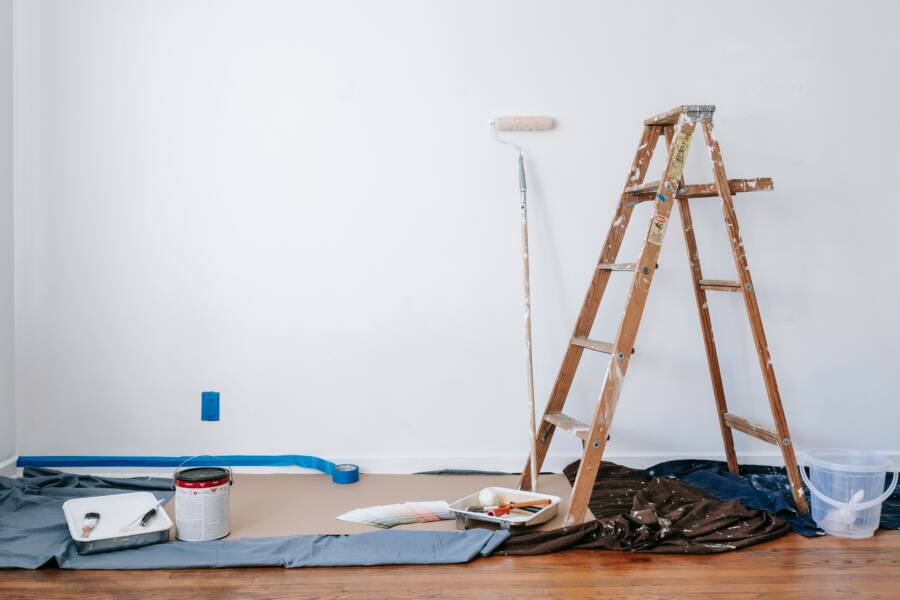
Blot fresh paint with paper towels, then lift the remaining color with warm water and mild dish soap. To get paint off vinyl flooring after it has dried, soften the spot, scrape gently with plastic, and finish with a vinyl-safe cleaner.
The right method depends on the paint type, how long it has dried, and whether the floor has a protective wear layer. Work slowly because the goal is to remove paint without scratching, discoloring, or loosening the vinyl surface.
How to Get Paint Off Vinyl Flooring Without Causing Damage
Start by identifying whether the spill is wet or dry. Note the paint color, its texture, and whether the floor is sheet vinyl, luxury vinyl plank, or luxury vinyl tile. If you have the flooring care guide, check it before using anything stronger than soap and water.
Test every cleaner in a hidden area, such as beneath an appliance or inside a closet. Leave the test spot long enough to check for fading, dullness, stickiness, or swelling. A cleaner that seems harmless can still damage a worn finish.
Use this order for most small spills:
Blot wet paint with a clean cloth.
Apply a small amount of warm, soapy water.
Lift dry residue with a plastic scraper held at a low angle.
Wipe the loosened paint away instead of spreading it.
Rinse with a damp cloth and dry the floor completely.
Work from the outside of the mark toward the center. This keeps the paint from spreading across clean vinyl. Use a fresh section of cloth each time residue transfers to the fabric.
Gather the Right Supplies Before You Start
Set out paper towels or clean microfiber cloths, warm water, mild dish soap, and a soft sponge. You may also need a plastic scraper, an old soft toothbrush for textured vinyl, cotton swabs, and a vinyl-safe commercial cleaner. Keep disposable gloves nearby if you may use a stronger product.
A plastic gift card can work for a small spot, provided it has no sharp edge. Choose a scraper with a smooth, rounded edge rather than a rigid tool with a pointed corner. Good ventilation matters whenever a solvent-based cleaner enters the process.
Avoid metal blades, steel wool, abrasive pads, and rough brushes. These tools can scratch the wear layer, leaving a mark that remains after the paint disappears. Abrasive powders can also create a dull patch around the spill.
Identify the Paint and Check the Flooring Finish
Water-based latex, acrylic, and many craft paints usually respond to water while they are fresh. Oil-based paint often feels slick and resists soapy water. Spray paint can be either water-based or solvent-based, so its label matters more than its appearance.
Inspect the floor for embossed texture, open seams, worn areas, or lifted edges. Paint can settle into those places, while excess liquid can enter the joints or soften damaged adhesive. Clean those areas with small amounts of moisture.
If the manufacturer lists approved cleaners, follow those directions over general advice. Flooring finishes differ, and a product safe for one vinyl surface may dull another. Take a quick photo of the floor before testing a removal method, especially if the pattern or finish is valuable.
Remove Fresh Water-Based Paint With Soap and Water
Act while the spill is wet, but don’t rub it across the floor. Press a paper towel or dry cloth onto the paint and lift straight up. Replace the towel as soon as it becomes coated, because a saturated cloth will smear the color.
Mix a small amount of mild dish soap into warm water. Dampen a soft sponge or cloth rather than pouring water over the floor, then dab the outside edge of the spill. Use a plastic card to lift thicker paint, keeping the edge nearly flat against the vinyl.
Repeat the process with clean parts of the cloth. The paint may require several passes, especially in a textured surface. After the color is gone, wipe the area with a clean damp cloth to remove soap, then dry it with a towel.
Keep moisture away from seams and plank edges. Standing water can work beneath flooring, where it may affect adhesive or the subfloor. A nearly damp cloth is safer than a dripping sponge.
Lift Dried Paint From Vinyl With Gentle Scraping
Place a damp cloth over a dried water-based paint spot for several minutes. The moisture can soften the surface without exposing the vinyl to a harsh chemical. Don’t soak the floor, and re-wet the cloth only when it starts to dry.
Hold the plastic scraper almost flat, then use short strokes to lift the softened paint. Begin at the outside edge and push toward the center. Use light pressure, because forcing a stubborn chip can scratch the finish or pull at a loose section of flooring.
Wipe away each lifted piece before making another pass. Once the raised paint is gone, clean the thin film with mild soap and warm water. Stop immediately if the vinyl begins to lift, whiten, scratch, or change texture.
A dried drip often comes off in layers rather than one piece. Patience is safer than increasing pressure. If dampening and plastic scraping make no progress, identify the paint before choosing a stronger cleaner.
Clean Paint From Textured Vinyl and Floor Seams
Use an old soft toothbrush to loosen paint from embossed patterns. Work with short, gentle strokes and only a small amount of cleaner. A cotton swab can reach a narrow seam without flooding the surrounding floor.
Wipe after every few strokes with a damp cloth. Frequent wiping removes loosened paint before it settles into another groove. Keep the cloth damp, not wet, around plank joints and sheet-vinyl seams.
Aggressive scrubbing can wear the raised finish and push paint deeper into the pattern. Standing water can also travel beneath an edge. If paint has entered a seam, use patience and controlled dabbing rather than repeated force.
Use Stronger Cleaners Only for Stubborn Paint Residue
A vinyl-safe commercial cleaner may help with a thin residue that soap and water cannot remove. For some oil-based paint, a small amount of mineral spirits may be considered, but only if the flooring instructions permit it. Never assume a solvent is safe because it removes paint from another surface.
Apply the product to a cloth, not directly to the floor. Test a hidden spot first, then dab the paint for a short period and wipe it away. Keep the treated area small so the product doesn’t spread beyond the mark.
Wear gloves and provide good ventilation when using a solvent. Keep the area away from flames, sparks, heaters, and smoking materials. Afterward, clean the spot with a damp cloth and mild soap, then dry it fully.
Avoid acetone, paint thinner, lacquer thinner, and undiluted bleach unless the flooring manufacturer specifically approves them. These products can soften vinyl, remove its finish, or create permanent discoloration. Stronger chemicals often cause more damage than the original paint.
Handle Oil-Based and Spray Paint Carefully
Oil-based paint may feel slick, remain flexible after partial drying, and resist a cloth dipped in soapy water. Check the paint container for its recommended cleanup solvent before doing anything else. The flooring care guide still controls whether that solvent belongs on the vinyl.
Spray paint can extend beyond the obvious mark as a thin overspray. Dab from the outer edge inward, and change to a clean part of the cloth often. Rubbing can enlarge the affected area and press pigment into the finish.
Stop if the vinyl’s color, shine, or texture changes. Wipe away the cleaner with a damp cloth and allow the area to dry. A chemical reaction can progress even after the paint looks removed, so don’t continue testing products on the same spot.
Avoid These Paint Removal Mistakes on Vinyl Floors
Never use a razor blade or metal putty knife on vinyl. Even a small slip can cut the wear layer, and a sharp edge may leave a line that catches dirt. Steel wool and abrasive scouring pads create similar damage through repeated contact.
Don’t apply heat from a heat gun. High heat can soften, warp, discolor, or loosen vinyl flooring and its adhesive. A hair dryer also deserves caution, so use moisture and a plastic scraper instead of heat.
Avoid soaking the floor or mixing cleaners. Water can enter seams, while mixed chemicals may release irritating vapors or produce an unpredictable reaction. Cleaners should be used one at a time, with the area wiped between products.
A dull or sticky area after cleaning may indicate finish damage rather than leftover paint. Stop scrubbing when the paint has gone but the surface looks different. Testing in an inconspicuous area first can prevent a small spill from becoming a large repair.
A nearly flat plastic scraper removes dried paint with less risk than increased pressure from a sharper tool.
Clean and Restore the Area After the Paint Is Gone
Remove all cleaner residue with a clean, damp cloth. Soap or solvent left on the surface can attract dirt and make the patch feel tacky. Use a separate dry towel to remove moisture from the vinyl.
Inspect the floor under normal room lighting after it dries. Look for remaining color, a cloudy film, raised edges, scratches, or a difference in shine. Check the surrounding area too, because spray paint and thin residue can extend beyond the original spot.
Use a vinyl polish or protectant only when the manufacturer approves it. Many vinyl floors shouldn’t be waxed, and wax can leave an unsuitable buildup. If the area remains dull after the paint is removed, the wear layer may need professional repair instead of another cleaning product.
When Paint Damage Means You Should Stop and Call a Professional
Stop home removal if the floor bubbles, peels, lifts, or develops deep scratches. Chemical burns, whitening, a softened surface, or a spreading dull patch also require no further cleaning. Continuing can enlarge damage that might otherwise remain repairable.
Call a flooring repair specialist when paint has entered seams or spread across a large area. Widespread overspray is difficult to remove evenly, especially on patterned vinyl. A professional can assess whether the finish, wear layer, adhesive, or subfloor has been affected.
Contact the flooring manufacturer if the floor is under warranty. Keep the product labels, photos, and details about every cleaner you tested. This information helps determine whether the surface can be repaired, refinished, or replaced.
Prevent Paint Spills During Future Projects
Cover the floor with a waterproof drop cloth and tape its edges to the baseboard. Thin plastic sheeting can let paint pool beneath it, so use a covering that resists leaks and stays in place. Cover nearby furniture, trim, and door thresholds as well.
Keep paint cans and trays on a stable, flat tray. Set brushes and rollers on the tray rather than directly on the vinyl. Check the floor during work breaks and again when the project ends, because a fresh drip is easier to remove than a cured one.
For a dried drip, place a damp cloth over the spot for several minutes. Lift it with a plastic scraper, wipe away the residue, and clean the area with mild soap. This short routine prevents small drops from hardening into larger, more difficult marks.
Conclusion
Blot wet paint, soften dried water-based paint, and scrape gently with plastic. Use stronger products only when the flooring instructions allow them, and test every cleaner in a hidden spot first.
Avoid sharp tools, abrasive pads, heat, and harsh solvents. If the vinyl changes color, shine, or texture, stop promptly. A small paint spot is easier to repair than vinyl damaged by aggressive cleaning.