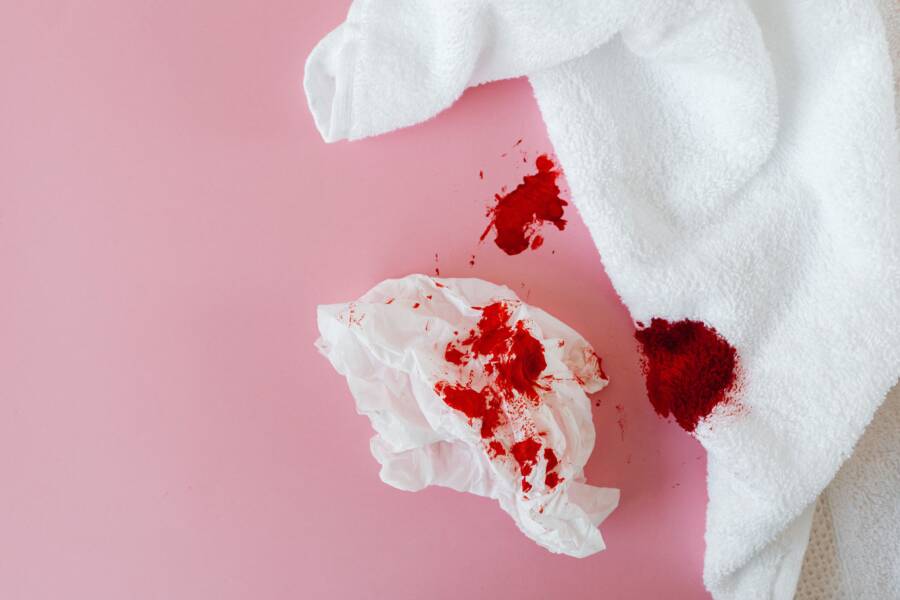
Yes, you can still remove a blood stain even after it went through the dryer, though heat sets the protein. The task is much harder once heat hits the fabric, but specific household products can still break down the dried proteins and lift them out.
Why Heat Makes Blood Stains So Stubborn
Heat cooks the iron and protein in blood, bonding the stain to the fabric fibers permanently. Fresh blood contains soluble proteins that wash away easily in cool water because the molecule structure remains intact. Once a dryer cycle runs over the garment, thermal energy alters those proteins. They cross-link and wrap tightly around the threads of cotton, polyester, or blends.
This process changes a simple organic spill into a nearly permanent pigment. Hot water from an iron or washing machine has the exact same effect on fresh spills. The thermal bonding turns the red iron oxide into a dull brown mark. Removing it requires breaking apart the altered chemical bonds rather than simply dissolving the original substance.
Enzyme Pre-Soaks That Break Down Set Proteins
Laundry detergents or specialized soaks containing enzymes like protease break down set proteins effectively. You need to mix a heavy-duty laundry detergent or an enzymatic stain remover with cool water in a bucket or sink. Submerge the stained garment completely so the liquid penetrates both sides of the fabric.
The soaking time needed for heat set stains is often several hours or overnight. Check the fabric periodically to see if the stain begins to loosen or fade into the surrounding water. Once the proteins break apart, rinse the garment thoroughly in cool water before checking the results.
Choosing the Right Enzyme Detergent
Look at the back of the laundry bottle for specific active ingredients like protease, amylase, or lipase. Biological enzymes target organic matter specifically, unlike optical brighteners or simple surfactants that only tackle surface dirt. Liquid laundry detergents often work faster than powders because they dissolve completely in cool water without leaving a chalky residue.
Check the label for a bio-formula designation. Brands that list protease high on the ingredient list usually perform better on stubborn biological messes. Avoid harsh chlorine bleach during this initial phase because bleach also sets proteins similarly to heat.
How to Mix and Soak the Fabric Properly
Mix one tablespoon of liquid enzyme detergent per gallon of cool or lukewarm water in a clean basin. Never use hot water, because elevated temperatures will seal the protein further into the weave. Submerge the garment and agitate the water gently to distribute the active ingredients across the fabric.
Let the item soak for at least eight hours without interruption. Press the fabric gently between your fingers every few hours to help the soapy water reach the center of the fibers. Drain the basin, rinse with cold water, and inspect the stain before moving on to additional treatment steps.
Using Hydrogen Peroxide on White and Light Fabrics
Hydrogen peroxide reacts chemically with dried blood, bubbling up the organic matter and lifting it from the weave. Pour a three percent concentration directly onto the stain and watch for immediate fizzing as the liquid attacks the iron content. Let the solution sit on the fabric for ten minutes, but do not allow it to dry completely under bright lights.
Blot the area firmly with a clean white cloth or paper towel to pull the lifted residue out of the fibers. Rinse the garment thoroughly with cold water to stop the chemical reaction.
Test hydrogen peroxide on hidden seams first because it can cause bleaching on colored fabrics. Dark garments will lose their dye rapidly when exposed to peroxide, leaving a bright faded patch behind. Reserve this method strictly for white cotton, linen, or light-colored polyester items.
Safe Alternatives for Delicate and Colored Clothes
Garments that cannot handle harsh chemicals or bleach require gentler options like dish soap, ammonia solutions, or meat tenderizer pastes. Mix one tablespoon of liquid dish soap with two cups of cold water and sponge the mixture directly onto the stain. Ammonia diluted with equal parts cold water also breaks down dried proteins safely on colored wool or silk blends.
Meat tenderizer contains papain, a plant-based enzyme that digests proteins without stripping fabric dye. Mix a small amount of unseasoned meat tenderizer powder with a few drops of water to form a thick paste. Spread the paste over the stain and let it sit for thirty minutes before rinsing with cold water.
Testing Your Cleaner on Hidden Seams
Apply a small drop of your chosen alternative cleaner to an inside hem or a hidden seam before treating the visible stain area. Wait five minutes to see if the dye bleeds or if the fabric texture changes under the solution. Rinse the test spot with cold water and blot it dry with a clean towel.
Proceed with the main treatment only if the fabric color remains completely unaltered. Skip this step on unknown synthetic blends to avoid permanent discoloration in visible areas.
Mechanical Removal Techniques for Stubborn Residue
Softened stain residue requires gentle mechanical removal using a soft toothbrush or a dull edge after a long soak. Scrape or brush at the softened stain very carefully without tearing the woven fibers of the garment. Move the toothbrush bristles in a circular motion over the outer edges of the mark toward the center.
Rinse the fabric frequently under a cold tap to wash away the loosened particles as you work. Stop immediately if the threads begin to fray or fuzz up under the friction. Pat the area dry with a towel to check your progress before attempting another round of soaking.
When to Repeat Treatment Versus When to Give Up
Multiple rounds of soaking and washing are necessary when dealing with deep, heat set blood stains. Fading indicates that the enzymes are working slowly, which means a second or third overnight soak will yield better results. You should repeat the enzyme treatment cycle until the brown tint disappears entirely from the fabric.
Give up on the stain only when the fabric starts to thin out from repeated scrubbing and chemical exposure. Delicate textiles reach their structural limit quickly, and a slightly faded mark is preferable to a torn garment. Never run the item through a heated dryer again until the stain is completely gone.