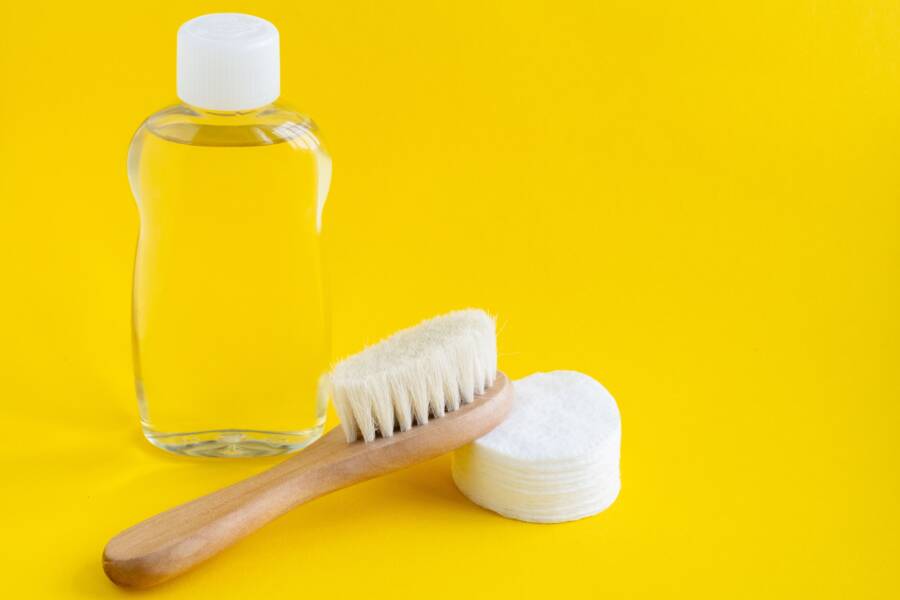
Act quickly to blot up excess liquid with cornstarch or baking soda, then scrub the spot gently with liquid dish soap before washing the comforter in hot water. Baby oil is difficult to remove because it is grease based, meaning its molecular structure resists water completely. This stubborn quality causes the oil to cling tightly to fabric threads, and standard washing cycles will only push the oil deeper into the material unless you pre-treat the affected area properly.
Why Baby Oil Leaves Such a Stubborn Mark on Your Comforter
Mineral oil clings tightly to fabric because of its chemical makeup, and everyday bedding materials absorb this substance very easily. When you spill baby oil, it doesn’t just sit on the surface of the fabric. Instead, it seeps into the fibers, creating a translucent spot that darkens the material and attracts dirt over time.
The Nature of Mineral Oil in Bedding
Baby oil consists primarily of heavy mineral oil and artificial fragrances, which form a hydrophobic liquid. When this liquid hits your bedding, it sinks deep past the outer shell and into down feathers or synthetic polyester batting. Because mineral oil does not evaporate like water or alcohol, it stays trapped inside the internal padding until you apply a solvent that breaks down the grease bonds.
Why Regular Water and Detergent Fail
Oil repels water completely, making standard washing machine cycles ineffective without pre-treatment. If you toss an oily comforter directly into the washing machine with regular detergent and cold water, the oil molecules refuse to mix with the wash water. The detergent surfactants cannot latch onto the grease effectively because the water barrier pushes them away, leaving the stain intact even after a full wash cycle.
How to Get a Fresh Baby Oil Stain Out of A Comforter
Treat a fresh spill immediately by lifting the excess surface oil with an absorbent powder before applying any liquid cleaners. Acting fast prevents the oil from migrating further into the filling of your comforter, which makes the cleaning process much easier.
Absorbing Excess Oil with Powders
Cover the wet spill generously with cornstarch or baking soda to lift wet grease from fabric before washing. Let the powder sit on the stain for at least thirty minutes so it can draw the oil out of the fibers. Brush the powder away gently with a soft-bristled brush, and repeat this process if the powder clumps up immediately from absorbed oil.
Breaking Down Grease with Dish Soap
Apply a few drops of liquid dish soap directly to the remaining oily spot after removing the powder. Rub the soap gently into the fabric using your fingers or a soft cloth, working from the outside edges toward the center to prevent the stain from spreading. Allow the soap to sit on the fabric for ten minutes so it can break down the grease molecules.
Treating Dried and Set In Stains
Old stains require a stronger approach because the oil has oxidized and bonded tightly with the textile fibers over time. Standard dish soap might not be enough once the oil reaches this hardened stage, so you need targeted solvents to lift the residue.
Using Commercial Degreasers Safely
Apply a safe household solvent like a laundry pre-treat spray or a small amount of Murphy’s Oil Soap to cut through old oil without ruining the comforter shell. Test the cleaner on a hidden corner of the comforter first to make sure it doesn’t cause discoloration or fabric damage. Blot the solvent into the stain using a clean white cloth, and let it rest for fifteen minutes before rinsing.
The Soak and Rinse Process
Fill a bathtub with warm water and add a scoop of oxygen bleach to create a soaking solution. Submerge the stained portion of the comforter in the water, and let it soak for at least two hours to loosen the remaining grease particles. Rinse the area thoroughly with clean warm water to remove all traces of soap and loosened residue.
Washing and Drying Your Comforter the Right Way
Machine washing is the final step to restore your bedding, but you must control the water temperature and drying method carefully. Skipping these precautions can cause any remaining oil rings to set permanently into the fabric.
Selecting the Correct Water Temperature
Hot water is necessary to melt and wash away remaining grease particles from the fabric fibers. Set your washing machine to the warmest temperature recommended on the care label of your comforter. Add your regular laundry detergent along with a cup of white vinegar to help strip away any lingering soap residue.
Checking the Results Before Using the Heat Dryer
Air dry the comforter first to make sure no oil ring remains before exposing the fabric to high heat. Hang the comforter over a clothesline or lay it flat on clean towels in a well-ventilated area until it is completely dry. Inspect the fabric under bright light because oil stains are often invisible when wet and only appear once the material dries out completely.