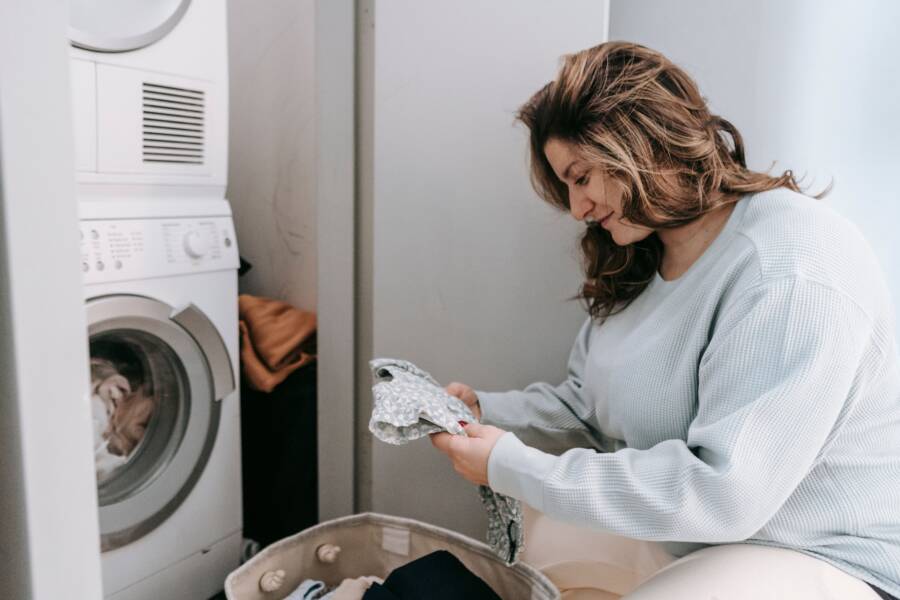
Add white distilled vinegar to the fabric softener dispenser, or pour it in during the rinse cycle. Use a measured amount and dry every item completely to keep any sour scent from staying in the fabric.
To use vinegar on laundry without the smell lingering, timing matters more than using extra vinegar. The scent usually fades as clothing dries, but excess vinegar, poor rinsing, or damp storage can leave laundry smelling unpleasant.
Use Vinegar on Laundry Without the Smell Lingering
For a regular load, pour 1/2 cup of white distilled vinegar into the fabric softener dispenser. The machine releases it during the rinse cycle, after detergent has done its job. Remove laundry promptly when the cycle ends so wet fabric does not trap odors.
Follow a simple rinse-cycle routine
Use up to 1 cup only for a large, heavily soiled load, such as towels or bedding. Don’t pour vinegar directly into the detergent compartment because the two products work best at different points in the wash.
If your washer has no dispenser, wait until the rinse cycle begins before adding vinegar. Check the appliance manual first, especially for front-loading machines with locked doors.
Use the Right Amount of White Vinegar for Each Load
More vinegar does not make clothes cleaner. It can leave a sharp smell behind, especially in thick towels, fleece, and fabrics that dry slowly.
Use these amounts as a practical guide:
Use 1/4 cup for a small load.
Add 1/2 cup for a regular load.
Limit large loads to 1 cup.
Choose plain white distilled vinegar
White distilled vinegar is colorless and has a mild, predictable acidity. Apple cider vinegar can contain color and may leave residue on pale fabrics. Cleaning vinegar is stronger than standard household vinegar, so it is not the best choice for routine laundry unless the washer and garment labels allow it.
Also, don’t fill a fabric softener dispenser past its maximum line. Overflow can send vinegar into the wash too early and increase the chance of lingering odor.
Add Vinegar to the Rinse Cycle, Not the Detergent Compartment
Laundry detergent needs time in the wash cycle to lift soil and body oils. Vinegar belongs in the rinse cycle, where it can help rinse away detergent residue without interfering with the detergent’s cleaning action.
Use the dispenser when your washer has one
Look for a compartment labeled “fabric softener,” “softener,” or a flower symbol. Pour the measured vinegar into that compartment, then run the machine as usual.
Some washers use different dispenser designs, so check the manual before adding anything to a tray. Never assume the bleach compartment is safe for vinegar. It isn’t.
Vinegar works best as a rinse aid, not as a detergent booster added at the start of the wash.
Dry Laundry Completely to Prevent Vinegar and Musty Odors
A light vinegar smell should disappear as fabric dries. However, damp clothes can hold onto any scent and may develop a musty odor that people mistake for vinegar.
Shake out shirts, towels, and sheets before putting them in the dryer. Leave enough room for air to circulate, and run another drying cycle if thick seams or towel hems still feel cool or damp.
Air-dry with moving air
Hang air-dried laundry where air can move freely around each item. Open a window, use a fan, or place a drying rack in a well-ventilated room.
Avoid piling damp clothing in a basket while waiting to fold it. A single wet towel pressed against other clothes can create a sour smell within hours.
What to Do When the Vinegar Smell Still Lingers
First, rewash the items with your normal detergent and use less vinegar during the next rinse. Add an extra rinse cycle if your washer offers one, especially after washing towels, blankets, or packed loads.
Then clean the washer drum, door seal, dispensers, and detergent drawer. Detergent residue, trapped lint, and moisture inside the machine can cause odors that transfer to fresh laundry.
Check the washer and the load size
Don’t overload the drum. Water needs room to circulate and rinse detergent, soil, and vinegar away from each item.
A persistent sour or musty smell often points to mildew, damp storage, or a washer that needs cleaning. In that case, vinegar alone will not fix the source of the odor.
Laundry Items That Benefit From Vinegar, and Those That Do Not
White vinegar can help rinse towels, washable cotton clothing, sheets, and items with light lingering odors. It may also reduce detergent residue that makes towels feel stiff.
Still, follow every garment care label. Some manufacturers advise against acidic products, and that instruction takes priority over general laundry advice.
Treat delicate and technical fabrics carefully
Avoid routine vinegar use on elastic materials, silk, wool, waterproof clothing, and water-resistant outerwear. These fabrics often rely on fibers, coatings, or finishes that need special care.
When you are unsure, test a hidden area first. Use a small amount, rinse thoroughly, and inspect the fabric after it dries.
Vinegar Safety Mistakes to Avoid in the Laundry Room
Never mix vinegar with chlorine bleach. The combination can release dangerous chlorine gas, which can irritate or damage the eyes, throat, and lungs.
Keep vinegar separate from bleach, ammonia, and other strong household cleaners. Rinse measuring cups and dispensers before switching products.
Vinegar is not a substitute for detergent, stain remover, or disinfectant. It also may not suit every washer or fabric when used frequently, so follow appliance and garment instructions.
A Fresh Rinse Starts With Correct Timing
White distilled vinegar belongs in the rinse cycle, measured carefully and followed by complete drying. Adding more does not solve odors, while a clean washer and prompt drying often do.
If laundry still smells sour after washing, inspect the machine and storage conditions before increasing the vinegar. Above all, keep vinegar away from chlorine bleach.