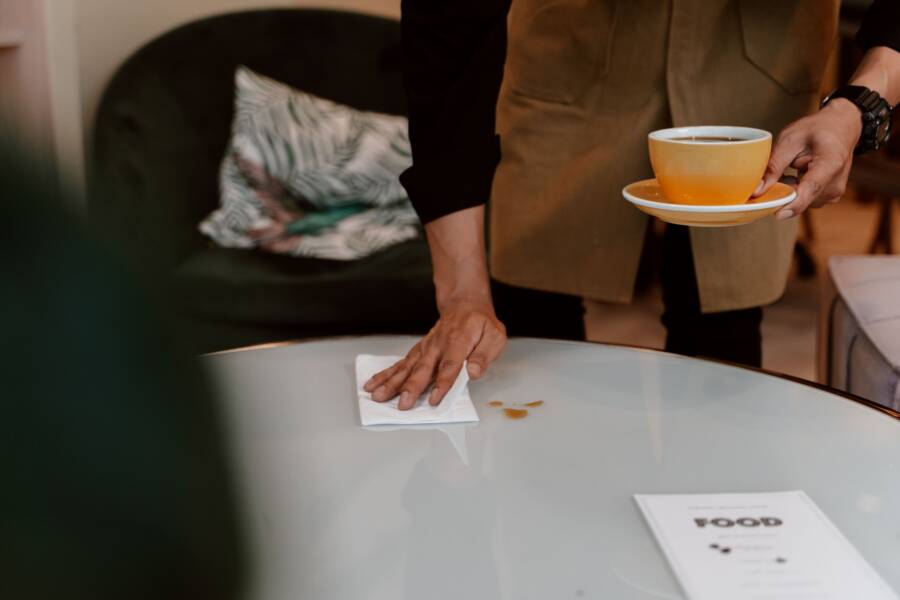
Remove solids first with a spoon, dull knife, or plastic card. Blot excess liquid, then treat greasy or oily residue before water-based color and protein residue.
That stain removal order helps prevent spreading, locked-in color, and material damage. The right approach also depends on the fabric or surface, stain age, and cleaner.
Stain removal order for mixed spills
Remove solids before touching the wet stain
Shield the surface below with an absorbent towel when possible. A mixed spill combines residues, such as grease and coffee, milk and chocolate, or dressing and tomato sauce. Lift food, mud, or wax from the outside toward the center without rubbing. Rubbing drives particles deeper and makes the mark larger.
Blot liquid instead of scrubbing it outward
Use white paper towels or a clean white cloth for moisture. Press straight down on carpet or upholstery, then replace the wet material. Don’t soak the backing, which can cause rings, odors, or water damage. The standard stain removal order is solids, moisture, oil, color, then protein and odor, but delicate fabrics, leather, finished wood, carpet, and upholstery need product-specific care.
Why grease usually comes before water-based stains
Spot the oily part of a mixed spill
Oil often leaves a slick feel, a translucent dark edge, or a lingering sheen. Butter, dressing, lotion, makeup, and cooking oil can all leave this layer. Color can fade while a faint greasy film remains. This stain removal order avoids spreading that film before water-based cleaning.
Use a small amount of the right degreaser
First, test any cleaner on a hidden area. Apply a small amount to a cloth, then blot from the edge inward. Use a material-safe detergent or solvent, following care labels and surface directions. Ventilate when using solvents, and keep them away from heat or flames.
Handle color, sugar, and protein after the oil
Treat coffee, juice, soda, and sauce carefully
Rinse away the degreaser before applying a second product. Cool or lukewarm water with mild detergent suits many coffee, juice, soda, and sauce residues. Strong dyes may need an oxygen-based product approved for that material. Avoid hot water on an unknown stain, since heat can set dyes or proteins.
Handle milk, egg, meat, and other protein stains with cool water
Milk, egg, and meat residues respond best to cool water. On washable items, use an enzyme cleaner only when the label permits it. Don’t use enzyme products on wool, silk, leather, or other sensitive materials. Keep heat away until every trace of protein has cleared.
The right order for clothing, carpet, and upholstery
Washable clothing needs a rinse and a final check
Check the care label before treating a delicate or valuable item. For washable clothing, scrape, blot, and pre-treat the oily area first. Rinse from the back when possible, then treat remaining color or protein. Launder at the label’s recommended temperature and inspect before using a dryer.
Carpet and upholstery require low moisture
Carpet and upholstery need controlled blotting and minimal cleaner. Rinse with small amounts of clean water without saturating padding or backing. Too much moisture can cause color bleed, browning, odor, or water marks. Natural fibers and delicate furniture finishes need extra caution.
When to use detergent, enzyme cleaner, solvent, or oxygen bleach
Match the cleaner to the residue and surface
Choose products by residue type and surface, not brand promises. Dishwashing detergent can loosen many fresh oily residues on compatible washable materials. Enzyme cleaners target some washable organic stains, while solvent products suit select grease or adhesive marks. Oxygen bleach can address some color stains on approved washable fabrics, but no product is universally safe.
Never mix cleaning chemicals during stain treatment
Patch-test every product, especially on dark, printed, or textured materials. Oxygen bleach and chlorine bleach are different products with different compatibility limits. Never mix bleach with ammonia, acids, vinegar, or other cleaners. Ventilate, wear gloves, follow labels, and rinse away one product before trying another.
Mistakes that make a mixed spill worse
Avoid rubbing, over-wetting, and repeated product layers
Scrubbing spreads residue and can roughen fibers or carpet pile. Adding water too soon may drive oil outward through the material. Too much cleaner leaves a sticky film that attracts soil. Use small applications and fresh cloth sections instead of repeated product layers.
Do not use heat until the stain has cleared
Skipping a patch test can lift dye or cloud a finish. Give each cleaner the label’s contact time before another attempt. Air-dry the treated area and inspect it under good light. Dryers, irons, steam, hair dryers, and hot water can set or spread residue.
When home treatment is not safe or effective
Stop when the material changes
Use professional cleaning for dry-clean-only items, silk, wool, leather, suede, or antique textiles. Large spills, dye transfer, strong odors, or stains that remain after one careful treatment also need professional help. Professional cleaners can identify fibers and use controlled extraction or specialty solvents. Follow manufacturer guidance first for a valuable finished surface.
Treat unknown or hazardous spills as a safety issue
Stop if color lifts, fibers distort, leather darkens, or a finish turns cloudy. Blot away excess product and let the area dry as directed. Treat chemical spills, bodily fluids, sewage, and strong fumes as safety issues. Avoid direct contact, consult product safety information, and call an appropriate professional when the risk is unclear.
A safer way to clear mixed spills
Remove solids, blot moisture, address grease, then treat color and compatible protein residue. Rinse carefully, air-dry, and inspect before heat reaches the area.
Let the surface and care label override the general order. Stopping early is safer than escalating to a harsh chemical.