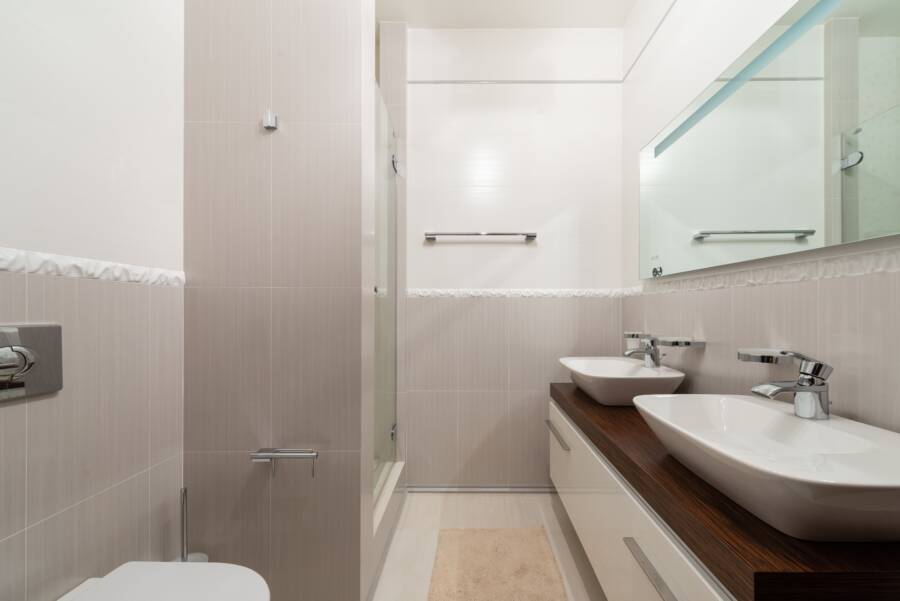
Remove the wet metal item, identify the countertop material, and rinse away loose residue. Then spot-test a material-safe rust cleaner in a hidden area before treating the visible ring.
Rust rings on a bathroom countertop usually come from shaving cans, metal soap dishes, hair-tool stands, rusty fixtures, or containers that hold water underneath. The safest fix depends on the surface, so use gentle cleaning first and stronger treatment only when the material allows it.
What Causes Rust Rings on a Bathroom Countertop?
Rust forms when iron or steel remains wet. Water causes the metal to release iron oxide, which transfers onto the counter as an orange, brown, or dark ring.
Common sources include shaving cream cans, metal soap dishes, razor holders, faucet bases, drain hardware, hair tool stands, screws, and leaky bottles with metal bottoms. A ring may also appear beneath a container that looks clean but traps moisture against a corroding base.
A surface rust mark sits on top of the finish and often responds to careful cleaning. On porous stone, however, iron oxide can enter the material. Acid exposure can also etch the finish, leaving a dull patch that looks similar to a stain.
How to Remove Rust Rings on a Bathroom Countertop
Follow these steps before reaching for an abrasive pad:
Remove the metal item and inspect it for corrosion or leaks.
Wipe the area with warm water and mild dish soap.
Rinse away soap and loose dirt, then dry the counter.
Apply a rust remover approved for the surface.
Leave it on only for the contact time printed on the label.
Wipe gently with a soft cloth or non-scratch nylon sponge.
Rinse thoroughly and dry with a clean towel.
Start With Gentle Cleaning and a Spot Test
Warm water and dish soap can remove grime around the ring, but they usually won’t dissolve true rust. Before using any cleaner, apply a small amount to an inconspicuous spot, such as the rear edge of the counter.
Wait through the product’s stated test period, then check for discoloration, dullness, roughness, or a change in texture. If the surface changes, stop using that product.
Use the Right Contact Time Without Scrubbing Hard
Rust removers need time to break down iron oxide. Scrubbing harder won’t replace that chemical action, and it can scratch laminate, acrylic, quartz, or polished stone.
Use a microfiber cloth or non-scratch nylon pad. Rinse after every attempt, and repeat a short treatment rather than extending the soak or applying more pressure.
Choose a Rust Stain Remover for Your Countertop Material
The countertop material determines which cleaners are safe. Read the manufacturer’s care instructions if you don’t know whether the surface is laminate, solid surface, quartz, tile, or stone.
Safe Options for Laminate, Ceramic, and Solid-Surface Counters
Laminate, ceramic tile, porcelain tile, and many solid-surface counters generally tolerate mild acidic rust cleaners better than natural stone. Still, grout, printed laminate finishes, and older surfaces can react, so use a spot test and the shortest labeled contact time.
Avoid steel wool, razor blades, pumice, and gritty powders. These tools can leave scratches that collect dirt and make the ring more visible.
Extra Care for Quartz, Granite, Marble, and Other Stone
Marble, limestone, travertine, and some cement-based surfaces can etch when exposed to vinegar, lemon juice, citric acid, or acidic rust removers. Etching creates a pale, dull mark that cleaning cannot remove.
Quartz and granite also require care because finishes, sealers, and manufacturer instructions vary. Choose a stone-safe rust remover approved for the exact material, and contact a stone-care professional for a deep stain.
Natural Ways to Treat a Light Rust Stain
Home methods are suitable only for a small, fresh surface stain. Use diluted white vinegar only when the countertop manufacturer permits it, and never apply it to marble, limestone, travertine, or another acid-sensitive surface.
You can place a small amount of diluted vinegar on a cloth, wipe the ring briefly, then rinse and dry the counter. A baking soda paste made with water can lift residue through gentle wiping, but it won’t dissolve heavy rust.
When Vinegar or Citric Acid May Help
Mild acids can loosen surface rust because they react with iron oxide. However, the same reaction can damage mineral-based counters and leave permanent etching.
Don’t leave an acidic solution on the surface, flood the seam around a sink, or use it without confirming the material. Never mix vinegar with bleach or another cleaner.
Why Baking Soda Doesn’t Dissolve Heavy Rust
Baking soda is a mild cleaner and deodorizer, not a powerful rust remover. It may help lift loose residue when used as a soft paste, but old or dark rings usually need a material-safe commercial product or professional repair.
When to Use a Commercial Rust Remover
A labeled rust remover is the better choice for dark, old, or repeated stains. Check that the product is approved for your countertop and read the active ingredients, which may include acids, oxalic acid, or other rust-dissolving compounds.
Wear gloves, ventilate the bathroom, follow the label, and keep children and pets away. Use one product at a time, and rinse the counter completely before trying another method.
Avoid Dangerous Cleaner Combinations
Never mix rust remover with bleach, ammonia, drain cleaner, or other household chemicals. These combinations can create dangerous fumes or harmful reactions.
If the first product fails, rinse the surface well and let it dry before considering another approved cleaner. Stronger chemicals are not automatically safer or more effective.
What to Do if the Rust Ring Will Not Come Off
A remaining dark mark may be rust trapped in porous stone, acid etching, a scratch, or damage to the original finish. A ring that changes when wet, leaves a rough texture, or remains after thorough rinsing may need polishing, sealing, resurfacing, or replacement.
Signs the Countertop Finish Is Damaged
Watch for a dull patch, rough surface, pale halo, dark stain that remains after rinsing, or a mark that looks different when the counter is wet. These signs point to surface damage rather than removable residue.
A professional stone refinisher or countertop technician can assess the finish. If water keeps collecting around a faucet base or drain, call a plumber to address the leak.
Check the Metal Source Before Repeating Treatment
Inspect faucet bases, drain hardware, screws, razor holders, and metal cans for active corrosion. Replace rusty accessories and repair leaks before cleaning the mark again.
Removing the source matters because fresh moisture will create another ring, even after a successful treatment.
Mistakes That Can Make Rust Rings Worse
Steel wool, abrasive powders, pumice, razor blades, undiluted acids, and long chemical soaks can damage a bathroom counter. Bleach may lighten the color of some stains, but it doesn’t dissolve rust and can harm certain finishes.
Why Hard Scrubbing and Abrasive Tools Fail
Rust is a chemical stain, so force alone often creates scratches while leaving the discoloration behind. Use a soft microfiber cloth or non-scratch nylon pad and make several gentle attempts instead of one aggressive session.
Why Acid Cleaners Are Risky on Natural Stone
Acid reacts with minerals in marble, limestone, and similar stone. The result is etching, which appears as a dull mark and requires refinishing rather than more cleaning.
How to Prevent Rust Rings From Returning
Keep shaving cans, soap dishes, and hair-tool holders on a plastic, silicone, or ceramic tray. A tray with drainage holes or raised feet prevents water from staying trapped beneath metal containers.
Wipe standing water each day and dry the counter after cleaning. Clean and dry the tray as well, because moisture beneath a protector can still stain the surface.
Loose faucet bases, corroded screws, and small plumbing leaks can create repeated marks. Replace damaged parts, dry around fixtures, and have a plumber inspect any faucet that continues to collect water at its base. Sealing porous stone may reduce staining, but it won’t stop corroding hardware or replace regular drying.
Conclusion
Remove the rusty item, identify the countertop material, and spot-test an approved cleaner. Treat the ring gently, follow the label’s contact time, rinse completely, and dry the surface.
Persistent stains, dull patches, and damaged stone finishes need professional help rather than stronger household chemicals. Once the moisture or corrosion source is fixed, new rust rings on a bathroom countertop become much less likely.