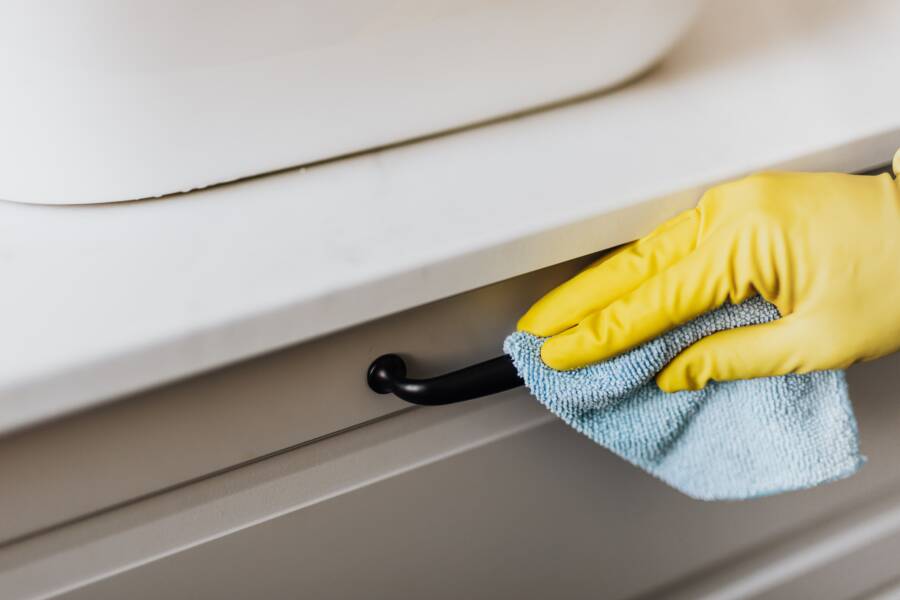
Blot or rinse fresh toner immediately, then clean the area with dish soap and a soft sponge. That is the safest first step for most sinks.
The best way to remove toner stains from a sink depends on the material and how long the color has remained. Use different care for porcelain, ceramic, stainless steel, acrylic, fiberglass, cultured marble, and natural stone. Start with the mildest method, then increase cleaning strength only when the surface allows it.
How to Remove Toner Stains From a Sink
For most nonporous sinks, gather dish soap, warm water, a microfiber cloth, and a soft sponge. Keep baking soda available for a mark that remains after regular washing. Before applying any cleaner, test it on a hidden area and check the sink manufacturer’s care instructions.
Blot fresh toner with a paper towel instead of wiping it across the basin.
Rinse the mark with cool or lukewarm water.
Add a small amount of dish soap to a damp soft sponge.
Leave the soapy film on the stain for two to five minutes.
Rub gently, rinse the basin fully, and dry it with a microfiber cloth.
Work around the drain and faucet base with the edge of the sponge. Drying the surface helps you see whether a colored film remains. If the mark is still visible, identify the sink material before trying baking soda or another stain remover.
Check the Sink Material Before Choosing a Cleaner
Porcelain and ceramic sinks usually have a hard, glossy coating over a ceramic base. Stainless steel has a visible metal finish, often with fine lines that run in one direction. Acrylic and fiberglass feel lighter and may flex slightly, while cultured marble often has a smooth molded surface with an integrated basin.
Stone-based sinks require extra caution because acids and abrasives can dull or etch the finish. A cleaner that works on white porcelain may scratch acrylic or damage polished stone. Follow the sink manufacturer’s instructions whenever they’re available, and read the cleaner label before use.
Safe Cleaning Choices for Porcelain and Ceramic Sinks
Start with mild dish soap and warm water. If the toner leaves a shadow, mix baking soda with enough water to form a thick paste. Spread it over the mark, wait five to ten minutes, and rub lightly with a damp microfiber cloth or soft nylon brush.
A nonabrasive sponge can clean the basin and the area around the drain without leaving metal marks. Rinse all residue away after treatment. If you use chlorine bleach under the manufacturer’s instructions, never combine it with ammonia, vinegar, alcohol, or another cleaner.
Gentle Methods for Stainless Steel, Acrylic, and Stone
For stainless steel, wipe in the direction of the existing grain. Dish soap and a soft cloth are usually enough, while steel wool and harsh scouring powders can leave scratches that collect future stains.
Acrylic and fiberglass need a softer approach. Use mild soap, water, and a soft cloth, because abrasive powders and rough sponges can permanently scratch the finish. On cultured marble or natural stone, avoid vinegar, lemon juice, and other acidic products. Choose a cleaner labeled safe for that exact surface.
Start With Fresh Toner Before It Has Time to Set
Quick action makes it easier to remove toner stains from a sink. Use dry paper towels to lift loose color, then rinse with cool or lukewarm water. Avoid rubbing at first, because friction can spread dye into a larger film.
Next, apply dish soap to a damp cloth or sponge. Wipe from the outside of the mark toward the center, then rinse the area completely. Cool water is a safer starting point than hot water, especially when the toner contains oils that may smear or when heat could help the product spread.
If the color reaches caulk, grout, or a chipped section, stop wiping it deeper into the damaged area. These porous spots can hold dye after the surrounding sink looks clean.
Use a Baking Soda Paste for Stubborn Toner Marks
Baking soda is a mild abrasive, so use it only on surfaces that can tolerate light polishing. Mix a small amount of water into two or three tablespoons of baking soda until it forms a thick paste. Apply a thin layer to the stain and let it sit for five to ten minutes.
Dampen a microfiber cloth and rub the paste with light pressure. Rinse until no powder remains, then dry the surface and inspect it under good lighting. Avoid this method on acrylic, fiberglass, delicate glossy finishes, and easily scratched surfaces unless the manufacturer approves it.
Repeated hard scrubbing can turn a removable stain into a dull patch. One gentle treatment is safer than several aggressive attempts.
When Stronger Stain Removers Are Safe to Try
Use stronger products only after dish soap and an approved mild method fail. A small amount of 3% hydrogen peroxide may help on some white porcelain or ceramic sinks, but test it in a hidden spot first. Apply it briefly with a cloth, rinse the area well, and stop if the finish changes.
Rubbing alcohol may remove some dye residue, but use it only when the sink care instructions allow it. Keep acetone, nail polish remover, paint thinner, and undiluted bleach away from the surface unless the manufacturer specifically approves them.
Wear gloves and ventilate the bathroom whenever you use a chemical cleaner. Never mix cleaning products, even if each product seems safe on its own. Rinse the sink thoroughly between treatments so one chemical doesn’t remain before another is applied.
Avoid These Mistakes That Can Damage the Sink
A toner stain usually needs controlled cleaning, not greater force. Avoid these common errors:
Scrubbing with steel wool or a rough scouring pad can scratch metal, acrylic, and coated surfaces.
A razor or metal scraper can chip porcelain glaze and cut acrylic.
Leaving peroxide, bleach, alcohol, or another chemical on too long can discolor the finish.
Boiling water can stress some sinks and may spread oily toner across the basin.
Mixing bleach with vinegar, ammonia, alcohol, or other cleaners can create dangerous fumes.
Scratches and dull patches trap residue during future hair-color treatments. Polished stone can also lose its smooth appearance after abrasive or acidic cleaning. Rinse the surface fully after every treatment, then dry it rather than allowing cleaner or colored water to sit.
Prevent Toner Stains During Future Hair Color Treatments
Before applying hair toner, place a washable basin barrier over the sink when the sink and barrier can drain safely. Keep paper towels within reach, wear gloves, and wipe drips as soon as they land. Rinse the basin immediately after the color process ends instead of waiting until the toner dries.
Check the product label for cleanup instructions, since formulas vary. Keep toner away from porous grout, caulk, unsealed edges, and chipped areas. A small spill is easier to remove while it remains wet and has not settled into those surfaces.
If a stain remains after several gentle attempts, stop scrubbing. The color may have chemically discolored the finish or entered a scratch. A professional refinishing service may be needed, especially for acrylic, cultured marble, or polished stone.
Clean Toner Stains Without Damaging the Finish
Dish soap, prompt wiping, and a soft sponge are the safest first steps for most toner spills. Baking soda can help on suitable porcelain or ceramic, while peroxide or rubbing alcohol requires a material check and a spot test.
Never mix cleaners, and stop immediately if the surface begins to dull, scratch, or change color. Careful cleaning removes the mark without creating a larger repair problem.