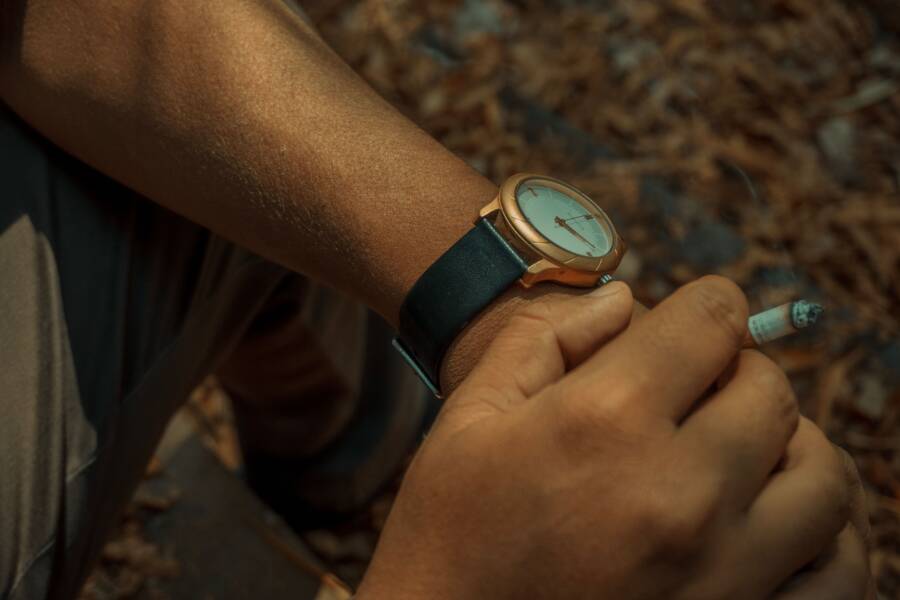
Wipe fresh sweat from the strap with a barely damp, soft cloth, then let it air-dry away from heat. For older marks, remove loose salt, use minimal moisture, and apply leather conditioner only after the strap is fully dry.
If you’re trying to remove sweat marks from a leather watch strap, avoid soaking, harsh soap, alcohol, and household cleaners. These can strip oils, damage the finish, or cause permanent color changes. Start by identifying the leather, then clean the least aggressive way possible.
How to Remove Sweat Marks From a Leather Watch Strap
Remove the strap from the watch if its design allows it. Brush away dry salt, wipe both sides with a slightly damp microfiber cloth, and leave the strap to dry naturally. Use very little water, especially around the holes, stitching, and edges.
Start with a dry wipe for fresh sweat and salt
Use a clean, dry microfiber cloth to lift loose salt crystals and surface residue. Wipe the top, underside, keeper loops, and buckle area with light pressure. Don’t scrub, because friction can push salt into the grain or wear away the finish.
Use a small amount of water for dried marks
Dampen a cloth with clean water, then wring it until it feels almost dry. Wipe the mark in short, gentle passes, testing an unseen area first. Replace the cloth when it picks up dirt, and wait until the strap is fully dry before wearing it again.
Check the Leather Finish Before You Clean the Strap
Leather doesn’t react to moisture in the same way. Smooth finished leather has a sealed surface and usually tolerates the damp-cloth method, while aniline leather absorbs moisture more easily. Suede and nubuck have a brushed surface that needs different care.
Tell smooth leather from suede and nubuck
Smooth leather feels even and looks polished or lightly textured. Suede and nubuck feel soft, with visible nap that changes direction when you brush it. Don’t use ordinary leather conditioner or water-heavy cleaning on either surface unless the maker’s care instructions approve it.
Coated leather may have a glossy, colored, or plastic-like surface. If the finish is peeling, cracked, or lifting, cleaning won’t restore it. A watchmaker, leather repair specialist, or the strap manufacturer can recommend repair or replacement.
Look for damage that cleaning cannot fix
Sweat marks usually appear as white salt lines, dark oily patches, or general discoloration near the wrist. Flaking finish, cracked leather, dye transfer, and spreading stains point to a larger problem. A strong musty smell or green, white, or black growth requires professional attention, not more scrubbing.
Gather the Safest Supplies for Cleaning a Leather Watch Strap
Prepare two microfiber cloths, clean water, and a soft toothbrush for the stitching and holes. Add a pH-balanced leather cleaner and conditioner made for the strap’s specific finish. Keep the watch case away from all moisture during the process.
Choose a leather cleaner that matches the strap
Follow the care label from the watch or strap maker before using any product. A cleaner labeled for shoes, furniture, or synthetic leather isn’t automatically safe for a watch strap. Choose a product intended for leather, and use only the amount stated on its label.
Paper towels can leave fibers behind, while disinfecting wipes, dish soap, baking soda, vinegar, and alcohol may strip oils or alter the color. Household cleaners also can leave residues that make the strap sticky. Plain water is often safer for a fresh mark.
Patch-test every product first
Apply a tiny amount of cleaner to the underside near a lug or edge. Let the area dry completely, then check for darkening, bleeding, stickiness, stiffness, or a changed texture. If the leather reacts badly, stop and use a professional service.
Clean the Strap Step by Step Without Soaking It
Work on a clean, dry surface and keep the strap away from the sink. Remove the watch or strap if possible, brush off dry residue, and clean the buckle separately with a damp cloth. Then wipe the leather, paying extra attention to the underside and the parts that touch your wrist.
Clean sweat buildup from the underside and holes
Use a barely damp microfiber cloth on the underside, then use a soft toothbrush around holes and stitching. Move lightly so the bristles lift residue without roughing up the leather. Keep water away from the watch case, and never put a leather strap in a sink or washing machine.
Remove cleaner residue before drying
If you used leather cleaner, follow it with a second cloth lightly dampened with clean water. This picks up leftover product before it dries on the surface. Blot with a dry cloth, and set the strap aside when it feels clean rather than wet or slick.
Treat Stubborn Sweat Stains Without Stripping the Leather
Let the strap dry before deciding whether the mark remains. If necessary, repeat the gentle cleaning method once, using the same small amount of moisture. Sweat contains salt, oils, and acids, so a deep stain may have changed the dye or finish permanently.
Handle white salt lines and oily dark patches
White, crusty lines often respond to careful surface wiping because the residue sits near the top of the leather. Dark oily patches may need a small amount of suitable leather cleaner. Don’t repeatedly wet the entire strap to create an even color, since excess moisture can leave water rings.
A clean cloth should pick up residue without removing the strap’s dye. If color transfers during wiping, stop immediately. Continued cleaning can create a pale patch that looks worse than the original mark.
Know when home cleaning should stop
Stop if the leather becomes tacky, the finish starts peeling, or the stain remains after two gentle attempts. Valuable, handmade, exotic, or heavily damaged straps deserve assessment by a leather repair specialist. Replacement is often safer when the material has lost its structure.
Dry and Condition the Strap After Cleaning
Blot away surface moisture and leave the strap flat or loosely shaped in a cool, ventilated room. Keep it away from direct sunlight, hair dryers, radiators, and other heat sources. Heat can shrink leather, harden its fibers, and cause cracking.
Dry leather slowly at room temperature
A lightly damp strap may need several hours to dry. Leave one that became noticeably damp overnight, and don’t reinstall or wear it while it feels cool, wet, or unusually soft. The leather should feel close to its normal firmness before it returns to your wrist.
Condition only when the leather needs it
Once smooth finished leather is fully dry, apply a very thin layer of suitable conditioner. Buff away excess product with a clean cloth, because too much conditioner can soften the strap, clog pores, and attract dirt. Don’t condition suede or nubuck unless the manufacturer specifically approves it.
Prevent New Sweat Marks and Extend the Strap’s Life
Wipe the underside after workouts and hot days, then leave the watch in an open, dry place. Rotate between two straps when possible, so each one has time to air out. A quick wipe after a sweaty wear is safer than repeated deep cleaning.
Build a simple after-wear cleaning routine
After each wear, wipe the underside with a dry microfiber cloth. For regular use, clean it with a gentle damp cloth about once a month, adjusting that schedule for heavy sweating and the maker’s instructions. Keep sunscreen, lotions, and water exposure as limited as possible.
Consider a different strap for heat and water
Leather is a poor choice for swimming, intense workouts, humid outdoor work, and frequent water exposure. Rubber, silicone, fabric, or stainless steel can suit those conditions better, provided the strap fits the watch and your wrist. Changing straps for the activity protects the leather you wear in daily settings.
Conclusion
The safest way to remove sweat marks from a leather watch strap is to remove dry residue first, use minimal moisture, and let the leather dry slowly. Clean the underside carefully, patch-test every product, and condition smooth leather only when it needs extra moisture.
Prevention protects leather better than aggressive stain removal. If discoloration remains after two gentle attempts, or the strap is cracked, peeling, tacky, or moldy, replace it or seek professional repair instead of scrubbing harder.