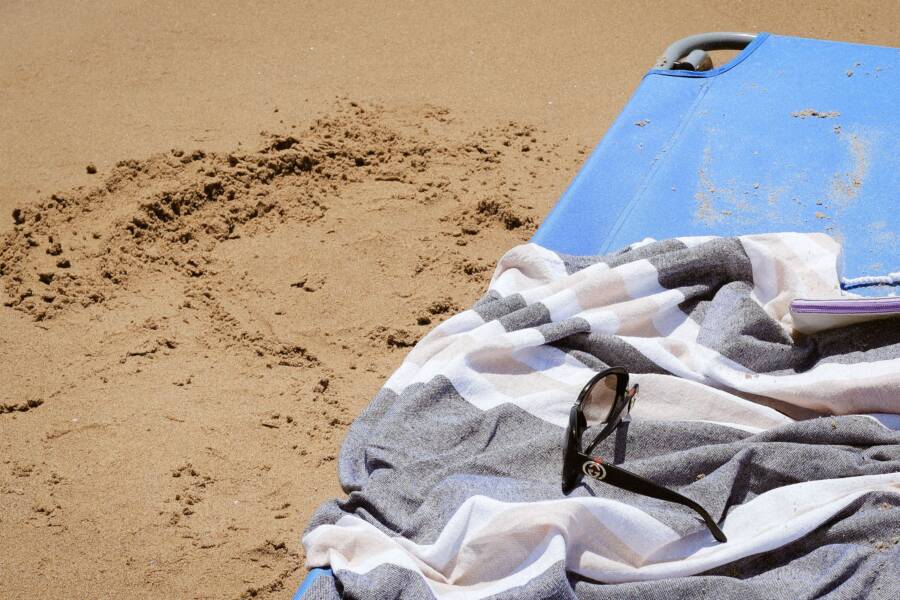
Treat the sunscreen mark before washing, remove excess lotion, then use liquid laundry detergent or a small amount of grease-cutting dish soap to break down the oils. When you need to know how to remove sunscreen stains from a beach towel, acting before heat reaches the fabric gives you the best result.
Sunscreen can leave greasy spots, chalky white residue, or yellow and orange discoloration. The method below works for cotton, microfiber, white towels, and brightly colored towels when you follow the care label.
How to Remove Sunscreen Stains From a Beach Towel
Start by lifting away any thick sunscreen with a spoon, dull knife, or plastic card. Don’t rub the lotion into the loops of the towel, because friction pushes oils farther into the fibers. Next, rinse the back of the stained area under cool running water for 30 to 60 seconds.
Apply liquid laundry detergent directly to the mark. For a slick, oily spot, use two or three drops of grease-cutting dish soap instead. Work the cleaner in with your fingertips or a soft brush, wait 10 to 15 minutes, then wash the towel according to its care label.
The quick treatment for a fresh sunscreen mark
At the beach, lift excess sunscreen before it has time to soak through the towel. A spoon, hotel key card, or clean plastic lid can remove lotion without grinding it into the fabric. Then blot the area with a clean, dry towel or paper towel.
Rinse with cool water when a shower or sink is available. Avoid hot water, which can help oily residue cling to the towel. Don’t cover the spot with more sunscreen, sand, or a damp swimsuit, since that makes the stain harder to identify and treat later.
How to wash the towel after pretreating it
Wash the treated towel in the warmest water the care label allows. Use the normal amount of laundry detergent, since too much detergent can leave residue that traps oils and makes towels feel stiff. Put it in a small load with similar colors, or wash it separately if the stain is large.
Check the towel after the wash cycle while it is still damp. If you can still see or feel the sunscreen mark, repeat the pretreatment before drying. Air-drying is safest until the stain is gone because dryer heat can set discoloration into the fabric.
Why Sunscreen Leaves Greasy, White, and Yellow Towel Stains
Many sunscreen formulas contain oils, waxes, emollients, and film-forming ingredients that help the product stay on skin. Those materials can cling to cotton loops and synthetic fibers, leaving a dark or greasy patch. Liquid detergent and dish soap work well because they target oily residue.
Mineral sunscreens often contain zinc oxide or titanium dioxide. These ingredients can leave white streaks or a pale, powdery cast, especially on dark navy, black, or red towels. Rinsing and gentle brushing usually remove fresh mineral residue before it becomes packed into the fibers.
Older yellow or orange stains are different. Sunscreen can combine with sweat, body oils, hard-water minerals, and heat, which changes the color of the mark. These stains often need repeat detergent treatments or a label-approved oxygen bleach soak.
A towel can look clean after washing while still holding oily sunscreen residue. Feel the area before drying, because a slick or stiff patch needs another treatment.
Gather Supplies Before Treating the Stain
Set out your supplies before you start so the pretreatment does not dry on the towel. You need products that remove oils without fading the fabric or weakening the fibers. Check the towel’s care tag first, especially if it contains microfiber, rayon, decorative trim, or a printed design.
Keep these items nearby:
Liquid laundry detergent for everyday sunscreen marks.
Grease-cutting dish soap for concentrated oily residue.
A soft toothbrush or laundry brush for working cleaner into the fibers.
Cool or lukewarm water and a clean cloth for rinsing and blotting.
Oxygen bleach for washable white or colorfast towels with stubborn discoloration.
Chlorine bleach should not be your first choice. It can fade colored towels, damage some blends, and weaken cotton fibers over repeated use. Never mix bleach with ammonia, vinegar, dish soap, or any other household cleaner.
Choose a cleaner that will not damage the towel
Use liquid laundry detergent for most stains because it is designed for washable fabrics. Choose dish soap only as a spot treatment when sunscreen feels oily or leaves a dark ring. Use a small amount, then rinse it well before machine washing because dish soap can create excessive suds.
Oxygen bleach can help with white towels and colorfast colored towels that have yellowed. Test it on a hidden corner first, such as the edge of a hem. Don’t mix oxygen bleach with detergent, vinegar, chlorine bleach, or another stain remover unless the product label clearly permits it.
Treat Dried or Set-In Sunscreen Marks
A dried stain needs more contact time than a fresh one. Lay the towel flat, apply liquid detergent or a few drops of dish soap to the dry mark, and gently work it into the fibers with a soft toothbrush. Leave the treatment in place for 15 to 30 minutes.
Rinse from the back with cool or lukewarm water, then inspect the fabric. If oil or discoloration remains, apply fresh detergent and repeat the process once before washing. This slower approach matters when you are figuring out how to remove sunscreen stains from a beach towel that has sat in a beach bag overnight.
Wash the towel after pretreating it, then inspect it before any dryer cycle. A stain that has already been dried may need two or three treatment cycles. Avoid aggressive scrubbing, since rough brushing can flatten cotton loops and make microfiber look fuzzy.
Use an oxygen bleach soak for washable towels
For stubborn stains, dissolve oxygen bleach in water following the product label’s directions. Soak only a towel labeled washable and colorfast, and use the stated water temperature and maximum soak time. Test a hidden section first, even if the towel is white.
After soaking, rinse the towel thoroughly and launder it with regular detergent. Do not add chlorine bleach, vinegar, ammonia, or dish soap to the soaking water. If the towel’s color changes during the test, skip the soak and continue with detergent treatments instead.
Get Yellow or Orange Sunscreen Stains Out of White and Colored Towels
Yellow and orange marks often appear after the towel has been used repeatedly in sun and heat. Sweat, body oil, mineral-heavy water, and sunscreen can leave discoloration that survives a normal wash cycle. Repeated washing and drying without pretreatment makes those marks more stubborn.
White towels can usually handle a color-safe oxygen bleach treatment if the care label allows it. Pretreat the discolored area with liquid detergent first, then use the oxygen bleach soak only if the color remains. Rinse well and wash the towel after soaking.
Colored towels require more caution because orange stains can tempt you to use strong bleach. Test oxygen bleach on an inside hem, then use the shortest label-directed soak time if the test area stays unchanged. For bright towels, repeated detergent treatments are often safer than one harsh treatment.
Avoid These Mistakes When Cleaning a Beach Towel
Putting a stained towel straight into the dryer is the most common mistake. Dryer heat can make sunscreen oils and discoloration harder to lift, especially after a yellow or orange mark appears. Inspect the towel in bright light before drying it.
Hot water can also make an oily stain harder to remove before pretreatment. Begin with cool water, rinse from the reverse side, and use detergent directly on the spot. Once the oil is gone, the care label should guide your wash temperature.
Avoid these other problems:
Don’t rub the stain hard with a rough brush, since it can spread oil and damage the towel.
Don’t use extra detergent in the hope of lifting more sunscreen, because excess detergent may not rinse out.
Don’t use chlorine bleach without checking the fabric label and testing a hidden area.
Never mix bleach with ammonia, vinegar, or other cleaners because dangerous fumes can form.
If a towel has severe fading, brittle fibers, or a stain that remains after several careful treatments, replacement may be more practical. A commercial laundry service can also help with large batches of heavily stained towels.
Prevent Sunscreen Stains on Your Beach Towel Next Time
Let sunscreen absorb into your skin before sitting or lying on a towel. Most sunscreen labels include directions for application before sun exposure, so follow the product instructions rather than applying it after you settle onto the fabric. Use a separate hand towel when applying lotion to your arms, legs, and back.
Place a clean cover-up, shirt, or extra towel between your skin and the beach towel when you are resting. After a beach or pool day, shake out sand, rinse away salt or chlorine, and wash the towel soon. Salt and sand can hold oils against the fibers if the towel stays crumpled in a bag.
Skip fabric softener when possible. It can coat towel fibers and reduce absorbency over time. Finally, dry beach towels completely before folding or storing them to prevent odor and mildew.
Keep Heat Away Until the Stain Is Gone
Remove excess sunscreen, pretreat the oily residue, and wash the towel according to its care label. Check the fabric before adding dryer heat, since fresh stains are far easier to remove than set-in marks.
Dried discoloration can still improve with repeated detergent treatment or a careful oxygen bleach soak. Patience before heat gives your beach towel the best chance of looking clean again.