To remove rust stains from white clothes, treat the mark promptly with a fabric-safe rust remover or a carefully tested mild acid. Rinse with cool water, then keep the garment away from heat until the stain is gone.
Rust needs different treatment from ordinary dirt. Chlorine bleach can react with iron and make orange or yellow marks darker. Fresh stains usually lift more easily, while old or heat-set stains may need repeated treatment or professional cleaning.
How to Remove Rust Stains From White Clothes Safely
First, check the care label and test your chosen treatment on an inside seam. Place a clean white towel beneath the stain, so the solution doesn’t transfer to another part of the garment.
Apply a fabric rust remover according to its label, or dab lemon juice over a small mark on sturdy white cotton.
Add a light sprinkle of salt if you’re using lemon juice.
Let the treatment sit briefly while you watch the fabric.
Rinse the area thoroughly with cool water.
Repeat once if the stain is fading but still visible.
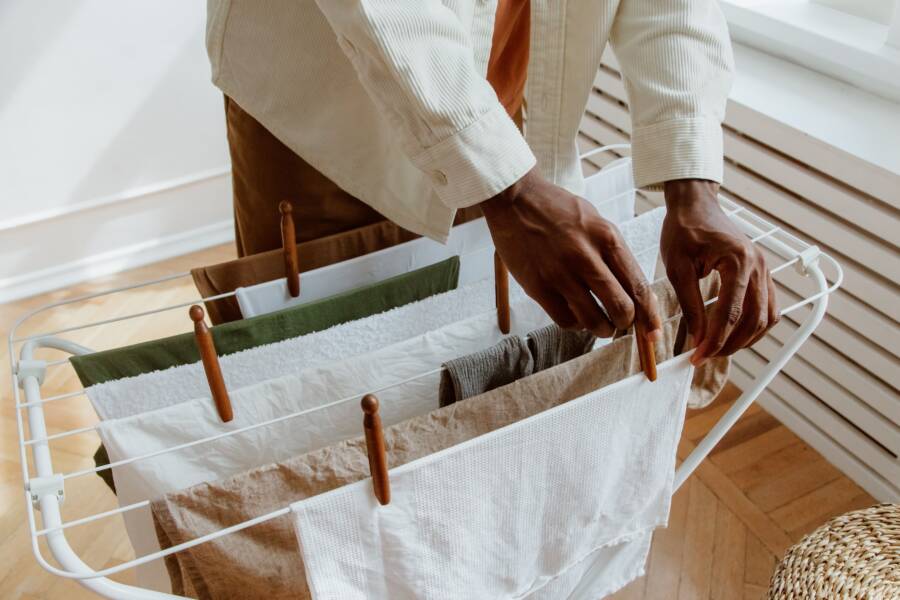
Wash the garment only after the rust has lightened, then air-dry it.
What to Gather Before Treating the Stain
Keep clean white towels, cool water, lemon juice, salt, and a soft cloth nearby. A commercial laundry rust remover is usually more effective for large or stubborn marks. Wear gloves when handling a commercial product, and follow all label warnings.
Never skip the hidden-area test. Apply a small amount to an inside seam, wait the recommended time, and check for color change, thinning, or surface damage before treating the visible stain.
How Long to Leave the Treatment on the Fabric
Contact time depends on the product and the fabric, so follow the instructions on a commercial remover. For lemon juice, start with a brief test of about five minutes in natural light. Don’t leave the solution unattended for hours.
Rinse immediately if the fabric becomes discolored, weak, rough, or damaged. A short treatment repeated carefully is safer than one long application.
Choose the Right Rust Stain Remover for Your Fabric
A fabric rust remover is the better option for old, widespread, or stubborn stains. Lemon juice can help with a small, fresh mark on sturdy white cotton, but household acids aren’t suitable for every fiber.
Use the care label, fabric type, trim, finish, and stain size to guide your choice. A white garment may still contain colored stitching, elastic, printed details, or a coating that reacts to acid.
Best Approach for Cotton, Linen, and Other Washable Whites
For washable cotton, apply the product only to the stained area, then rinse it completely with cool water. Wash the garment according to its care label after the mark has faded.
Linen needs gentle handling because harsh chemicals and long soaking can weaken its fibers. Use short treatment periods and repeat light applications instead of applying a strong solution once.
Extra Care for Delicates, Wool, Silk, and Blends
Don’t use lemon juice, salt, or a strong rust remover on wool, silk, rayon, lace, or delicate finishes unless the product label clearly allows it. Rubbing can spread the stain and damage fragile fibers.
Take valuable, lined, structured, antique, or dry-clean-only clothing to a professional cleaner. Home treatment can leave a permanent ring or affect the garment’s shape.
How to Remove Fresh and Set-In Rust Marks
Treat a fresh surface stain as soon as you notice it. Place a towel behind the mark, apply a small amount of fabric-safe remover, and rinse after the label’s short contact time.
Old stains may need two careful treatments, with complete rinsing between applications. Never iron the area or put the garment in a dryer until you’ve confirmed that the rust has disappeared. Heat can set the remaining color and make later treatment harder.
Treat Rust From Metal Buttons, Zippers, and Hangers
Rusty buttons, zippers, hooks, hangers, and laundry hardware can leave rings or transfer marks on white clothing. Remove the rust source when possible, or cover it before treating the fabric.
Work only on the affected area and keep a towel behind it. Dry metal parts before storage, and replace corroded hangers, hooks, and other hardware that touches clothing.
Handle Rust Stains That Survived the Washer or Dryer
Washing alone may not dissolve rust, so don’t repeat a normal cycle without pretreating the mark. If the garment went through a dryer, a fabric-safe remover may still work, but test a hidden area first.
Stop after two careful treatments if the stain remains. A professional cleaner can assess both the rust and any damage caused by heat.
Why Chlorine Bleach Can Make Rust Stains Worse
Chlorine bleach can react with iron and intensify orange or yellow rust marks. Avoid bleach-based whitening products until you’ve treated the rust and rinsed the area thoroughly.
Rust removal and whitening are separate jobs. Oxygen bleach may help brighten fabric later, but use it only after the rust is gone and the care label permits it.
Never mix a rust remover with chlorine bleach, ammonia, or another cleaning product. Chemical reactions can produce hazardous fumes or damage the fabric.
How to Rinse, Wash, and Dry White Clothes After Treatment
Rinse the treated area with cool water until no product remains. Then wash the garment according to its care label, using your usual detergent rather than applying detergent as the first rust treatment.
Inspect the stain while the garment is still wet. If any orange or yellow color remains, air-dry the item and treat it again instead of using a dryer. Return the garment to storage only after it’s completely clean and dry.
Mistakes That Can Damage White Clothing During Rust Removal
Avoid these common errors:
Chlorine bleach can darken iron stains instead of removing them.
Hard scrubbing can spread rust and roughen the fibers.
Hot water may set leftover color before treatment works.
Long acid exposure can weaken linen and damage finishes.
Skipping a patch test can cause hidden discoloration.
Mixing products can create dangerous fumes or chemical damage.
Drying before inspection can make a remaining stain harder to lift.
Use one treatment at a time and rinse thoroughly before trying another. Keep the product away from metal surfaces that could transfer more rust.
When to Stop Treating the Stain and Call a Professional
Professional cleaning is the safest choice for silk, wool, dry-clean-only garments, embroidered clothing, antique pieces, and expensive items. Get help sooner if the fabric looks thin, brittle, faded, or damaged around the stain.
A cleaner should also handle widespread staining, lined garments, structured clothing, and pieces with special finishes or colored trim. Tell the cleaner what caused the mark and list every product you’ve already used.
Conclusion
The safest sequence is simple: test a fabric-approved rust remover or mild acid, treat the stain briefly, rinse with cool water, wash according to the care label, and air-dry until the mark is gone. Keep chlorine bleach and heat away from rust-stained clothing during the process.
Prompt treatment gives fresh stains the best chance of removal. A hidden-area test protects the garment before you commit to treating the visible mark.