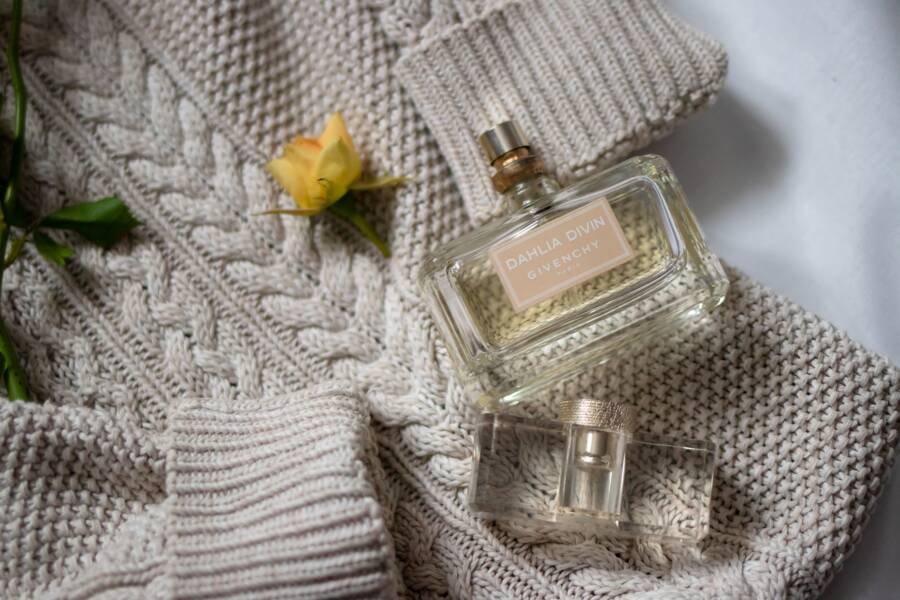
Air the sweater outdoors in shade for several hours, then follow its care label before washing or using an odor absorber. To remove perfume smell from a sweater, use the gentlest method that matches the fiber and avoid adding another fragrance to cover it.
Perfume clings to knit fibers, especially around collars, cuffs, and shoulders. Wool, cashmere, cotton, synthetic blends, and dry-clean-only sweaters need different care, so the label should guide every step.
How to Remove Perfume Smell From a Sweater Safely
Start by separating the sweater from other laundry. Place it on a wide hanger or a clean drying rack outdoors in a shaded, well-ventilated spot for four to eight hours. Fresh moving air can reduce a light perfume smell without exposing the garment to water.
If the sweater’s label allows washing, use cool water and a small amount of fragrance-free detergent. Hand-wash fine knits in a clean basin, pressing the water through the fabric instead of rubbing or twisting it. For machine-washable sweaters, turn the garment inside out and select the delicate cycle.
Rinse until the water runs clear and no detergent remains. Then reshape the sweater on a towel or dry it as the label directs. Heat can trap odor, shrink natural fibers, and damage elastane, so skip hot water and the dryer unless the label clearly permits it.
Start with the care label
The care label tells you whether water, dry cleaning, or a gentle machine cycle is safe. A sweater marked “dry clean only” needs a dry method first, not a soak in the sink. When label instructions conflict with general cleaning advice, follow the label.
Check the Fiber Before Treating the Odor
Fiber content affects how perfume oil settles into a sweater. Natural fibers can absorb scent readily, while acrylic and polyester often hold fragrance in their synthetic strands. Read the fiber tag before trying vinegar, baking soda, or any detergent.
Wool and cashmere need minimal handling
Wool and cashmere can shrink, felt, or lose shape after heat, friction, or long soaking. Use cool water only if the label allows washing, and keep the wash brief, usually five to ten minutes. Support the full sweater when lifting it from water because wet knitwear stretches easily.
Avoid scrubbing perfume-heavy areas. Instead, press soapy water gently through the collar or cuffs, then rinse with the same water temperature. Sudden temperature changes can stress wool fibers.
Cotton, acrylic, polyester, and blends
Cotton sweaters usually tolerate washing better, although bright colors can bleed. Acrylic and polyester blends often handle a delicate machine cycle, but they can retain perfume longer than cotton. Check for added wool, silk, rayon, or spandex because blended garments follow the needs of their most sensitive fiber.
Before applying any treatment, test it on an inside seam. Wait until the area dries, then check for fading, stiffness, or a changed texture.
Remove Perfume Smell Without Washing the Sweater
A dry approach works well when the scent is mild or the sweater cannot be washed immediately. Hang it where air can circulate freely, away from direct sun, rain, kitchen smoke, and strong household odors. A covered porch, open window, or room with a fan works better than a closed closet.
Give the sweater 24 to 48 hours when perfume is noticeable but not overwhelming. Turn it once or twice so air reaches both sides. If the smell weakens but remains, repeat the airing period before choosing a stronger method.
Use an odor absorber nearby
Place the sweater in a clean, breathable garment bag or large cotton pillowcase. Set an open container of baking soda, activated charcoal, or unscented odor-absorbing material nearby, without letting it touch the knit. Leave the setup in a dry room for one to two days.
An odor absorber works by treating the air around the sweater. Powder pressed into knitwear can lodge between fibers and create another cleaning problem.
Don’t spray perfume, fabric refresher, essential oils, or deodorizer onto the sweater. These products often combine with the original scent and leave residue on the yarn.
Use Vinegar or Baking Soda With Care
White vinegar can help during a rinse for washable sweaters, but only after a patch test. For a hand-washed garment, add 1/4 cup of plain white vinegar to a basin of cool rinse water. Swish the water lightly, soak the sweater for two to three minutes, then rinse once more with cool clean water.
Never mix vinegar with bleach or add several household cleaners to the same wash. Mixing products can damage fabric, leave residue, or create unsafe fumes. Use fragrance-free detergent first, then try a vinegar rinse only if the label allows water washing and the odor remains.
Keep baking soda out of fine knitwear
Baking soda is useful as a dry odor absorber near a sweater, but it isn’t a good scrub for wool or cashmere. Its fine particles can cling to textured stitches, ribbing, and seams. Rinsing them out may require more agitation than the garment can handle.
Cotton or sturdy synthetic sweaters may tolerate a small amount of baking soda in wash water, but use it only after testing an inconspicuous area. A single gentle treatment is safer than layering detergent, baking soda, vinegar, and scented additives in one session.
Treat Wool, Cashmere, and Dry-Clean-Only Sweaters
For wool or cashmere, begin with shaded outdoor airing and assess the scent after a full day. If it remains faint, use the breathable-bag method with an odor absorber placed beside the garment. Avoid sealing the sweater in plastic, because trapped moisture and odor have nowhere to escape.
When a wool or cashmere label permits hand-washing, use a wool-safe, fragrance-free detergent and cool water. Keep the sweater submerged only long enough to wash it, then press out water without wringing. Lay it flat on a clean towel and reshape the cuffs, hem, and sleeves before drying.
When professional cleaning is the safer choice
Take a dry-clean-only sweater to a professional cleaner if the perfume is strong, the garment is valuable, or it has a stain near the scented area. Tell the cleaner that the main concern is perfume odor, especially if the fragrance came from a spill or direct spray. That detail helps them choose an appropriate process.
Don’t use hot water, direct sunlight, fabric softener, aggressive brushing, or a long soak on fine fibers. Each can change the feel or fit of an expensive knit more permanently than the perfume smell.
Get Rid of Strong or Stubborn Perfume Odors
A strong fragrance may need more than one gentle treatment. Let the sweater dry completely after the first wash or airing period, then smell the collar, underarms, cuffs, inside seams, and lining. Perfume often concentrates where fabric touches skin or where a scarf or coat pressed against it.
If the care label allows it, repeat the same mild wash once after the garment has dried. Don’t increase detergent, water temperature, or soaking time to force a faster result. Extra product can remain in the fibers and make the sweater smell worse.
The odor may return if it came from a scented drawer, closet, scarf, or nearby clothing. Wash heavily fragranced items separately, wipe hard storage surfaces with a mild cleaner, and air the storage space before putting the sweater back. Persistent perfume residue, visible stains, or repeated odor after proper washing calls for professional cleaning.
Mistakes That Can Make the Smell Worse
Scented detergent and fabric softener may mask perfume briefly, but they add more fragrance to the same fibers. Spraying a fabric deodorizer directly on knitwear can leave a ring, stiffen the yarn, or create an unpleasant mixed scent. Stick with fragrance-free products when removing an existing odor.
Hot water and dryer heat can damage sweaters and make oils harder to release. Long soaking can felt wool, while vigorous rubbing can stretch stitches and create fuzzy patches. Dry the garment fully before storing it, because damp fibers can develop a musty odor.
Keep perfume off sweaters in the first place
Apply perfume to clean skin before getting dressed, then wait until it feels dry. Avoid spraying the neck of a sweater, scarf, coat, or cardigan directly. Fragrance oils transfer easily from skin and hair, so keeping the spray away from knitwear reduces buildup.
Store only clean, fully dry sweaters in drawers or closets with airflow. Keep candles, room sprays, scented sachets, and heavily fragranced laundry products away from knitwear storage. Wash sweaters only as often as the care label permits, since over-washing can wear out fibers.
A Gentle Method Protects the Sweater
Air the sweater first, identify its fiber, and use the mildest care-label-approved treatment. For washable garments, cool water and fragrance-free detergent usually offer the safest next step. Vinegar rinses and nearby odor absorbers can help when used with restraint.
Fine wool, cashmere, and dry-clean-only pieces deserve extra caution. Cool water, careful drying, and fragrance-free products protect the sweater better than heat or a second layer of scent.