Gently lift the crayon with a plastic scraper, then wipe the remaining wax with a damp microfiber cloth and one or two drops of mild dish soap. To remove crayon marks on a laminate floor, work with light pressure, little moisture, and a clean, dry towel.
Laminate can resist ordinary stains, but its printed surface and protective finish may scratch or lose their sheen. Excess water can also enter plank seams. Follow these steps for fresh and stubborn marks, and avoid cleaning methods that can damage the floor.
How to remove crayon marks on a laminate floor safely
Start with a dry surface. Hold a plastic scraper or old gift card almost flat against the floor, then push under the raised wax with short, gentle strokes. Keep the tool nearly parallel to the plank so its edge doesn’t dig into the finish.
Next, dampen a microfiber cloth with warm water and add one or two drops of mild dish soap. Wipe the mark lightly, turning the cloth as wax transfers to it. Use a second cloth dampened with clean water to remove soap residue, then dry the area immediately.
What to gather before cleaning the mark
Keep these supplies nearby:
A plastic scraper or old gift card
Two or three microfiber cloths
Warm water
Mild dish soap
A clean, dry towel
Metal blades, rough sponges, and large amounts of water are poor choices for laminate flooring. Before using any cleaner, test it on a hidden area, such as beneath furniture or inside a closet.
Why fresh crayon is easier to remove
Fresh wax usually sits on top of the finish, so scraping removes most of it quickly. Foot traffic can spread the wax into embossed texture, bevels, and plank seams. Remove the excess first, because wiping immediately can smear the mark over a larger area.
Remove stubborn wax without scratching the laminate
For dried or thick crayon, place a sealed bag of ice over the spot for several minutes. The cold can make the wax more brittle, allowing you to lift it with a plastic scraper. Keep the bag sealed so condensation doesn’t wet the floor.
After scraping, use a small amount of diluted dish soap on a barely damp microfiber cloth. Rinse the cloth rather than pouring water onto the plank, then wipe the area with clean water and dry every trace of moisture. If one gentle pass doesn’t remove the film, let the floor dry before trying once more.
When a little rubbing alcohol may help
A tiny amount of isopropyl alcohol on a cloth may help with a thin leftover film. Check the flooring care instructions first, then test the alcohol in an inconspicuous place. The cloth should be lightly damp, never wet, and you should wipe the area with clean water before drying it.
Never pour alcohol directly onto the floor. Stop if the test area becomes cloudy, lighter, sticky, or less glossy.
Avoid heat, abrasive cleaners, and Magic Erasers
Don’t use a hair dryer or steam cleaner. Heat can soften the wax, spread it, and stress the bonded layers of laminate. Acetone, paint thinner, scouring powder, steel wool, and abrasive melamine sponges can scratch, discolor, or dull the protective finish.
Choose the right cleaner for your laminate floor
Mild dish soap is the first choice for most surface residue because it removes grease and wax without leaving a heavy coating. A laminate-safe floor cleaner can also work if the product label and flooring instructions allow it. Apply it to a cloth, not directly to the plank.
Avoid waxy furniture polish, oil-based products, and cleaners made for unfinished wood. They can leave a slippery film that attracts dirt and changes the floor’s appearance.
Check the floor care instructions first
Look at the original flooring package, the manufacturer’s website, or the care sheet for approved products and moisture limits. Laminate finishes vary, so a product labeled for hard floors may still be unsuitable for your plank. A hidden-spot test remains useful even when the label says the cleaner is safe for hard surfaces.
Clean crayon from laminate seams and textured surfaces
Crayon can settle into embossed grain, beveled edges, and plank joints. Use a soft toothbrush or cotton swab with a small amount of soapy water, working along the texture instead of pushing wax deeper. Keep the moisture controlled, then wipe with a clean, damp cloth.
Dry each joint immediately with a towel. Don’t scrub back and forth with force, since friction can polish one small area differently from the rest of the floor.
What to do if wax gets into a joint
Don’t pry between planks or pour cleaner into the gap. Remove visible wax from the top with a plastic tool, then use a barely damp cotton swab for the remaining residue. Stop if the joint begins to swell, separate, or change color.
Fix a crayon stain that leaves a colored shadow
A colored shadow may come from leftover pigment, dirt held in the surface texture, or damage to the finish. Make one or two gentle cleaning passes, drying the area between attempts. Repeated hard scrubbing can create a dull patch while leaving the color behind.
If the mark remains, inspect the plank under ordinary room light. A scratch that catches a fingernail, a cloudy finish, bubbling, swollen edges, or lasting color change points to damage rather than removable wax.
When professional help is the safer option
Replacing a badly damaged plank may be safer than applying stronger chemicals. The replacement must match the pattern, color, thickness, and locking profile, so keep a spare plank if one is available.
Call a flooring professional when marks cover a wide area, seams are damaged, swelling appears, or several gentle cleaning attempts have failed. If the surface turns cloudy or altered, stop testing products, photograph the area, and contact the flooring manufacturer or an experienced laminate-flooring professional.
Common mistakes that can damage laminate flooring
Excessive water and soaking-wet mops can swell seams or work moisture beneath the planks. Sharp tools can cut the printed layer, while vigorous scrubbing may leave scratches or an uneven sheen. Steam adds heat and moisture at the same time, which makes it especially risky for laminate.
Bleach and ammonia-heavy cleaners may discolor the surface or weaken its finish. Leaving any cleaner on the floor can create a cloudy or sticky residue. Use the least aggressive method that works, and remove both cleaner and moisture promptly.
Prevent new crayon marks on the floor
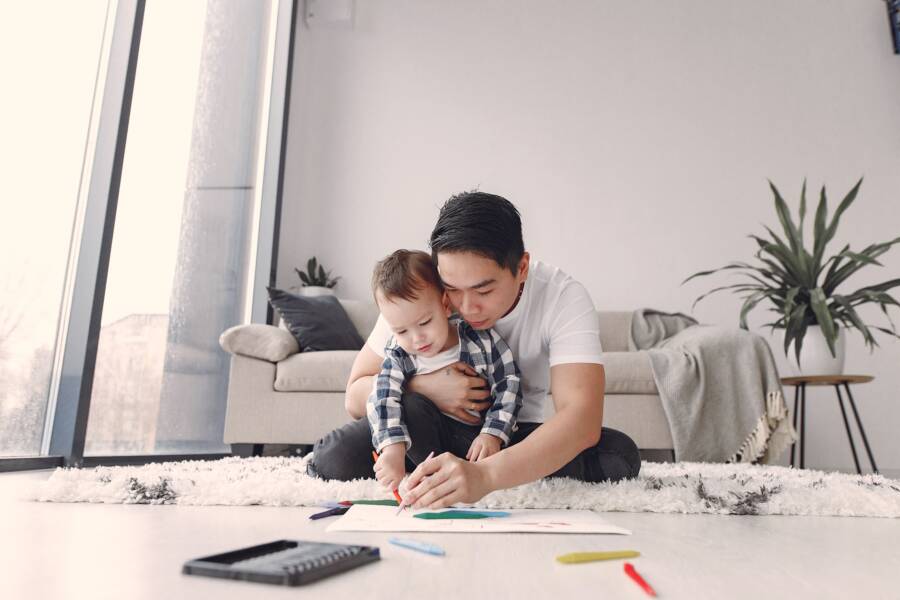
Give children a table with washable crayons and place a washable mat beneath art supplies. Keep crayons in a tray, check the floor after drawing time, and teach children that crayons belong on paper rather than flooring.
Clean new marks as soon as you see them, before dirt and foot traffic spread the wax. Store scrapers, alcohol, dish soap, and other cleaning supplies where children can’t reach them.
Conclusion
The safest sequence for crayon marks on a laminate floor is simple: lift the wax with plastic, wipe with a barely damp microfiber cloth and mild dish soap, then dry the plank immediately.
Avoid heat, abrasives, steam, and excess water. If the crayon has damaged the finish or a seam, stop cleaning and have the plank assessed or replaced instead of using a stronger chemical.