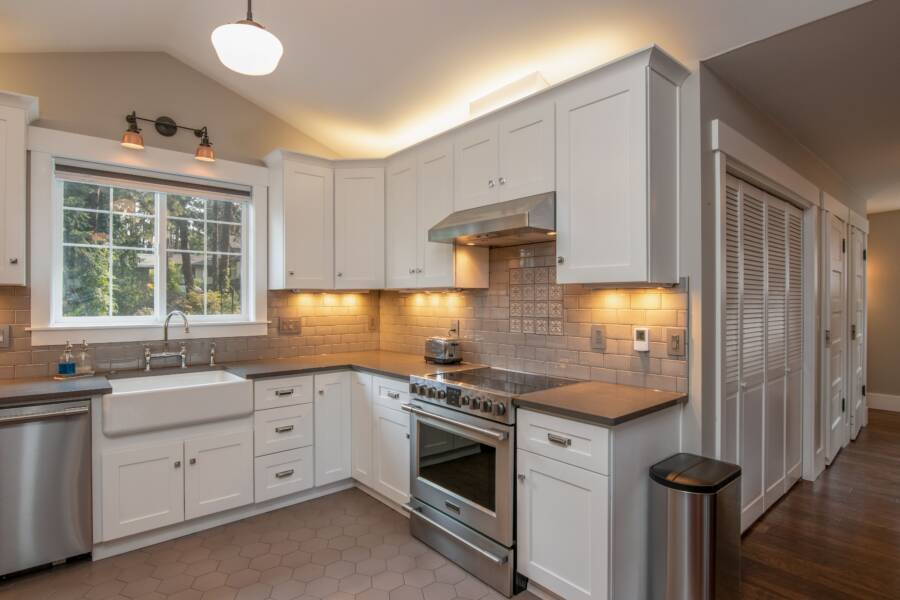
Fresh grease usually comes off with warm water, a few drops of dish soap, and a soft cloth. Older buildup may need a cabinet-safe degreaser, but test it first.
To remove cooking grease from kitchen cabinets, match the cleaner to the cabinet finish and use as little moisture as possible. The process is simple: test, wipe, rinse, dry, then prevent new residue from settling.
How to Remove Cooking Grease From Kitchen Cabinets
First, wipe away loose dust with a dry microfiber cloth. Mix a few drops of grease-cutting dish soap into a bowl of warm water. Dip in a cloth, wring it until barely damp, and clean one small section at a time.
Apply the solution to the cloth, never by soaking the door. Use several light passes instead of pressing hard, then wipe with a clean damp cloth to remove soap. Dry each section immediately with a second microfiber cloth.
Start With a Small Spot Test
Test the solution on a hidden area, such as the inside edge of a door. Let the spot dry fully before cleaning the visible surface. Stop if the finish looks dull, sticky, discolored, swollen, or streaked.
Use a Gentle Scrub for Stubborn Grease
For sticky residue, use a soft microfiber cloth or non-scratch sponge. A soft toothbrush can clean grooves, corners, and areas around cabinet hardware. Avoid steel wool, abrasive pads, razor blades, and heavy pressure because they can scratch or strip the finish.
Choose the Safest Cleaner for Your Cabinet Finish
Cabinet material changes the cleaning method. Sealed wood, painted wood, laminate, thermofoil, and unfinished wood don’t respond to moisture and chemicals in the same way. Follow the product label and the cabinet maker’s care instructions whenever they’re available.
Cleaning Painted, Stained, and Sealed Wood Cabinets
Use a lightly damp cloth with mild dish-soap solution on finished wood. Keep standing water away from joints because moisture can seep inside and cause swelling or separation. Unfinished or worn wood may need professional refinishing instead of stronger degreasing.
Cleaning Laminate and Thermofoil Cabinets
Laminate and thermofoil usually tolerate mild soapy water, but heat, harsh solvents, and trapped moisture can damage them. Keep liquid away from seams and edge bands. Dry lifted, swollen, or peeling areas at once, and don’t scrub them.
How to Remove Old, Sticky Grease Buildup
Several warm, soapy passes often loosen layers that a single wipe leaves behind. If residue remains, apply a cabinet-safe commercial degreaser only after reading its label and testing a hidden spot. Let the cleaner sit briefly on the cloth or surface, but never allow it to dry.
Rinse the area with a clean damp cloth after using any degreaser. Residue left behind can create a sticky film that attracts more dust and grease. Work in small sections so you can control moisture and check the finish as you go.
Clean Grease Around Handles, Corners, and Seams
Remove handles and knobs when practical, then wash the hardware separately in warm soapy water. Use a soft toothbrush around screw holes, corners, and decorative grooves. Keep liquid away from hinges, seams, and cabinet edges.
When Baking Soda or Vinegar Is a Poor Choice
Baking soda can scratch some painted, laminate, and glossy finishes. Vinegar’s acidity may dull or weaken certain coatings, especially with repeated use. Never assume either option is safe for every cabinet, and never mix them with bleach or other cleaners.
Remove Cooking Grease From Painted and Wood Cabinets Without Damage
Removing surface grease should not strip the finish beneath it. Use light pressure, short cleaning passes, and a clean section of cloth as soon as the fabric becomes greasy. Watch for flaking paint, exposed wood, a cloudy coating, or darkened joints.
A safe cleaning process removes residue without changing the cabinet’s color or texture. If the surface starts to feel soft, rough, or tacky, stop and let it dry. Further scrubbing can turn a repairable finish into a refinishing project.
Avoid Water Damage and Finish Streaks
Wring cloths well before every pass, and work from the top down. Change dirty rinse water so grease doesn’t spread across clean doors. Finish by buffing the dry surface with a clean microfiber cloth.
Protect Natural Wood After Cleaning
Don’t apply oil, wax, or polish unless the cabinet maker recommends it. These products can trap grease and create a heavier buildup over time. Bare or damaged wood needs refinishing, not repeated applications of household cleaner.
Clean Kitchen Cabinet Grease With the Right Tools and Products
Gather microfiber cloths, warm water, mild dish soap, a bowl or bucket, gloves, and a soft toothbrush or non-scratch sponge. Keep a cabinet-safe degreaser available for heavy buildup. Abrasive scrubbers, powdered cleaners, razor blades, and strong solvents can damage cabinet surfaces.
Use Microfiber Cloths Instead of Paper Towels
Microfiber lifts grease effectively and leaves less lint than paper towels. Use separate cloths for washing, rinsing, and drying so you don’t spread grease or soap back over the doors. Wash greasy cloths before reusing them.
Read Degreaser Labels Before Applying Them
Check whether the product is suitable for painted wood, natural wood, laminate, or thermofoil. Wear gloves, ventilate the room, and keep cleaners away from food and food-contact surfaces. Never mix cleaning chemicals, even when both products seem mild.
Common Mistakes That Make Greasy Cabinets Worse
Spraying cleaner directly onto doors can send liquid into seams, hinges, hardware holes, and edge bands. Soaking wood can cause swelling, while abrasive tools can leave permanent scratches. Leaving cleaner to dry also creates streaks and residue.
Ignoring cabinet edges and lower door rails leaves grease in places that spread it back onto clean surfaces. Use a damp cloth instead of a wet one, clean hidden edges carefully, and always rinse and dry after washing. A small amount of soap works better than a concentrated mixture.
Why Direct Spraying Can Damage Cabinet Doors
Spray can run behind doors and into unfinished edges. The risk is higher with wood and thermofoil cabinets, where trapped moisture can loosen coatings or swell the core. Pour or spray the cleaner onto your cloth instead.
Why More Cleaner Doesn’t Mean Cleaner Cabinets
Too much detergent leaves a sticky film that catches dust and cooking grease. Use only a few drops in a bowl of warm water, then rinse with clean water. A dry final wipe removes the moisture that causes streaks.
Prevent Grease From Building Up on Kitchen Cabinets Again
Run the range hood or kitchen vent during cooking and for several minutes afterward. Ventilation reduces airborne grease, but it doesn’t replace wiping splatters from nearby doors. Clean the area around the stove regularly, including handles and lower cabinet edges.
Create a Simple Cabinet Cleaning Schedule
Wipe high-grease areas weekly or whenever residue appears. Schedule deeper cleaning every few weeks when you notice sticky handles, a visible film, or a dull surface. This flexible routine prevents fresh grease from hardening into layers.
Reduce Grease During Cooking
Use splatter screens and lids when frying or simmering oily foods. Choose the correct burner setting so food doesn’t boil or spatter unnecessarily. Keep ventilation filters clear because blocked filters reduce airflow and allow more grease to settle nearby.
Know When Grease Damage Needs Professional Repair
Cleaning isn’t the right fix for swollen particleboard, peeling thermofoil, bubbling paint, cracked finish, deep staining, warped doors, or loose edges. Odors that remain after safe cleaning can also indicate damage or contamination inside the material. Stop scrubbing and contact the cabinet manufacturer, a refinisher, or a qualified repair professional.
Separate Surface Grease From Permanent Stains
Removable grease feels tacky and changes during a safe cleaning test. Discoloration that remains after the surface dries may have penetrated the finish or altered the coating. Repeated harsh cleaning can make that permanent damage worse.
Handle Cabinets Near a Range or Cooktop Carefully
Heat and repeated grease exposure weaken finishes faster beside a stove. Check for loose laminate, cracked coatings, and swollen edges before applying liquid cleaner. Damaged areas need repair advice, not stronger scrubbing.
Conclusion
Test a mild dish-soap solution first, then clean with a barely damp soft cloth. Rinse away soap, dry the surface immediately, and use a labeled degreaser only for stubborn buildup after testing it.
The cabinet material always matters. Gentle, regular cleaning removes fresh grease before it hardens and helps prevent most cabinet damage.