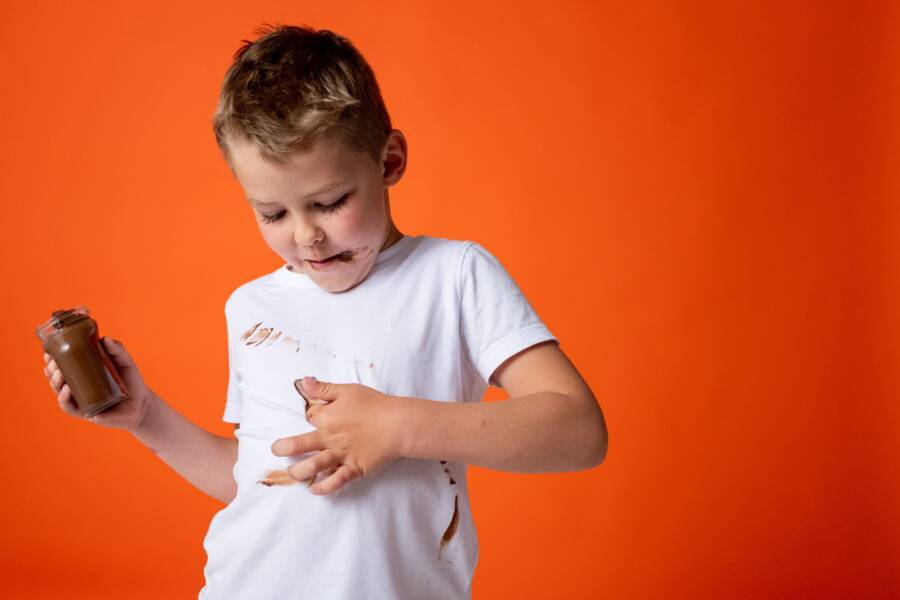
To get chocolate out of clothes, chill the spot first, then gently scrape away the hardened pieces. Treat the remaining greasy mark with liquid detergent before washing, and avoid hot water, rubbing, dryers, and irons.
Heat softens chocolate and can push its oils farther into the fabric. The safe process is cold treatment, careful lifting, pretreatment, and a care-label-approved wash. Delicate or dry-clean-only clothing needs different handling.
How to Get Chocolate Out of Clothes Without Melting It Further
Start by placing the garment in the freezer for 10 to 15 minutes. If the clothing won’t fit, seal ice in a plastic bag and hold it against the chocolate until the spot feels firm. Keep moisture from the ice away from the fabric.
Once the chocolate hardens, lift it with a spoon, a dull butter knife, or the edge of a credit card. Work from the outside toward the center, using light pressure so you don’t catch or break the fibers. Remove as much solid chocolate as possible before applying any cleaner.
Why cold treatment works better than hot water
Chocolate contains sugar and fat. Heat softens the fat, while water can carry the loosened residue into nearby fibers. Cold treatment hardens the chocolate, allowing you to remove more of the stain before a cleaning product touches the fabric.
Cold removes the solid chocolate; detergent handles the oily residue left behind.
What to do if the chocolate is already soft
Don’t rub soft chocolate into the garment. Use a paper towel or clean spoon to lift loose material from the surface, then chill the area before scraping. Pressing or wiping can force chocolate deeper into the weave and enlarge the mark.
Remove the Greasy Chocolate Residue Before Washing
After removing the solid pieces, place a clean towel behind the stain. The towel will absorb loosened grease and reduce the chance of transferring it to another part of the garment. Apply a small amount of liquid laundry detergent or grease-cutting dish soap to the mark.
Gently work the product into the fabric with a soft toothbrush or clean cloth. Leave it for 5 to 10 minutes, then rinse from the back of the stain with cool water. Rinsing from behind pushes residue outward instead of driving it through the fabric.
Choose a stain remover that matches the fabric
Liquid laundry detergent is a practical first choice for washable cotton, polyester, and similar fabrics. Check the care label before treating the garment, especially if the fabric has a finish or special construction.
Test dish soap or any stain remover on an inside seam first, particularly on dark or brightly colored clothing. If the hidden area changes color, feels stiff, or loses its finish, stop using that product.
Wash Chocolate-Stained Clothes at the Right Temperature
Wash the garment after pretreatment using the warmest water allowed by its care label. When the label is unclear, choose cool or lukewarm water rather than risking heat that could soften leftover chocolate grease.
Use the normal detergent amount for the load, and don’t add extra soap to compensate for a stubborn spot. After the cycle finishes, inspect the fabric in good light before placing it in the dryer. Check both the front and back, since grease can remain visible on only one side.
When to repeat the treatment
If a shadow remains, repeat the detergent treatment and wash the garment again. Stubborn chocolate marks may need two or three gentle rounds, especially when the fabric absorbed melted chocolate.
Adding more product or scrubbing harder isn’t always better. Excess cleaner can leave residue, while aggressive brushing can roughen fibers or cause a pale patch on colored clothing. Let the garment dry by air between treatments so you can see the remaining stain clearly.
Handle White, Colored, and Dark Fabrics Safely
White washable items may tolerate oxygen bleach if the care label allows it. Follow the product instructions and distinguish oxygen bleach from chlorine bleach, which can weaken some fabrics and damage finishes. Never assume a white garment can handle every bleaching product.
For colored and dark clothes, use a color-safe stain product and test it on a concealed area. Aggressive bleaching can cause fading that won’t disappear after the chocolate is gone. Keep the treatment limited to the stained area rather than soaking the entire garment without a clear care-label instruction.
Avoid spreading the stain while treating it
Keep an absorbent towel under the stained section during pretreatment. Apply a small amount of cleaner from the outer edge toward the center, then blot with a clean cloth. This method controls the moisture and keeps the grease from spreading outward.
Soaking or scrubbing the whole garment can create a larger wet ring and move the stain into clean fibers. Replace the towel if it becomes oily, and use fresh sections of the cloth as you blot.
Treat Delicate and Dry-Clean-Only Clothing Differently
Silk, wool, velvet, rayon, leather, suede, embellished clothing, and garments marked “dry clean only” need stricter limits. Chill the item and lift away only the chocolate sitting on the surface. Then take it to a professional cleaner as soon as possible.
Don’t use water, dish soap, heat, or home stain removers unless the care label or a professional specifically permits them. Water can leave rings, while rubbing may damage the nap of velvet, distort wool, or spread color on delicate fibers.
What information to give the dry cleaner
Point out the chocolate stain when you drop off the garment. Tell the cleaner whether it contained milk, caramel, nuts, or another filling, because those ingredients can leave different residues.
Also describe every product or method you’ve already tried. Full disclosure helps the cleaner select a suitable solvent and avoid repeating a treatment that could make the stain harder to remove.
Avoid These Chocolate Stain Removal Mistakes
Several common actions make chocolate stains larger or harder to remove:
Rubbing fresh chocolate pushes it into the weave, so lift it instead.
Using hot water first softens the fat and spreads the mark, so start with cold treatment.
Applying an iron can press grease into the fibers, so keep heat away.
Putting the garment straight into a hot dryer can set any residue, so air-dry it first.
Scraping with a sharp knife can cut or pull fibers, so use a dull tool.
Using bleach without checking the label can fade colors or damage fabric, so test and follow care instructions.
Do not use heat to speed up drying
Air-drying is safest until the stain has disappeared. Hang the item or lay it flat according to the care label, keeping the stained area visible and free from direct heat.
Before using a dryer, examine the front and back of the fabric in good light. If you can still see a brown, gray, or oily shadow, treat and wash it again.
Know When a Chocolate Stain Needs Professional Cleaning
Stop home treatment when the item is dry-clean-only, made from a delicate fiber, heavily embellished, or covered by a large stain. Professional cleaning is also the better choice for old marks and chocolate mixed with strongly colored fillings.
Prompt action improves the chance of removal, but repeated scrubbing can damage a garment that might otherwise be saved. If the mark remains after two careful wash treatments, take the item to a cleaner rather than adding harsher chemicals.
Conclusion
Keep the chocolate cold, lift off the solid pieces, pretreat the oily residue, and wash according to the care label. Air-dry the garment until the stain is completely gone, because dryer heat can set what remains.
Heat and rubbing are the main ways chocolate spreads or becomes harder to remove. Check delicate and dry-clean-only clothing before treating it at home, and use a professional cleaner when the fabric or stain calls for more careful handling.