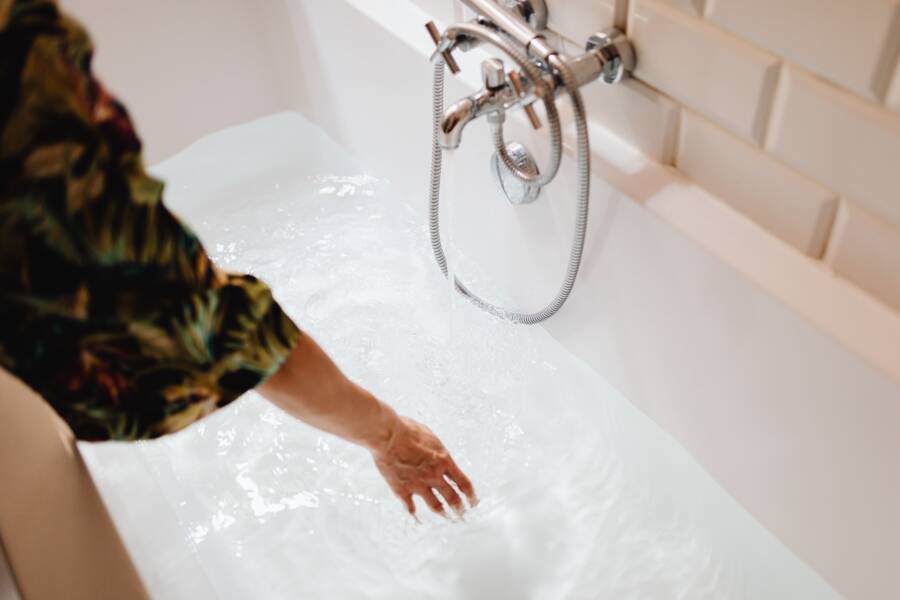
Rinse the stain with warm water, apply a mild dish soap solution, and use a nonabrasive cleaner if the color remains. A purple shampoo stain on a white tub is usually removable, but the safest method depends on whether the surface is acrylic, fiberglass, porcelain, or enamel.
Start with the gentlest cleaner and avoid aggressive scrubbing. The steps below cover fresh spills, stubborn dye, surface safety, and ways to prevent the purple mark from returning.
Purple Shampoo Stain on a White Tub: What to Do First
Remove shampoo bottles, bath mats, and anything else near the spill. Rinse the area with warm water, then wipe or blot loose product with a clean microfiber cloth. Blotting helps prevent the dye from spreading across a larger area.
Fresh purple shampoo comes off more easily before the dye dries onto soap film or settles into small scratches. Check the tub material before choosing a stronger product, because acrylic and fiberglass can lose their shine when exposed to harsh chemicals or rough tools.
Gather Safe Cleaning Supplies Before You Scrub
Keep these supplies nearby:
Liquid dish soap and warm water
A soft microfiber cloth
A non-scratch sponge
Baking soda
White vinegar
Rubber gloves and clean water
Avoid steel wool, scouring powder, and rough scrub pads. Even a cleaner that removes the mark can leave permanent scratches or a dull patch on the tub.
Test Any Cleaner in a Hidden Spot
Apply a small amount of the chosen cleaner to an inconspicuous area. Leave it for the time stated on the label, or for several minutes when no contact time is given, then rinse and inspect the finish.
Acrylic and fiberglass need mild, nonabrasive products. Older porcelain or enamel may tolerate more cleaners, but chipped, worn, or exposed areas can stain and deteriorate more easily.
How to Remove a Fresh Purple Shampoo Stain with Dish Soap
Mix about 1 teaspoon of liquid dish soap with 1 cup of warm water. Dip a soft cloth into the solution, wring it out, and place it over the stain for one or two minutes. Then wipe in small circles with light pressure.
Rinse the area thoroughly with clean water and dry it with a white towel. Repeat the process no more than two or three times before trying another method. Repeated hard scrubbing can damage the finish while leaving the dye in surface scratches.
Dish soap works well when the purple product sits on soap residue or oily buildup. It may not remove dye that has dried for several hours, so move on carefully rather than increasing the pressure.
Use Baking Soda for Purple Shampoo Marks That Still Remain
Make a soft paste with 2 tablespoons of baking soda and enough water to create a smooth, spreadable texture. Cover the purple mark with a thin layer and let it sit for about 10 minutes. Wipe it away with a damp, non-scratch sponge, using only light pressure.
Rinse several times so no baking soda remains in the tub’s texture or around the drain. Baking soda is mildly abrasive, so don’t scrub it aggressively on acrylic or fiberglass. If the surface begins to look cloudy, stop and rinse immediately.
When a Vinegar Solution Can Help
A diluted vinegar solution can remove soap film around the dye. Mix equal parts white vinegar and water, apply it to the residue for two to three minutes, then wipe and rinse well.
Vinegar may loosen the film that holds a purple shampoo stain on a white tub, but it doesn’t remove every dye mark. Never mix vinegar with bleach, ammonia, or another bathroom cleaner. Chemical mixtures can produce dangerous fumes.
Choose a Stronger Cleaner Without Damaging the Tub
Use a commercial bathroom cleaner, oxygen-based stain remover, or melamine sponge only after dish soap and a gentle baking soda paste fail. Read the label first and confirm that the product is suitable for your tub material. Wear gloves, open a window, and keep the contact time as short as the directions allow.
Never combine cleaners, even if the first product seems ineffective. Rinse the tub completely before trying something else. A melamine sponge can remove the finish from some glossy surfaces when used with heavy pressure, so use a few gentle passes rather than scrubbing back and forth.
Clean Acrylic, Fiberglass, Porcelain, and Enamel Differently
Acrylic and fiberglass tubs generally need a soft cloth or non-scratch sponge with a mild liquid cleaner. Avoid abrasive powders and products that contain strong solvents unless the manufacturer specifically approves them.
Porcelain and enamel surfaces are harder, but they can still scratch, etch, or chip. A carefully chosen bathroom cleaner may be acceptable on an intact finish, while a chipped edge needs extra caution. Check the tub manufacturer’s care instructions whenever they’re available.
Avoid These Mistakes When Removing Purple Dye
Don’t leave spilled purple shampoo to dry for hours. Also avoid colored cloths, since loose dye from the fabric can transfer to a white surface. Use a clean white microfiber cloth when possible.
Scouring pads, steel wool, and undiluted chemicals can create damage that is harder to repair than the original stain. Never pour bleach directly onto the mark, and never mix bleach with vinegar, ammonia, or other products. Strong fumes, skin burns, and surface damage are greater risks than a purple spot.
What to Do If the Purple Stain Will Not Come Out
Old dye can settle into worn enamel, tiny scratches, caulk, or textured tub surfaces. After several gentle attempts, stop if the area becomes dull, sticky, rough, or discolored. More pressure won’t restore a damaged finish.
Contact the tub manufacturer for material-specific cleaning advice. A professional cleaner may help with permanent discoloration, cracks, or a damaged coating. Don’t attempt repainting or refinishing until someone has assessed the surface, because leftover cleaner and hidden damage can affect the result.
Prevent Purple Shampoo Stains in Your White Bathroom
Rinse the tub immediately after washing your hair, especially around the drain and walls where colored water can collect. Rinse your hair thoroughly as well, since leftover product creates more drips when you step out of the shower.
Keep the bottle on a waterproof shelf or tray instead of the tub edge. Wipe spills before they dry, and choose a white or washable bath mat that won’t transfer color. Close the bottle between uses so a tipped container can’t spread shampoo across the surface.
Keep the Tub Clean Without Damaging Its Finish
A fresh purple shampoo stain on a white tub usually needs only warm water and dish soap. If a mark remains, try a soft baking soda paste, then consider a stronger product only after checking the tub material and label directions.
Quick rinsing and gentle wiping protect the finish better than forceful scrubbing. Treat the spill while it’s fresh, and the white surface has a much better chance of staying intact.