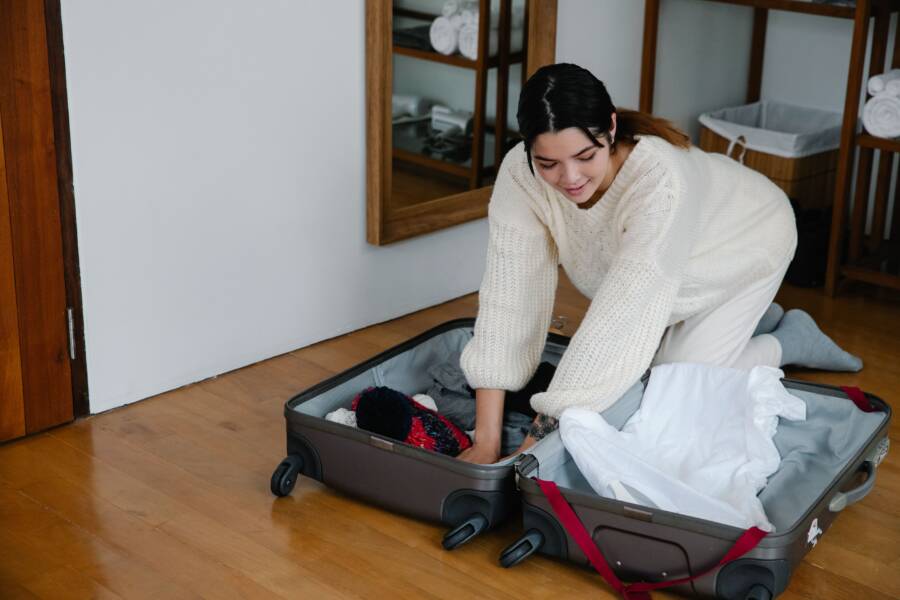
Take the suitcase outside, open every compartment, and let it air out. Next, inspect the lining for mold, then clean the material with a lightly damp cloth and mild soap before using any deodorizer.
A musty smell in a suitcase usually comes from trapped moisture, mold, or mildew during storage. Damp clothing, spills, poor airflow, and humid rooms can all leave an odor behind. The right fix depends on the suitcase material and whether mold has reached its padding or seams.
What Causes a Musty Smell in a Suitcase After Storage?
Humidity is the most common cause. A suitcase stored in a basement, garage, attic, or closed closet may collect moisture, especially when the case stays shut for months. The smell can also develop after storing damp clothes, wet shoes, towels, or toiletries inside.
Poor airflow allows that moisture to linger in fabric and foam. Small spills can soak into the lining or padding, even when the surface looks dry. Mold and mildew may then grow in seams, pockets, under panels, or around the zipper.
Stale Odor Versus Mold or Mildew
A stale odor often improves after several hours of ventilation and a proper cleaning. Mold or mildew usually produces a stronger, earthy smell that returns after the suitcase sits closed.
Look for white, green, black, or fuzzy spots. Visible growth may be small because mold can hide beneath lining fabric, inside pockets, or within foam padding.
Inspect the Suitcase Before Removing the Odor
Move the suitcase outdoors or into a well-ventilated room before opening it. Empty every pocket, remove packing cubes, and check the lining, seams, zipper tracks, wheels, and handle areas. If the case has removable panels, lift them carefully and inspect underneath.
Wear disposable gloves and a well-fitting mask if you see mold or loose particles. Anyone with asthma, mold allergies, or another respiratory condition should avoid cleaning visible mold. Keep the suitcase away from clean clothing and other luggage until you finish the inspection.
When the Suitcase Needs Professional Help
Professional cleaning is sensible when mold covers a large area, the fabric has started to break down, or the odor remains after cleaning. Sewage, floodwater, and other hazardous liquids create a separate contamination risk. A professional can assess valuable leather, designer, or specialty luggage without exposing you to unnecessary damage.
How to Air Out a Suitcase Without Damaging It
Place the empty suitcase fully open in a dry, shaded area with good airflow. Leave every pocket and compartment open for several hours or overnight. A fan can improve circulation, but keep it outside the case and use a gentle setting.
Airflow should come before baking soda, charcoal, or fragrance products. Sealing the suitcase with an odor absorber while moisture remains inside can trap the problem. Avoid hair dryers, heaters, and prolonged harsh sunlight because high heat can warp plastic, weaken adhesives, fade fabric, and damage vinyl.
If the suitcase feels damp, continue drying until the lining and padding feel completely dry. Closing it too soon can restart the odor, even after the surface appears clean.
The Safest Way to Clean a Musty Suitcase Lining
Start by vacuuming loose dust and debris with a clean attachment. Test any soap solution on a hidden area first, such as the underside of a pocket flap. For common fabric interiors, mix a small amount of mild soap with water, dampen a cloth, and wipe without soaking the lining.
Clean hard-shell plastic, vinyl, and other nonporous surfaces with the same lightly damp approach, then wipe away residue with a clean cloth. Don’t saturate foam padding, glued seams, or stitched edges because trapped water can create another mold problem. Dry the suitcase fully with all compartments open before deodorizing or closing it.
Cleaning Fabric, Canvas, and Removable Liners
Follow the care label when the liner or fabric panel can be removed. Some liners allow gentle hand washing, while others require careful wiping because their backing contains foam or a water-resistant coating.
Blot stains instead of scrubbing them aggressively. Remove soap residue with a clean, damp cloth, then hang or lay the liner flat until it is completely dry. Bleach and strong solvents can discolor fabric, weaken fibers, and damage protective coatings.
Removing Visible Mold or Mildew Safely
Never brush visible mold indoors. Take the suitcase outside, follow the material care instructions, and use only a cleaner that suits the surface after testing a hidden spot.
Porous foam and heavily contaminated fabric may not be safely salvageable. People with asthma, allergies, or other respiratory conditions should leave mold removal to a qualified professional rather than cleaning it themselves.
Natural and Store-Bought Ways to Neutralize Suitcase Odors
Use an odor absorber only after cleaning and drying address the source. Place an open container of baking soda, a pouch of activated charcoal, or a suitable commercial moisture absorber inside the dry suitcase. Keep the suitcase open and leave the product in place for 24 to 72 hours.
Replace the absorber if the smell remains, then reassess the lining and seams. A persistent odor after two cleaning attempts often points to contamination inside foam or other porous material. Fragrance sprays, perfume, and essential oils may cover the smell, but they don’t remove moisture or mold.
Never mix bleach with vinegar or ammonia. These combinations can produce dangerous fumes.
Odor absorbers work best after the suitcase dries because they reduce leftover odor, not the moisture that caused it.
When to Replace a Suitcase Instead of Cleaning It
Replacement is usually safer when mold has entered foam, padding, or fixed interior panels. Widespread growth, peeling lining, water damage, and soft or crumbling material also make thorough cleaning difficult. A strong odor that returns after two careful cleanings is another reason to stop using the case.
Discard luggage contaminated by sewage or other hazardous liquids unless a qualified service confirms that it can be restored. A new suitcase may cost less than repeated cleaning when the interior cannot be reached or dried.
Valuable or delicate luggage deserves an assessment before disposal. A professional cleaner may identify removable components or material-safe treatment options that home cleaning cannot provide.
How to Store a Suitcase So the Smell Does Not Return
Clean and dry the suitcase before storage, including the wheels, pockets, and lining. Leave it slightly open when the storage area is safe and clean, and use a breathable fabric cover instead of a sealed plastic bag. Keep the case off concrete floors, which can transfer moisture into the bottom panels.
Choose a dry closet rather than a basement, garage, or damp utility area. In humid homes, inspect stored luggage every few months and place a moisture-control product nearby, not directly against delicate fabric. Avoid packing the suitcase away immediately after a rainy trip.
Before your next journey, open the case several days ahead. Check for odor, dampness, spots, and damaged seams before placing clothes inside.
Conclusion
Inspect the suitcase, air it out, clean its material safely, and dry it completely before using an odor absorber. Persistent mold, damaged padding, contamination, or a returning musty smell means you should replace the luggage or seek professional help.
The best prevention is simple: never store luggage damp or sealed in a humid space. Keeping compartments dry and slightly open helps prevent the odor from returning.