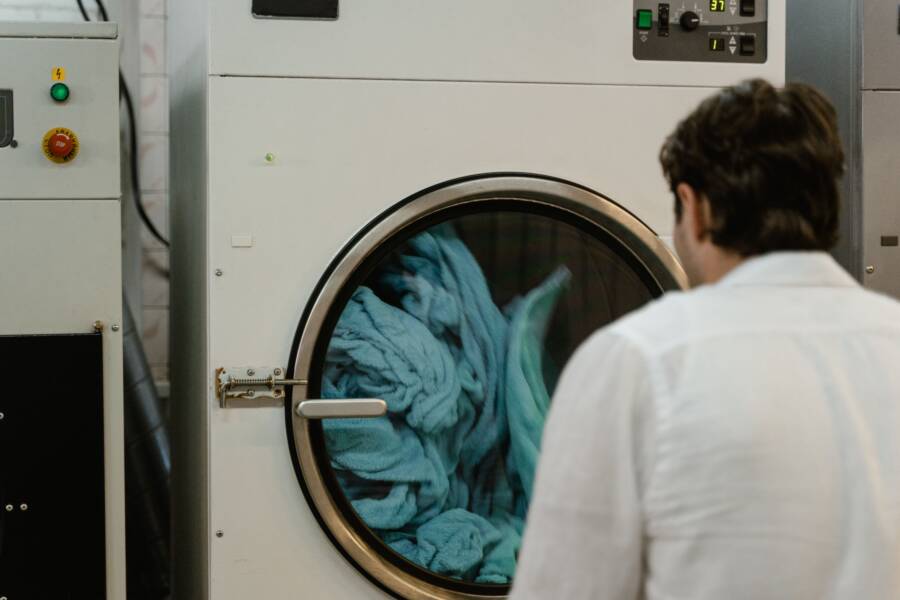
Rewash the clothes as soon as possible with laundry detergent and a fabric-safe odor treatment. Do not put them in the dryer until the smell is gone, because heat can set musty odors into fabric.
A mildew smell in clothes left in the washer overnight usually comes from trapped moisture, residue, and limited airflow. One delayed load rarely means the clothes are ruined, so start with the washer and the fabric care labels.
Mildew Smell in Clothes Left in the Washer Overnight: What to Do First
Wet clothes should come out of the washer promptly. Follow these steps:
Remove the entire load and separate items with the strongest odor.
Check care labels for water temperature, bleach restrictions, and drying instructions.
Inspect clothes for visible spots, stains, or damaged fibers.
Keep everything out of the dryer until the odor has disappeared.
Start treatment now rather than leaving the load in the closed drum for another hour. If the smell is mild, one complete rewash may solve it. Heavily affected towels, jeans, and bedding may need a second treatment.
The quickest wash cycle for a fresh, washable load
Add the correct amount of regular laundry detergent, based on the product label and load size. Select the warmest water allowed by the care label, then run a full wash cycle instead of a short refresh cycle.
For washable whites and colorfast items, oxygen bleach can provide extra odor and stain control when the clothing label permits it. Follow the oxygen bleach package directions, and never mix chlorine bleach with vinegar, ammonia, oxygen bleach, or other cleaners.
What to do with delicate fabrics and clothes that cannot use bleach
Wool, silk, dark colors, elastic garments, and delicate activewear need gentler handling. Use the care label’s recommended temperature, a mild detergent, and a gentle cycle. Avoid chlorine bleach unless the label clearly allows it.
After washing, air-dry delicate items where there is strong airflow. Sunlight can help when the fabric permits it, but don’t leave dark or fragile materials in harsh direct sun for long periods.
Why Wet Clothes Develop a Musty Smell Overnight
A musty laundry odor develops when microbes and residue remain in warm, damp fabric. One missed transfer can create a smell overnight, especially in a warm room, but repeated delays can also leave buildup inside the washer.
A mildew smell in clothes left in the washer overnight is different from a sewage, rotten-egg, or burning smell. Those odors can indicate a drain, electrical, or mechanical problem, so don’t keep rewashing the load without checking the appliance.
How moisture, detergent, and poor airflow make odors worse
Trapped water gives odor-causing microbes time to grow. Excess detergent and fabric softener can leave residue that holds moisture, while an overloaded drum prevents water and air from moving through the clothes.
High-efficiency washers may retain moisture in the door gasket, dispenser, or drain system. Closing the washer door immediately after a cycle also slows evaporation and can make the drum smell.
How to Remove a Mildew Smell From Clothes Without Setting It In
Start with a normal rewash using detergent and the warmest approved water. If the smell remains, use a fabric-safe treatment allowed by the care label, then run an extra rinse to remove residue.
Inspect the load before drying. If the fabric still smells musty, repeat the treatment or check the washer first. Adding more detergent than directed can worsen the problem because soap residue stays behind and traps odor.
Using oxygen bleach, vinegar, or baking soda safely
Oxygen bleach often works well on washable clothing when the label permits it. Use the amount stated on the package, and never pour it into a load that contains chlorine bleach or another incompatible cleaner.
Distilled white vinegar can be used as an optional rinse or soak aid, but it must never mix with chlorine bleach. Baking soda may reduce a mild odor, yet it cannot replace rewashing and thorough drying.
When a second wash is necessary
Run another treatment if the odor returns when the fabric warms, remains after air-drying, or appears with visible spots. Thick items often need more than one complete wash because moisture stays inside seams and folds.
Before repeating the load several times, inspect the washer. A dirty gasket, dispenser, drain filter, or drum can transfer the odor back onto clean clothes.
How to Clean the Washer So the Smell Does Not Return
Wipe the door gasket, clean the detergent drawer, and remove visible hair, lint, soap, and water. If the owner’s manual permits it, check and clean the drain filter. Filter locations and removal steps vary, so don’t force a panel or part.
Run the manufacturer’s recommended washer-cleaning cycle at the stated interval. Leave the door and dispenser open afterward if the appliance instructions allow it, so remaining moisture can evaporate.
Cleaning front-load washer parts that hold moisture
Pull back the rubber gasket and wipe inside every fold. Debris can collect where the drum looks clean, and trapped water can keep producing an odor after each wash.
Remove the dispenser drawer if the manual allows it, rinse away sticky detergent, and dry the drawer and its housing. Wipe these parts after cleaning instead of pushing them back while they are wet.
When the washer may need service
Contact the manufacturer or a qualified appliance technician if you notice a sewage smell, standing water, slow draining, leaks, repeated odors after cleaning, or an error code. These signs can point to a blocked drain, pump issue, seal problem, or electrical fault.
Don’t take apart sealed components or electrical parts without the correct service instructions. Household cleaning cannot fix every source of a persistent machine odor.
The Best Way to Dry Musty Clothes After Rewashing
Complete drying matters because leftover moisture allows the odor to return. Transfer clothes promptly, shake them out, and leave space between items on a rack or clothesline.
Use a dryer only when the care label permits it, and clean the lint filter first. Stop the cycle if the smell becomes stronger, then rewash the clothing instead of storing it with a lingering odor.
How to dry thick items that hold moisture
Towels, jeans, hoodies, blankets, and bedding dry more slowly than thin shirts. Wash smaller loads, use an extra spin cycle when the fabric and washer allow it, and separate dense items so air can reach every surface.
Check seams, pockets, cuffs, waistbands, and folded sections before storage. A garment can feel dry on the outside while moisture remains in its thickest areas.
How to Prevent Musty Laundry Smells in the Future
Move wet clothes to a dryer or drying rack within a few hours of the wash ending. Use the correct detergent amount, avoid overloading the drum, and leave the washer door slightly open after use when the manufacturer permits it.
Clean the washer on the schedule stated in the appliance manual. Regular attention to the gasket, dispenser, and approved drain-filter area helps prevent residue from becoming a recurring odor source.
A simple routine for busy laundry days
Set a phone timer when you start the washer, or use a delayed-start feature only when the clothing will finish near a time you can transfer it. Leaving the washer door open afterward can also remind you that the load needs attention.
Wet clothes shouldn’t sit in a closed machine for long periods, especially in a warm, humid room. If you forget a load, rewash it before drying rather than relying on perfume or fabric softener.
When Musty Clothes Should Be Replaced or Professionally Cleaned
Most overnight odors can be treated, but repeated washing isn’t suitable for every item. Replace clothing with extensive visible mold, permanent staining, damaged fibers, or a smell that remains after several correct treatments.
Choose professional cleaning for valuable, antique, dry-clean-only, or highly delicate garments. Anyone with mold allergies or a breathing condition should limit exposure and avoid handling heavily contaminated fabric indoors.
How to handle visible mold on fabric
Don’t shake moldy clothing indoors, because that can spread spores. Isolate the item in a bag or contained area, check the care label, and wear suitable hand and respiratory protection during handling.
Seek professional advice when contamination is widespread or the garment has significant value. Keep affected items away from clean laundry until you know they can be cleaned safely.
Rewash, Dry Completely, and Check the Washer
Prompt rewashing, a fabric-safe odor treatment, and complete drying will resolve most overnight laundry odors. If the smell returns, clean the washer before running the load again.
Preventing trapped moisture is the lasting solution. Transfer clothes within a few hours, avoid overloading, and allow washer airflow whenever the appliance manual permits it.