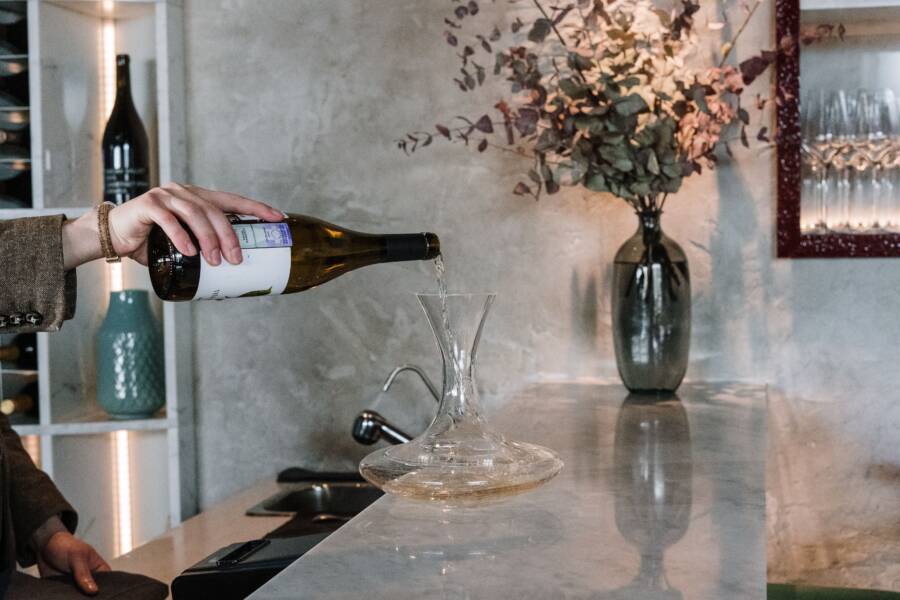
Blot the wine immediately, then clean the area with mild dish soap and water. To get wine out of a marble countertop, work gently because marble is porous and reacts badly to acidic cleaners.
A fresh spill may disappear completely, while an older stain can need a poultice. If the wine caused a dull or cloudy mark, the problem may be etching rather than trapped color, and polishing could be necessary.
How to Get Wine Out of a Marble Countertop
Start by moving glasses, bottles, and other objects away from the spill. Then follow these steps:
Blot the wine with a clean paper towel or soft cloth.
Replace the towel section as it absorbs liquid.
Wipe the area with warm water and a few drops of pH-neutral dish soap.
Rinse with a clean, damp microfiber cloth.
Dry the countertop completely with a fresh towel.
Inspect the surface under good light after it dries.
Blotting removes liquid before it spreads or soaks farther into the stone. A small amount of mild soap lifts residue without exposing the marble to harsh chemicals. Rinsing matters because dried soap can leave a dull film that resembles a stain.
Blot the Spill Before It Soaks In
Handle the spill within a few minutes whenever possible. Press the towel down gently, lift it, and repeat rather than dragging it across the counter. Scrubbing can spread red wine over a larger area and push pigment into the marble pores.
Use a fresh section of the towel each time it becomes wet. Continue until the towel picks up little or no liquid. White wine still needs quick attention because its acidity can etch marble, even when it doesn’t leave strong color.
Clean and Dry the Marble Without Leaving Residue
Mix warm water with only a few drops of mild dish soap. Dampen a microfiber cloth, wipe the spill area, and avoid flooding the countertop. Excess water can enter unsealed stone around the stain.
Use another cloth with clean water to remove the soap. Dry the marble fully, including nearby seams and edges. Leftover moisture can reveal a ring or allow more liquid to enter the stone.
How to Remove a Dried Wine Stain From Marble
A dried wine stain usually needs more than surface wiping. A marble-safe poultice can draw pigment from the stone as the paste dries. Test the mixture on a hidden area first, especially if the countertop has a colored or unusual finish.
For a home treatment, combine baking soda with enough distilled water to make a thick paste. Spread it over the stain, extending slightly beyond the visible edge. Cover the paste with plastic wrap, tape the edges, and leave it in place for about 24 hours.
After 24 hours, remove the plastic and lift the dried paste gently. Don’t scrape with a knife or metal tool. Rinse with clean water, dry the area, and wait before judging the result because marble can look darker while damp.
Use a Poultice to Draw Wine From the Stone
A poultice works because its absorbent paste pulls moisture and pigment toward the surface while it dries. Keep the mixture thick enough to stay in place instead of running across the counter. One application may not remove a deep stain, so repeat the process only if the marble shows no damage.
Baking soda is a common home option, but a commercial marble poultice is a better choice for stubborn discoloration. Choose a product whose label confirms that it’s safe for natural stone. Follow its directions exactly, since different formulas require different drying times.
When Hydrogen Peroxide Is Safe to Consider
Hydrogen peroxide is a cautious option for organic stains on light-colored marble, not a default treatment. Ask a stone-care professional before using it, and test a small hidden spot first. Peroxide can lighten some stones or alter a polished finish.
Never mix hydrogen peroxide with bleach, ammonia, vinegar, or another cleaner. Use one product at a time, rinse the area, and allow it to dry before evaluating the surface.
Tell the Difference Between a Wine Stain and Marble Etching
A stain usually looks darker or colored because wine pigment remains inside the stone. Etching appears pale, dull, cloudy, or slightly rough because the wine’s acid reacted with the marble surface. The two problems can appear together after a single spill.
Cleaning can remove a stain, but it won’t restore an etched finish. Check the area only after it has dried, then compare its color and sheen with the surrounding marble.
Signs the Wine Left a Stain
Red wine may leave pink, purple, or brown discoloration. The color can fade as the stone dries, especially when the spill was recent. Unsealed or worn marble absorbs pigment more readily than a well-maintained surface.
A colored mark that remains after gentle cleaning may respond to a poultice. Avoid applying more chemicals simply because the first wipe didn’t remove it.
Signs the Surface Needs Polishing Instead
A dull spot with little or no color is more likely etching. Run a clean fingertip lightly across the area, without pressing, to check for a change in texture. A rough or cloudy patch needs surface repair rather than stain removal.
Mild etching may improve with marble polishing powder used exactly as directed. Widespread or deep damage should go to a stone-care professional.
Cleaners and Tools to Avoid on Marble Countertops
Keep these products away from marble:
Vinegar and lemon juice
Bleach and ammonia
Abrasive powders and scouring pads
Steel wool
Bathroom descaler
Generic acidic stain removers
Acidic cleaners can remove some wine color while damaging the surface around it. Abrasive tools can scratch the polish and leave a larger visible patch. Use a soft microfiber cloth, clean water, mild soap, or a product labeled for natural stone instead.
Why Vinegar and Lemon Can Make the Mark Worse
Marble contains calcium carbonate, which reacts with acids. Vinegar, lemon juice, and wine can dissolve a small amount of the surface finish. The result may be a dull spot, lost shine, or a damaged area larger than the original spill.
Avoid Scrubbing and Harsh Spot Treatments
Aggressive scrubbing can spread the stain and scratch polished marble. Don’t combine cleaners, and follow every product label. Stop immediately if the stone changes color, texture, or shine.
What to Do If the Wine Stain Will Not Come Out
Old stains, dark marble, unsealed stone, and spills that extend below the surface may resist home treatment. Stop repeating poultices if the area becomes dull or lighter. Additional applications won’t repair etching or reverse a damaged finish.
A professional stone restoration technician can assess the mark and select a stronger poultice when appropriate. They may also hone or polish the surface and match the surrounding finish.
When a Professional Marble Restoration Is Needed
Call a professional when a stain remains after one or two careful poultice treatments. Professional help also makes sense for visible etching, a large spill, a damaged seal, or a valuable countertop with a high-gloss finish.
Ask whether the service includes stain removal, honing, polishing, and resealing. Those are separate treatments, so a quote should identify which steps your marble needs.
Do Not Hide Damage With Wax or Coating
Furniture wax, countertop paint, and unapproved coatings can trap moisture and create an uneven sheen. They can also make later restoration harder. Leave the surface untreated until you know whether the mark is a stain or etching.
Check and Restore the Marble Sealer After Cleaning
Sealing doesn’t make marble stain-proof. It slows absorption and gives you more time to blot a spill before pigment enters the stone.
To check the sealer, place a few drops of water on a clean, dry, inconspicuous area. Wait 10 to 15 minutes, then wipe the water away and look for darkening. A darkened spot suggests the sealer may need attention.
How to Test Whether Marble Needs Resealing
Don’t judge protection by shine alone. Polished marble can still absorb liquid, and sealing frequency depends on the stone, countertop use, and product formula. Follow the sealer manufacturer’s instructions or ask a stone professional for guidance.
Prevent the Next Wine Spill From Becoming a Stain
Use coasters, trays, and cutting boards, and keep a soft cloth nearby. Wipe spills as soon as they happen, especially wine, citrus drinks, and other acidic liquids. Store drinks and cleaning products on a tray instead of directly on the countertop.
A Simple Marble-Safe Wine Spill Checklist
For a fresh spill, blot first, wipe with mild soap and water, rinse, and dry. Inspect the dry surface before choosing any further treatment. Use a cautious poultice only when a colored stain remains.
Stop if the marble turns dull, feels rough, or fails to improve after careful treatment. At that point, contact a professional rather than adding stronger chemicals.
Conclusion
Quick action gives you the best chance to get wine out of a marble countertop without lasting damage. Blot instead of scrubbing, use mild marble-safe cleaners, and dry the surface completely.
A poultice can help with absorbed wine, while polishing or professional restoration may be needed for acid etching. The first question is simple: does the mark contain color, or has the marble’s finish changed?