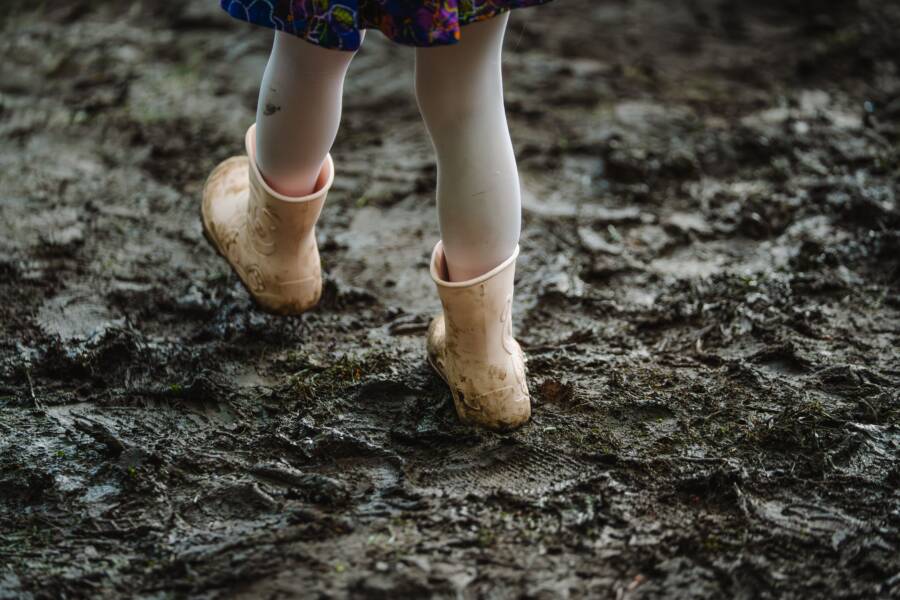
Let the mud dry completely before cleaning. Lift thick pieces with a spoon or dull butter knife, vacuum loose dirt, then blot the remaining stain with mild soapy water.
Adding water too soon can spread wet soil deeper into carpet fibers. To get dried mud out of carpet safely, use light moisture, gentle pressure, and complete drying.
How to Get Dried Mud Out of Carpet, Step by Step
Protect the surrounding floor with a towel or plastic sheet. Hold the carpet steady, then lift the thick crust from the outside edge toward the center. Use several slow vacuum passes afterward, and avoid grinding the mud into the pile.
Gather the Right Tools Before You Start
Set out a spoon or dull knife, a vacuum cleaner, white cloths, warm water, mild dish soap, a bowl, and a soft-bristled brush. White cloths make color transfer easier to spot and won’t add dye to the carpet. Avoid bleach, strong solvents, and harsh cleaners on ordinary carpet because they can fade color or damage fibers.
Remove the Dry Crust Without Spreading the Dirt
Keep the mud dry while removing the hardened pieces. Slide the spoon under the crust with short, gentle movements, working inward instead of scraping across the whole spot. Aggressive scraping and rubbing can push grit deeper into the pile and make vacuuming less effective.
Prepare the Carpet Before Applying Any Cleaner
Check the carpet’s care label and identify the fiber if possible. Common synthetic carpets usually tolerate careful spot cleaning, but natural fibers, delicate rugs, and unstable dyes need more caution. Never pour cleaner directly onto the stain, because excess liquid can reach the backing and pad.
Vacuum Up Every Loose Mud Particle
Use a clean attachment and make slow passes in more than one direction. Empty or check the vacuum if suction drops during cleaning. Removing dry particles first prevents them from mixing with water and creating a larger muddy residue.
Make a Mild Cleaning Solution and Test It
Mix a small amount of mild dish soap into warm water in a bowl. The solution should feel lightly soapy, not thick or concentrated. Test it on a hidden section, then check for color transfer, fading, bleeding, or a change in texture before treating the visible stain.
Lift the Remaining Mud Stain With Gentle Blotting
Dip a white cloth into the solution and wring it out well. Press the damp cloth onto the stain, lift it away, and repeat with a clean section as soil transfers. Several light applications work better than one large amount of water.
Blot From the Outside Toward the Center
Start at the outer edge and move inward to keep the mark from spreading. Press and lift rather than rubbing back and forth. On durable synthetic carpet, a soft-bristled brush may loosen remaining soil after dry removal, but use only a few gentle strokes.
Rinse Away Soap Without Soaking the Pad
Use a separate cloth dampened with plain water to remove soap residue. Wring it nearly dry, press the area lightly, and follow with a dry towel. Do not create puddles, since trapped water can cause odors, backing damage, and slow drying.
Dry the Carpet Completely and Check for Residue
Press dry towels over the cleaned area until they stop picking up moisture. Run a fan nearby, improve room ventilation, and keep people and pets away until the carpet feels completely dry. Trapped moisture can cause musty smells, browning, or mildew.
Check for Residue After the Carpet Dries
Inspect the spot only after it has dried fully. A stiff, dull, or crunchy patch may contain leftover soap or soil. Blot it lightly with a water-only cloth, then press it with dry towels and repeat the full drying process.
Use Different Care for Rugs and Delicate Carpet Fibers
The safest method depends on the material. Wool, silk, viscose, antique, handmade, and jute rugs can react badly to excess water, brushing, or ordinary dish soap. Check the care label first, and contact a qualified rug cleaner when the fiber or dye is uncertain.
Know When Water Can Cause Damage
Stop home treatment if you see dye bleeding, yellow or brown discoloration, shrinking, rippling, a loose backing, or a strong odor. These signs can indicate an unstable dye, moisture damage, or a material that needs controlled cleaning. A carpet or rug professional can select a method based on the fiber and backing.
Avoid Mistakes That Make Dried Mud Stains Worse
Don’t wet the mud before vacuuming, scrub hard, or use too much detergent. Colored towels can transfer dye, while hot water may harm an unknown fiber or set other substances mixed into the soil. Walking over a damp area also presses moisture and dirt into the pile.
Why Scrubbing and Over-Wetting Backfire
Scrubbing can mat or damage carpet fibers and spread the stain beyond its original edge. Excess water carries soil into the backing and pad, where surface blotting may not reach it. Dry removal, light moisture, gentle blotting, and thorough drying are safer.
Avoid Heat and Harsh Household Chemicals
Don’t use bleach or ammonia on carpet unless the manufacturer specifically permits it. Carpet powders aren’t a substitute for removing mud, and leftover powder can attract more soil. Avoid high heat from a hair dryer or steam device because it may damage fibers, backing, or color.
Know When Home Cleaning Is Not Enough
Get professional help for a large stain, repeated tracking, mud mixed with oil or chemicals, a returning stain, persistent odor, or water damage. Professional cleaning is also safer for delicate materials and mud that has reached the carpet pad. Extraction equipment can remove moisture and soil without relying on guesswork.
Signs the Stain Has Reached the Carpet Pad
Press the carpet with a dry towel and check whether moisture returns. A stain that wicks back after drying, a musty smell, or a soft, damp area beneath the carpet points to pad contamination. Surface cleaning won’t solve those problems, and delayed treatment can worsen odor or damage.
Place washable mats at entrances and remove muddy shoes outdoors. Keep white towels and mild cleaner near the door, clean muddy pet paws before they enter, and let fresh mud dry before vacuuming. Quick dry removal is easier than treating several layers of tracked-in soil.
Conclusion
Let the mud dry, lift loose pieces, vacuum carefully, blot with a mild solution, rinse lightly, and dry the carpet completely. Avoid scrubbing, soaking, bleach, and high heat.
For delicate fibers, widespread stains, returning moisture, or signs of pad damage, stop home cleaning and contact a qualified professional. That order keeps a small dried mud spot from becoming a larger carpet problem.