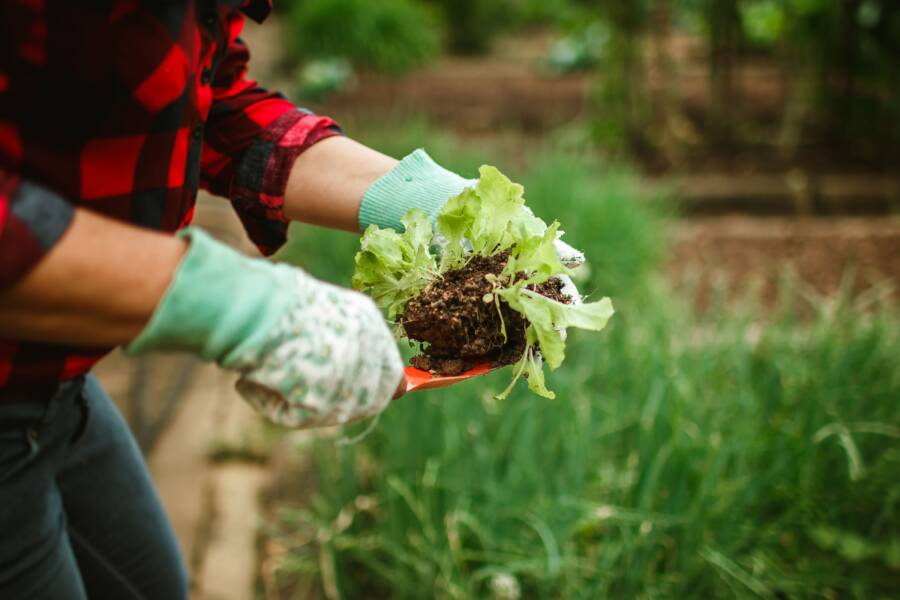
Brush or shake off loose soil, then rinse the gloves with cool water and clean them with mild soap suited to the material. Fresh dirt comes off more easily than dried stains, so start cleaning soon after gardening.
The safest method for garden soil stains on gloves depends on whether the pair is cotton, knit, rubber, coated, synthetic leather, or genuine leather. Fabric gloves can often handle a short soak, while leather usually needs spot cleaning. Begin with the gentlest method and check the care label before washing.
What Causes Garden Soil Stains on Gloves?
Wet soil contains fine particles that settle into fabric and seams. Clay can leave a gray or orange film, while compost may add dark organic marks and an earthy odor. Fertilizer residue can also leave pale or gritty patches after it dries.
Surface dirt usually brushes away or rinses off. A deep stain remains after loose soil disappears and may feel embedded in the fibers. If the glove has a waterproof coating or leather surface, aggressive cleaning can damage it before the stain is gone.
How to Remove Fresh Garden Soil Stains on Gloves
Start by shaking the gloves outdoors or brushing off dry particles. Rinse them under cool running water, directing the water from the clean side toward the dirty side. Add a small amount of mild dish soap or liquid laundry detergent, then rub the material gently with your fingers.
Work over the fingertips, palms, and seams without twisting the gloves. Rinse until no soap remains, then press out excess water with a clean towel. Don’t wring or twist gloves, because this can stretch knit fabric, distort coatings, and weaken seams.
The Best Brush and Soap for Stubborn Dirt
Use a soft nailbrush, old toothbrush, or soft vegetable brush for dirt trapped around fingertips and stitching. Apply mild soap first, then brush with short, light strokes. Test the soap and brush on an inside seam or another hidden area before cleaning the whole glove.
Bleach, paint thinner, acetone, and other harsh solvents can weaken fibers, remove color, or destroy waterproof coatings. Aggressive scrubbing can roughen synthetic leather and push clay farther into fabric. If the glove changes color or texture during the test, stop and use water only.
Cleaning Garden Soil Stains by Glove Material
Different glove materials need different amounts of water and friction. The care label takes priority, especially when the gloves include rubber palms, foam padding, or a bonded coating. When no label exists, hand washing is safer than using a washing machine.
Cotton, Knit, Rubber, and Coated Gloves
Soak washable cotton or knit gloves in cool or lukewarm water with mild detergent for 10 to 15 minutes. Rub stained areas gently, rinse well, and wash them according to the care label. Most fabric gardening gloves should air-dry rather than go in a hot dryer.
Rubber and coated gloves usually need wiping or hand washing. Clean the outside with mild soapy water, rinse away all residue, and wipe the inside if soil or sweat has entered. Dry both surfaces completely, because trapped moisture can cause odor and mildew.
Leather and Synthetic Leather Gloves
Genuine leather shouldn’t be soaked. Water can make it stiff, shrink it, or cause cracks as it dries. Brush away soil, then use a damp cloth with a small amount of mild soap to spot-clean the mark.
Reshape leather gloves while they’re damp and let them air-dry away from heaters, fireplaces, and direct sunlight. Synthetic leather may tolerate gentle hand washing, but only when the care label allows it. Otherwise, clean it with a damp cloth and dry it flat.
How to Get Dried Soil Stains Out of Gardening Gloves
Let dried soil stay dry while you loosen it. Tap the gloves together or brush them with a soft brush before adding water. Removing the crust first reduces rubbing and keeps the stain from spreading across wet fabric.
For washable fabric gloves, use a short detergent soak of 10 to 15 minutes, then brush the remaining mark lightly and rinse. Leather and other delicate materials need careful spot treatment with a damp, soapy cloth. Old stains may fade without disappearing completely, especially when clay has dried inside light-colored fibers.
Clay, Compost, and Plant Residue
Clay often needs repeated rinsing because water releases it in layers. Rinse, brush lightly, and rinse again rather than pressing the mud deeper into the glove. Compost stains may leave organic discoloration or odor, so clean the gloves promptly and dry them fully.
Plant sap can resist soap on durable synthetic material. After a hidden spot test, dab a small amount of rubbing alcohol onto the residue, then rinse the area and wash with mild soap. Never mix cleaning products, and don’t use alcohol on leather, rubber, or an untested coating.
How to Dry and Store Clean Gardening Gloves
Hang fabric gloves in a ventilated place with the cuffs open. Turn them inside out once the outside feels dry, if the construction allows it. Rubber gloves should be wiped inside and out, then placed over a rack or wide opening so air can circulate.
Reshape leather gloves while damp and dry them flat or on a glove form. Keep every material away from heaters and strong direct sunlight, which can shrink fabric, harden rubber, and crack leather. Don’t store gloves in a sealed container or against damp soil until they’re fully dry.
How to Prevent Garden Soil Stains on Gloves
Choose dark-colored or washable gloves when you expect heavy contact with soil. For muddy beds, rubber or waterproof-coated gloves are easier to clean than absorbent fabric. Use breathable fabric gloves for dry planting and light weeding instead of exposing them to prolonged wet work.
Rinse gloves after each gardening session, then hang them open to dry. Keep a dedicated soft brush and a small bucket near the garden so cleanup takes less than a minute. Removing heavy soil before it dries prevents most garden soil stains on gloves from becoming permanent.
When Stained Gardening Gloves Should Be Replaced
Stains are usually cosmetic, so appearance alone doesn’t require a new pair. Replace gloves when holes expose your skin, seams split, or a coating peels away from the palm. Cracked leather and stiff areas also reduce grip and can make tools harder to control.
Persistent mildew is another reason to discard gloves, particularly when the odor returns after washing and drying. Replace any pair contaminated with an unknown chemical or concentrated fertilizer that cleaning can’t remove. A clean-looking glove with damaged protection is less useful than a stained glove that still fits and functions properly.
Conclusion
Remove loose soil quickly, use cool water and mild soap, and match the cleaning method to the glove material. Fabric pairs can often handle a short soak, while rubber needs thorough rinsing and leather requires spot cleaning.
Dry gloves completely before storing them, and rinse them after each gardening session. Regular care prevents most garden soil stains on gloves from becoming permanent, while holes, mildew, damaged coatings, and chemical contamination are clear signs that it’s time for a replacement.