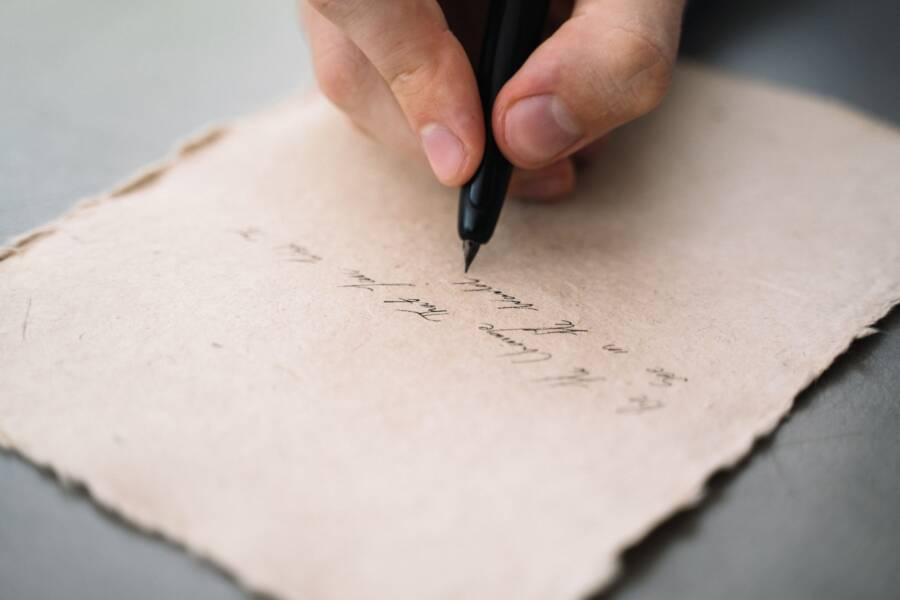
Spilling fountain pen ink on a linen napkin causes immediate fiber absorption and pigment bonding. Dye-based inks sink quickly into the cellulose structure, while pigment-based formulas leave heavier particulate residue on the surface of the cloth.
Why Fountain Pen Ink Behaves Differently on Natural Fabric
Linen absorbs liquids much faster than standard paper because of its unique cellular construction. Flax fibers feature high porosity, so ink travels along internal channels through capillary action almost instantly.
Understanding Cellulose Fibers and Liquid Absorption
Plant-based textiles contain complex cellulose networks that readily accept water-borne solutions. When a wet nib touches a natural fabric, the liquid spreads outward in a starburst pattern along the yarn twist. This structural pathway pulls the fluid deep into the core rather than keeping it pooled on top.
The Role of Ink Composition in Fabric Staining
Iron gall formulas bond permanently with cloth fibers through oxidation, creating dark, indelible marks. Dye-based solutions dissolve more easily in cleaning solvents because their color molecules don’t form chemical bonds with the textile. Knowing your ink type determines whether simple rinsing or solvent application works best.
Immediate Steps to Salvage Fountain Pen Ink on a Linen Napkin
Act immediately to prevent the dye from setting permanently into the fabric weave. Quick intervention stops the pigment from drying and locking into the cellulose structure.
Blotting Excess Liquid Without Pressing
Press dry paper towels firmly against the wet spot to lift surplus moisture out of the threads. Never rub the stain because friction pushes the liquid deeper into the fabric matrix and widens the affected area.
Applying Cold Water Rinses Correctly
Hold the stained area under a cold tap, letting the water flow from the back of the fabric to push the pigment out. Hot water sets dye-based stains permanently by opening the cellulose fibers and locking the color molecules inside.
Effective Cleaning Solutions for Removing Stubborn Stains
Household solvents break down residual dye molecules that survive the initial cold water rinse. Matching the correct chemical agent to your specific ink type ensures safe removal without damaging the natural flax threads.
Using Isopropyl Alcohol on Dye-Based Inks
Dab rubbing alcohol onto the stain using a clean cotton swab to dissolve soluble dye components. Place a dry towel underneath the napkin to catch the bleeding color as the alcohol flushes it through the weave.
Using Mild Acids for Iron Gall Residue
Apply a few drops of fresh lemon juice or diluted citric acid to dissolve stubborn iron compounds on the cloth. Rinse the treated spot thoroughly with cold water immediately after the dark mark fades to protect the linen fibers.
Preventing Accidental Spills During Writing Sessions
Good preparation keeps your fine writing instruments safely separated from high-end dining textiles. Simple layout adjustments eliminate most risks of staining table linens during correspondence.
Choosing Safer Inks for Casual Settings
Switch to washable blue or black formulations when writing near fabric table settings or clothing. Washable formulas contain water-soluble dyes that rinse out easily if an accident occurs.
Setting Up a Safe Writing Workspace Near Linens
Keep your ink bottles and fountain pens on a sturdy desk rather than a dining table covered in fabric. Position your writing pad away from napkins, and close your pen immediately after finishing your notes.