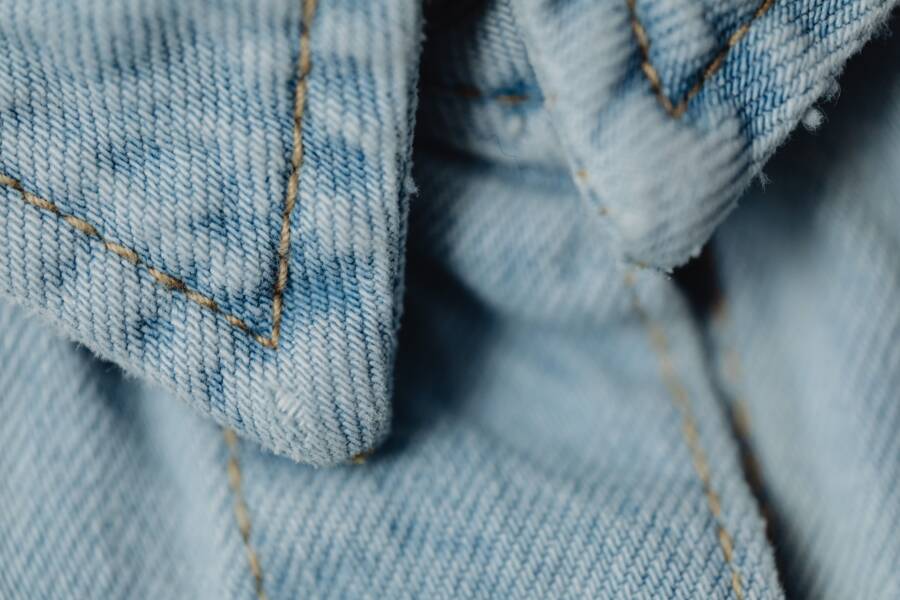
You can’t wash a bleach stain out of jeans because bleach removes dye from the fabric. To cover a bleach stain on jeans, rinse a recent spill with cool water, wash the garment separately, then use fabric color, a patch, embroidery, or a planned design.
The best method depends on the mark’s size, the jeans’ color, and whether the denim contains stretch fibers. Clean and dry the jeans first, then test every product on a hidden seam before repairing the visible area.
How to Cover a Bleach Stain on Jeans Safely
Stop using bleach as soon as you notice the spill. Rinse the affected area with cool water if the bleach is still active, then wash the jeans alone with mild detergent. Let them dry completely before choosing a repair method, because wet denim can make the stain look different.
Bleach can weaken cotton fibers, especially after prolonged contact. Avoid rubbing, scrubbing, rough brushing, and high heat. If the fabric feels thin, papery, or brittle, reinforce it before adding color.
Check the Stain, Fabric, and Jeans Color First
Inspect the mark under natural light. Note its size, color, and edges, then check for loose threads, roughness, or small holes. Dark blue, black, gray, and colored denim each need different shades, while stretch jeans need a flexible product that won’t crack or peel.
Gather Supplies Before Starting
Useful supplies include fabric dye or fabric paint, a fabric marker, a small brush, gloves, cardboard, mild detergent, and a clean cloth. Place cardboard inside the jeans to stop color from reaching the opposite side. Test the chosen product on an inside seam or hidden hem, and wait for it to dry before judging the match.
Match a Small Bleach Spot With a Fabric Marker
A fabric marker works well for a small, pale mark with intact fibers. Choose a shade close to the surrounding denim, then apply thin strokes rather than filling the spot with one heavy layer. Extend the color slightly beyond the bleach mark so the edge doesn’t look sharply outlined.
Work from the outside edge toward the center, following the direction of the denim threads. Let each coat dry before adding another, and compare the repair in natural light. Permanent markers can bleed, fade, or leave a shiny finish, so use them only as a temporary option when a fabric marker isn’t available.
Blend Blue or Black Denim Without Creating a Dark Dot
One blue rarely matches an entire pair of jeans. Woven denim includes lighter threads, fading, and texture, so a single dark color may create an obvious dot. Use several light strokes, and soften a harsh blue area with a small amount of lighter blue or gray fabric color.
Set and Wash the Repaired Area Carefully
Follow the product label for heat setting, curing time, and washing instructions. When heat is required, protect the fabric and use the care label’s temperature limit. Afterward, turn the jeans inside out, wash them in cold water with mild detergent, and air-dry them.
Use Fabric Dye or Paint for a Larger Bleach Stain
A broad yellow-orange or pale area needs more coverage than a marker can provide. Fabric dye usually gives a softer result because it absorbs into the fibers, while fabric paint offers stronger coverage but can change the denim’s texture. A custom-blended color often looks better than applying one ready-made shade.
For a large stain, dyeing an entire panel or the whole garment may look more even than covering one isolated spot. This approach changes the jeans’ overall color, so test the dye on a hidden section first.
Blend Fabric Dye Into the Surrounding Denim
Protect the work surface, put on gloves, and mix a small amount of dye according to its label. Test that mixture, then apply thin layers with a clean cloth, sponge, or brush. Allow each layer to dry before deciding whether more color is needed.
Apply Fabric Paint Without Making Jeans Stiff
Thin or layer fabric paint only as the label directs, using a small brush or sponge. Thick coats feel stiff, especially around knees, hips, and other bending areas. Keep paint off zippers, buttons, and seams, and let the repair cure fully before washing.
Hide the Mark With a Patch or Embroidery
A patch, appliqué, or embroidery is a durable choice when the stain is large, uneven, or surrounded by weakened denim. Choose a design that suits the location, such as a patch on the thigh or knee. Check the garment’s care label before using an iron.
Choose Between an Iron-On Patch and a Sewn Patch
Iron-on patches are quick to apply, but repeated washing can loosen their adhesive. Sewn patches usually hold better and work well on stretchy or frequently washed jeans. For an iron-on patch, use a pressing cloth, the correct heat setting, and firm pressure without dragging the iron.
Cover the Spot With Simple Embroidery
Flowers, stars, leaves, geometric shapes, and visible-mending stitches can cover small or irregular marks. Place a stabilizer behind thin denim to prevent puckering, then keep the fabric flat without pulling it tight. Secure the thread on the inside, where knots won’t rub against your skin.
Turn the Bleach Mark Into a Deliberate Design
Exact color matching isn’t always practical, especially when the stain covers a large section. You can make the mark look intentional by adding several lightened areas, creating a faded panel, or painting a simple pattern. Avoid adding more bleach unless you understand the safety risks and the damage it can cause.
Create an Even Tie-Dye or Acid-Wash Look
Repeat a controlled pattern across both legs or selected panels so the original spot becomes part of the design. Use a fabric-safe product according to its label, wear gloves, provide ventilation, and test the process on an old garment first. Never mix bleach with vinegar, ammonia, or other cleaners.
Use Fabric Paint for a Custom Design
Color blocks, small flowers, lettering, and abstract shapes work well on denim. Sketch lightly, place cardboard inside the jeans, and apply thin coats that can bend with the fabric. Follow the paint label’s curing instructions before washing.
Repair Denim That Feels Thin or Brittle
Appearance matters less than fabric strength when bleach has damaged the fibers. A rough edge, tear, or papery section may spread during normal wear. Place a denim scrap or fusible repair fabric behind the area before covering it.
Reinforce Weak Fabric Before Covering It
Trim only loose threads, and don’t cut into sound denim. Position matching denim or repair fabric behind the weak section, then secure it with careful stitching or a suitable fusible product. Avoid pulling hard on the area, and don’t apply high heat without checking the care label.
Know When a Tailor Is Better
Take expensive jeans, large damaged areas, or marks near a pocket, waistband, or several seams to a tailor. A professional can add hidden reinforcement, replace a panel, or create balanced visible mending. Repair is safer when the fabric has lost much of its strength.
Avoid Repairs That Make the Stain More Noticeable
Too much color is the most common mistake. Skipping a hidden test, painting dirty denim, ironing without a pressing cloth, or washing before the product cures can also ruin the repair. Clean the jeans first, build color slowly, and inspect the result in daylight.
Choose the method that fits the damage rather than forcing one product to do every job.
Wash repaired jeans inside out in cold water with mild detergent. Avoid chlorine bleach and harsh stain removers, and air-dry the garment when possible. Hot washing can fade dye, loosen patches, and make painted areas crack.
Conclusion
Bleach stains cannot be removed, but you can disguise or redesign them successfully. Clean and inspect the jeans first, test every product on a hidden area, and choose coverage based on the stain’s size and the fabric’s strength.
A marker suits a tiny spot, while dye, paint, patches, and embroidery handle larger damage. Let the repair cure fully, then wash the jeans gently so the fix lasts.