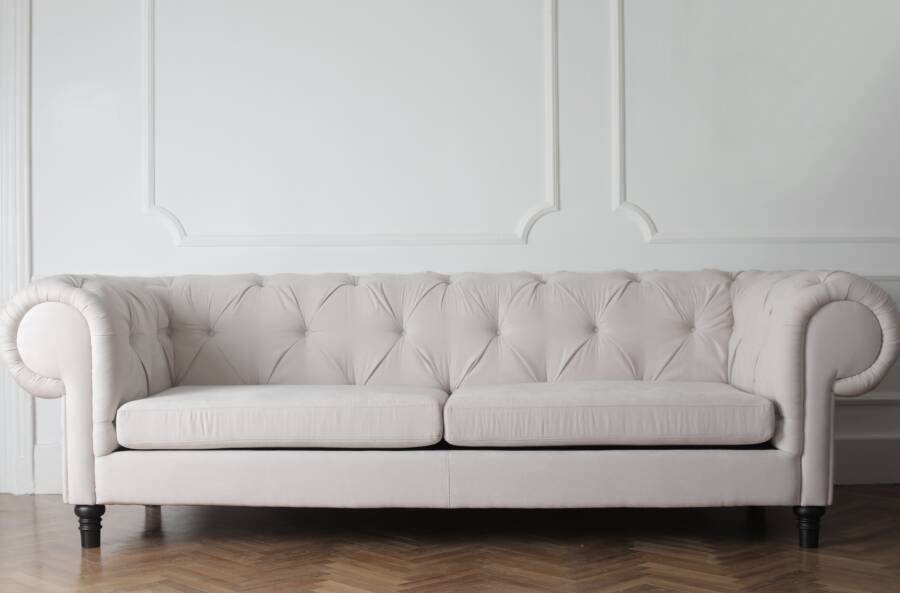
To clean sick off a fabric sofa, remove the solids first, blot the stain, then follow the sofa’s upholstery care code. Quick action limits staining, odor, and moisture damage.
This method works for vomit on fabric sofas, cushions, and removable covers. Delicate fabrics, contaminated upholstery, or cushions soaked through to the core may need professional cleaning. Start with safe removal before reaching for any cleaner.
How to Clean Sick Off a Fabric Sofa Without Spreading the Mess
Put on disposable gloves and move children and pets away from the sofa. Open a window if possible, then place a trash bag, paper towels, and a spoon or dull scraper beside the affected area. Keep the mess contained so you don’t transfer residue to other cushions or furniture.
Lift away solid material with cardboard, a spoon, or a dull plastic scraper. Put each piece directly into a plastic bag, tie the bag closed, and place it in a second bag if needed. Next, press paper towels onto the wet area without rubbing, working from the outside edge toward the center.
Use only a small amount of cool water if residue remains. Apply it to a white cloth rather than pouring it onto the sofa, then blot again. Don’t use hot water, because heat can set protein-based stains and make them harder to remove.
Protect Yourself and Improve Ventilation Before Cleaning
Disposable gloves protect your hands from bodily waste and cleaning chemicals. If you have cuts on your hands, cover them before putting on gloves, and avoid touching your face, phone, or door handles during cleanup. Wash your hands with soap and water after removing the gloves.
Ventilation helps reduce unpleasant odors while the fabric dries. Anyone with a weakened immune system should avoid handling vomit when another person can manage the cleanup. Keep the room closed off until the waste has been removed and the affected surfaces are clean.
Remove Solids Before Applying Any Liquid
Scraping first prevents solid material from being pushed farther into the weave. Hold a plastic bag close to the sofa, then lift the residue with cardboard, a spoon, or a dull scraper. Avoid pressing down on the cushion, since pressure can drive moisture into the foam or filling.
After removing the solids, fold a paper towel and blot from the perimeter inward. Replace each towel when it becomes soiled. Rubbing spreads the stain across a larger area and can roughen the fabric fibers.
Gather the Right Supplies and Check the Sofa Care Code
Collect the supplies before you begin so you don’t leave a wet sofa unattended. You may need:
Disposable gloves and paper towels
A spoon, piece of cardboard, or dull plastic scraper
White cloths that won’t transfer dye
Mild dish soap or upholstery detergent
Cool water and a clean spray bottle
Baking soda and a vacuum with an upholstery attachment
An upholstery-safe enzyme cleaner, if the label allows it
Look for the manufacturer’s cleaning tag beneath a cushion, along a seam, or under the sofa frame. The code usually identifies the safest cleaning method. W means water-based cleaning, S means solvent-based cleaning, WS or W-S allows either method, and X means vacuuming only.
Choose a Cleaner That Matches the Upholstery
Water-based cleaning is suitable only for fabric marked W or WS. An S-coded sofa requires the solvent named by the manufacturer, while X-coded upholstery shouldn’t receive a wet cleaner at home. If the tag is missing, contact the sofa manufacturer or an upholstery cleaner before applying liquid.
Test every cleaner on a hidden section first. Wait until the test area dries and check for color change, fading, texture changes, or a visible ring. Avoid bleach, ammonia, strong disinfectants, and mixed products because they can damage fibers, release irritating fumes, or permanently alter the color.
Treat the Fabric Stain With a Gentle Cleaning Solution
For W or WS upholstery, mix a small amount of mild detergent into cool water. Use enough soap to create light suds, then apply the foam or a lightly dampened white cloth to the stain. Don’t soak the sofa, since excess water can carry residue into the cushion and create a larger ring.
Blot from the outer edge toward the center, turning the cloth as it collects residue. After cleaning, use a separate cloth dampened with plain cool water to remove soap. Press dry towels over the area and stop immediately if dye transfers, the fabric becomes fuzzy, or a water ring starts to form.
Use an Enzyme Cleaner for Protein-Based Odors
Vomit contains proteins that can leave a sour or persistent smell after the visible stain disappears. An upholstery-safe enzyme cleaner may break down some of that residue, but use it only when the product label permits it for your sofa’s fabric code.
Test the product in a hidden spot, then follow the label’s dwell time and dilution instructions. Apply only enough to dampen the affected area, and never combine it with detergent, bleach, ammonia, or another cleaner. Enzyme products may damage wool, silk, leather, and specialty fabrics, so check the material first.
Clean the Cushion Seams and Surrounding Area
Liquid can travel into seams, piping, cushion gaps, and the underside of a cushion. Inspect those areas with a flashlight, then use small, controlled blots instead of flooding the fabric. Lift removable cushions and check the surface beneath them.
Splashes may also reach nearby blankets, armrests, flooring, or the sofa base. Wash removable textiles according to their labels, and clean hard flooring with a suitable household cleaner. Removing residue from nearby surfaces prevents the odor from lingering in the room.
Clean Removable Covers and Cushion Inserts Safely
Read the washing label before removing or treating a cover. If washing is allowed, close the zipper, turn the cover inside out when the label recommends it, and pre-treat only with an approved product. Wash with cool or lukewarm water and a mild detergent, using the cycle listed on the care label.
Air-dry the cover when permitted, or follow the stated dryer setting. Don’t put it back on the cushion while it’s damp or while the odor remains. A damp cover can trap moisture against the insert and create a musty smell.
Decide Whether a Cushion Insert Can Be Washed
Foam, feather, and fiberfill inserts have different care requirements. Never assume that a removable insert can go into a washing machine because the cover is washable. Check the manufacturer’s instructions before exposing the insert to water.
If liquid reached the insert, press clean towels against it to draw out moisture. Don’t wring or twist foam, because twisting can deform it permanently. When vomit soaked into the foam or filling, ask a professional upholstery cleaner for advice rather than attempting a full rinse at home.
Dry the Sofa Completely and Remove Lingering Odors
Press dry towels into the cleaned area, replacing them as they absorb moisture. Set a fan to move air across the fabric, open windows when weather allows, and stand removable cushions upright so air reaches both sides. Keep the sofa out of normal use until the fabric and cushion interior are dry.
Drying time depends on the fabric, airflow, and amount of moisture used. Check seams, cushion edges, and the underside before replacing covers or sitting on the sofa. If the surface feels dry but the cushion still feels cool, heavy, or damp inside, continue drying.
Use Baking Soda Only After the Fabric Is Dry
Once the upholstery is completely dry, sprinkle a light layer of baking soda over the affected surface. Leave it for several hours or overnight, then vacuum it thoroughly with an upholstery attachment. Keep the vacuum nozzle moving gently so it doesn’t pull at loose fibers.
Baking soda can absorb surface odors, but it doesn’t remove vomit residue or clean a damp cushion. Don’t use it to cover an odor that returns after drying. Persistent smell usually means residue remains below the surface.
Fix Water Rings, Discoloration, and a Sour Smell
A visible ring can result from uneven moisture, detergent residue, or fabric that reacts to water. Don’t keep rewetting the area in an attempt to blend the mark, because over-wetting can spread the stain and damage the cushion. Let one careful treatment dry fully before deciding what to do next.
Call a professional when the stain remains after one proper cleaning, the odor returns after complete drying, or the care code doesn’t allow water. Professional upholstery cleaners can select extraction equipment or specialty solvents based on the fabric and the extent of contamination.
Know When the Sofa Needs Professional Cleaning
Professional help is the safer choice when:
Vomit soaked into the cushion core or insert
A large section of the sofa is affected
The upholstery has an S or X cleaning code
The fabric is silk, wool, velvet, antique, or otherwise delicate
Mold appears during or after drying
The odor persists after cleaning and complete drying
A trained cleaner can inspect the fabric, remove residue from internal layers, and choose a method that reduces the risk of permanent water damage. Don’t keep adding household products when the first treatment fails.
Avoid These Mistakes When Cleaning Vomit From Upholstery
Rubbing, using hot water, and soaking the cushion are the most common ways to spread the mess. Other problems come from skipping the care label, using colored towels, or applying bleach and ammonia to a fabric that cannot tolerate them. Never mix cleaning products, even if the first one didn’t remove the smell.
Don’t seal a damp cushion in plastic, since trapped moisture encourages mildew and prolongs the odor. Remove the solids quickly, use limited moisture, blot rather than scrub, and provide steady airflow. Those steps are safer than aggressive cleaning and give the fabric the best chance of drying without a ring.
Conclusion
Protect yourself, remove the solids, blot toward the center, and follow the sofa’s care code before using a cleaner. Test the product, use only controlled moisture, and dry the fabric and cushion completely before replacing covers.
Deep soaking, delicate upholstery, visible mold, or an odor that returns after drying are signs to stop DIY cleaning. A professional can handle contaminated cushion interiors and fabrics that require solvent or specialty treatment.