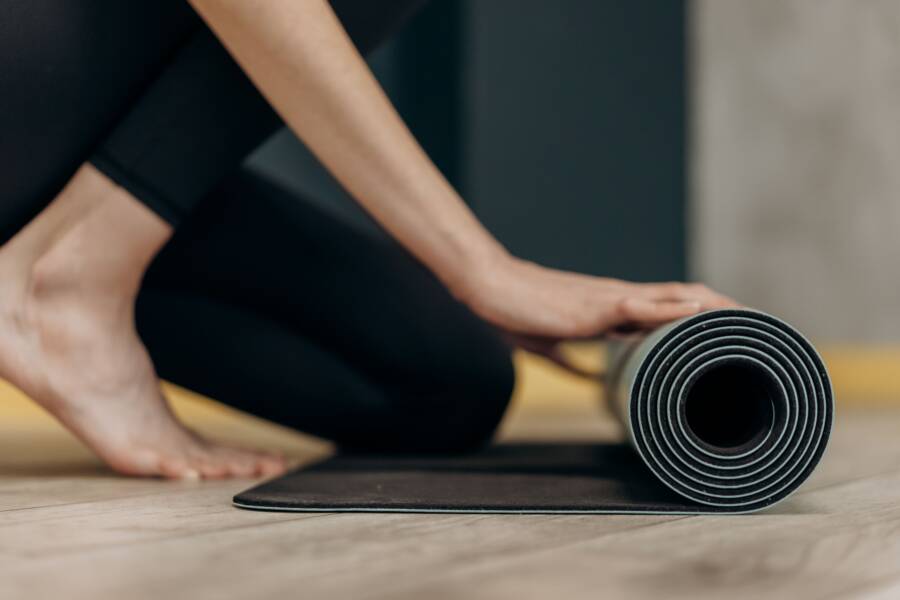
Act quickly by flushing fresh blood on your gear with cold water before the proteins set into the fibers. You need to treat the spot immediately because letting it dry makes removal much harder, especially on porous versus non-porous mat materials.
Why Fast Action Matters for Blood Stains on a Yoga Mat
Blood contains iron, proteins, and cellular waste that bond tightly to surfaces once they dry. When you practice hot yoga, your pores open and you sweat, which transfers skin oils and moisture directly onto your equipment. If you bleed during a session and let the fluid sit, it seeps into the material and oxidizes. Oxidation turns the red liquid brown and anchors it permanently into the texture. Speed prevents the proteins from curing.
Understanding Material Porosity
Open-cell mats act like tiny sponges because they absorb sweat, oils, and blood deeply into their structure. PVC and closed-cell rubber mats feature a sealed surface that stops liquids from sinking right away. When you spill blood on an open-cell mat, the liquid migrates into the core within minutes. Closed-cell mats give you a larger window for cleanup because the fluid stays pooled on top. You must identify your mat type before picking a cleaning agent.
Safe Cleaning Solutions You Can Make at Home
Harsh solvents like bleach, acetone, or heavy window cleaners destroy rubber, polyurethane, and PVC surfaces instantly. You should stick to gentle household items that break down proteins without melting your gear. Cold water, mild dish soap, and targeted hydrogen peroxide solutions lift the pigment safely. Always test your cleaner on a tiny corner of the mat first to check for discoloration.
Using Cold Water and Dish Soap
Hot water cooks the proteins in blood, bonding them permanently to rubber and fabric just like frying an egg in a hot pan. You must always use ice-cold water to flush fresh liquid away from the surface. Mix a single drop of mild dish soap into a cup of cold water to create a light lather. Dip a soft cloth into the mixture and dab the area gently to lift surface residue.
When and How to Use Hydrogen Peroxide Safely
Hydrogen peroxide bubbles upon contact with blood because it reacts with the catalase enzyme found in red blood cells. You can use a three percent solution straight from the brown bottle on stubborn, dried spots. Apply a few drops directly onto the stain using a cotton swab to control the spread. Let the liquid fizz for thirty seconds before blotting it away with a damp towel. Do not leave peroxide on natural rubber for too long because it degrades the grip over time.
Step-by-Step Instructions to Lift the Stain
Cleaning yoga gear requires patience and physical control to avoid stretching or tearing the material. You need to follow a strict sequence of steps to remove the pigment without ruining your investment. Grab a clean microfiber towel, your cold soapy mixture, and a bottle of clean water for rinsing.
Blotting Instead of Rubbing
Rubbing spreads the stain deeper into the texture and frays the outer layer of your mat. You must press down firmly with a clean cloth and lift straight up instead of scrubbing back and forth. Repeat this motion with a fresh part of the towel until no more red transfers onto the fabric.
Flush the area with cold water using a spray bottle or a damp sponge.
Apply your mild soap solution or diluted hydrogen peroxide directly to the spot.
Press a dry microfiber cloth firmly onto the area to absorb the lifted residue.
Rinse the spot with a separate damp cloth soaked in plain cold water.
Proper Drying Techniques to Prevent Mold and Damage
Trapped moisture causes mildew to grow inside open-cell mats, ruining the material from the inside out. You must never place rubber or PVC gear inside a mechanical clothes dryer because the heat warps the shape permanently. Hang your mat over a sturdy shower rod or a balcony railing in a shaded, well-ventilated area. Wait until both sides are completely dry before you roll it back up for storage.
Sanitizing Your Mat After Stain Removal
Once the stain disappears, you should kill any remaining bacteria left behind from the skin contact. Mix equal parts white vinegar and water in a clean spray bottle with three drops of tea tree oil. Mist the entire surface of the mat lightly to neutralize odors and disinfect the grip zones. Wipe the solution away with a dry towel after two minutes of contact time.
Preventing Future Damage and Maintaining Your Gear
Regular upkeep stops stains from setting and extends the lifespan of your daily practice equipment. You should wipe down your gear after every sweaty session using a mild plant-based spray or a damp cloth. Store your mat in a cool, dry room away from direct sunlight because ultraviolet rays break down natural rubber. Keeping your practice space clean protects your health and your gear.
To maintain your practice gear, clean blood stains from a yoga mat immediately using cold water and mild soap. Avoid heat, scrub gently, and let the material air dry completely before your next session.