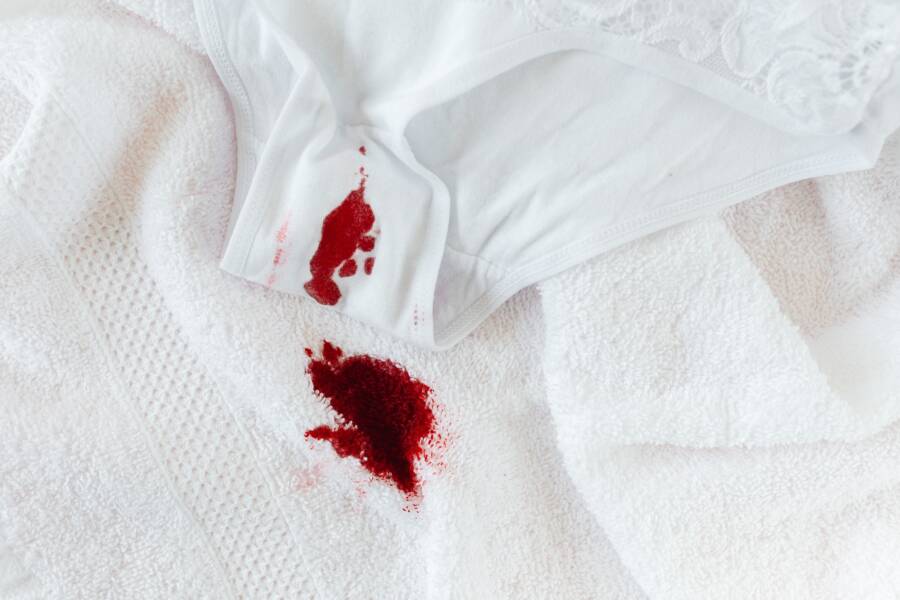
Dealing with blood on white towels that already have bleach damage requires a careful approach to prevent the fabric from tearing completely. You need to treat the protein stain without exposing the weakened fibers to more harsh oxidizing agents.
Why Bleach Stains Make Removing Blood on White Towels So Hard
Chlorine bleach strips the protective finish off cotton fibers. This chemical reaction breaks down the cellulose structure, leaving the fabric brittle and prone to shredding. When blood enters these damaged areas, the proteins bind aggressively to the exposed interior of the degraded fibers.
The Chemical Changes in Damaged Cotton Fibers
Standard cotton loops feature a natural protective wax coating that repels minor stains. Chlorine bleach dissolves this wax layer entirely. As a result, the fibers absorb liquids much faster and trap organic matter deep inside the core. Blood contains iron and complex proteins that wedge into these microscopic gaps. Because the structural integrity of the cotton is already compromised, standard scrubbing tears the threads apart.
Why Iron in Your Water Makes Stains Turn Brown
Tap water contains trace amounts of iron and other minerals. When these minerals interact with bleach-damaged cotton, they oxidize and form rust-colored compounds. Blood introduces even more iron into the equation during the clotting process. This combination creates dark brown or orange spots that look much worse than a standard red stain. The iron binds permanently to the raw cellulose unless you use targeted reducing agents instead of more bleach.
Safely Treating Blood on White Towels That Already Have Bleach Damage
You must avoid hot water and chlorine bleach entirely when washing these delicate textiles. Cold water prevents the protein bonds from tightening further inside the fabric.
Using Cold Water Rinses to Loosen Fresh Proteins
Run cold tap water directly through the back of the stain to push the blood out of the weave. Never use warm or hot water because heat cooks blood proteins into the cotton fibers. Once the proteins cook, they set permanently into the damaged weave. Soak the towel in cold water with a teaspoon of standard liquid dish soap for thirty minutes.
Applying Hydrogen Peroxide Without Hurting Weakened Fabric
Hydrogen peroxide acts as a mild oxygen bleach that lifts blood without destroying the remaining cellulose. Pour a three percent concentration directly onto the stain and let it fizz for no more than ten minutes. Rinse the area thoroughly with cold water to stop the chemical reaction. If you leave peroxide on bleach-damaged cotton for too long, it weakens the fibers further.
Enzyme Cleaners That Break Down Stains Without Chlorine
Enzyme-based laundry detergents offer a safer alternative for fragile textiles. These specialized formulas target organic matter directly without attacking the surrounding cotton structure.
How Protease Enzymes Target Dried Blood Proteins
Protease enzymes act as biological scissors that cut protein molecules into smaller, water-soluble pieces. They dismantle the red blood cells holding the stain to the fabric without requiring any physical scrubbing. Apply a liquid detergent containing protease directly to the spot and let it sit at room temperature for an hour. The enzymes break the bond between the iron and the cellulose safely.
Soaking Methods for Delicate and Thin Terry Cloth
Fill a basin with cold water and mix in one tablespoon of liquid enzyme detergent. Submerge the damaged towel completely so the solution reaches every fiber. Soak the textile for up to two hours, checking the fabric every thirty minutes to test its strength. Gently squeeze the water through the towel without wringing or twisting the weakened areas.
Restoring the Bright White Look of Your Damaged Linens
Bleach damage causes permanent yellowing that standard detergents cannot reverse. You need optical brighteners or alternative coloring methods to restore a uniform appearance.
Using Bluing Agents to Counteract Yellow Stains
Liquid bluing agents add microscopic blue pigments to the fabric to neutralize yellow tones. Mix a few drops of bluing liquid into a gallon of cold water in a separate bucket before adding your towel. Dip the linen into the mixture for one minute, then remove it immediately to prevent over-tinting. The blue optical tint tricks the eye into seeing a bright white surface despite the underlying chemical damage.
Safe Dyeing Options When Bleach Damage Cannot Be Reversed
Fabric dye provides a permanent solution when chemical burns leave unsightly patches across your towels. Choose a hot-water or all-purpose dye that matches the original shade or pick a darker color to mask the spots entirely. Wash the towel first to remove any remaining residues, then follow the dye package instructions carefully in a stainless steel sink or washing machine. Dyeing covers the bleached patches uniformly and extends the usable life of the linen.
The key to salvaging compromised textiles is treating organic stains with cold water and enzymes while avoiding chlorine entirely.